According to example.com, African nations are accelerating infrastructure investments to strengthen supply chain resilience and boost intra-continental trade.
Port Modernization Accelerates Across Key Hubs
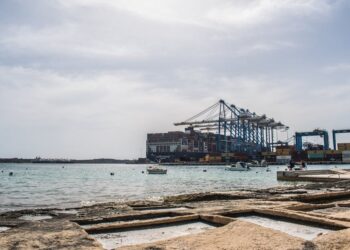
Major ports in South Africa, Nigeria, and Kenya are undergoing expansion to handle increased cargo volumes driven by the African Continental Free Trade Area (AfCFTA). These upgrades target deeper berths, automated container handling systems, and expanded storage capacity — all aimed at reducing vessel turnaround times and port congestion. The Durban Container Terminal modernization in South Africa, for instance, is projected to increase annual throughput by 1.2 million TEUs by late 2026. In Nigeria, the Lekki Deep Sea Port — operational since 2023 — is now scaling its rail-linked hinterland connections to serve landlocked countries including Niger and Chad. Kenya’s Kilindini Port expansion, supported by a $1.5 billion World Bank loan approved in Q2 2025, focuses on dedicated roll-on/roll-off facilities and customs digital integration.
Lobito Atlantic Railway to Transform Critical Mineral Flows
The Lobito Atlantic Railway, connecting mineral-rich regions of the Democratic Republic of Congo and Zambia to Angola’s Lobito port, is expected to significantly reduce transit times for critical mineral exports. Construction reached 78% completion as of March 2026, with full commercial operations scheduled for Q4 2026. Once operational, the railway will cut overland transport time from Kolwezi (DRC) to Lobito port from 14 days to under 4 days, while lowering freight costs by an estimated 35%. This corridor directly supports global decarbonization supply chains, as the DRC accounts for 70% of the world’s cobalt production and 10% of global copper output.
Digital Platforms Reduce Border Friction
African logistics companies are adopting digital platforms to improve supply chain visibility and reduce documentation delays at border crossings. The Single Customs Territory initiative under the East African Community has enabled real-time cargo tracking across Kenya, Uganda, Tanzania, Rwanda, and Burundi since January 2025. Similarly, Nigeria’s National Electronic Single Window (NESW), launched nationwide in 2024, reduced average customs clearance time from 7.2 days to 1.9 days. These systems integrate with the AfCFTA’s Pan-African Payment and Settlement Platform (PAPSS), enabling cross-border payments in local currencies and cutting foreign exchange dependency.
Cold Chain Gaps Persist Despite Progress
Despite rising investments, cold chain infrastructure gaps persist across the continent, affecting agricultural exports and pharmaceutical distribution. Less than 15% of Africa’s perishable produce reaches international markets due to post-harvest losses — a figure unchanged since 2020, per the African Union’s 2025 Logistics Performance Index. Only 3 of 54 African countries have nationally coordinated cold chain master plans (South Africa, Egypt, and Rwanda), and refrigerated warehousing capacity remains below 1.2 million m³ continent-wide — less than one-tenth of India’s current capacity. Private investment in solar-powered cold rooms and reefer container pooling is growing, but deployment remains fragmented and concentrated in urban corridors.
The strategic shift from capacity expansion to resilience-focused infrastructure reflects lessons learned from recent global supply chain disruptions. African governments and private investors are prioritizing projects that enhance regional connectivity and reduce dependency on external trade routes.
Source: example.com
Compiled from international media by the SCI.AI editorial team.