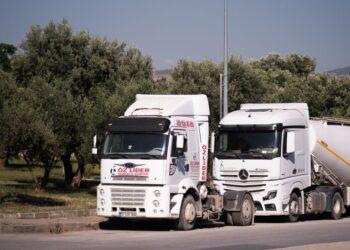
According to www.cnbctv18.com, supply chain and logistics disruptions have emerged as key risks for Indian industry amid escalating West Asia tensions, with oil prices exceeding $100 a barrel and early signs of stress already visible across raw material flows, logistics networks, and the broader supply chain ecosystem.
Immediate Operational and Macroeconomic Pressures
CII President Rajiv Memani described the situation as “a really serious issue” for both industry and government. He noted tangible impacts unfolding across sectors: “It is starting to have an impact in different ways—whether it is raw material, the entire supply chain ecosystem that is shaking right now, or logistics issues, which are equally big and very concerning,” — Rajiv Memani, President, Confederation of Indian Industry (CII).
The crisis is compounding macroeconomic vulnerabilities. Memani flagged risks to India’s FY27 growth outlook, a widening trade deficit, and mounting pressure on the current account. “It is very difficult to estimate, but the government is probably in the best position to assess what the impact of the war will be. But for sure, inflation will be high in the next six months. GDP growth will get impacted, even if the conflict ends in a very short timeframe,” — Rajiv Memani, President, CII.
Coordinated Government–Industry Response
Memani emphasized sustained coordination between policymakers and industry stakeholders. “The government has been very engaged with industry on a very regular basis… the government and industry are completely in sync,” he said, highlighting the speed and responsiveness of the joint effort. Immediate discussions focus on mitigating near-term disruptions—including logistics bottlenecks, financing constraints, and shortages of critical inputs such as gas and feedstock—while also shielding vulnerable sectors and ensuring operational continuity.
Broader Structural and Strategic Implications
Beyond immediate mitigation, Memani outlined structural headwinds: elevated energy imports are driving a growing current account deficit; remittances and foreign direct investment inflows face headwinds; and fiscal space is under pressure. At the same time, longer-term strategies aim to convert crisis into opportunity—by accelerating domestic manufacturing, sustaining private investment momentum, and identifying high-potential areas to attract foreign capital.
He stressed that “the focus is on managing both demand and supply,” and affirmed that government action is occurring “almost on a daily basis” as conditions remain fluid. Notably, Memani indicated the disruption could accelerate India’s energy transition: “There will be acceleration in transitioning to energy sources where India has greater control,” citing compressed biogas, ethanol, and renewables as priority pathways.
Practitioner Context for Global Supply Chain Professionals
For global supply chain professionals, this situation underscores how regional geopolitical volatility in the Strait of Hormuz—a chokepoint handling over 20% of global oil trade—can rapidly cascade into freight rate spikes, port delays, rerouted vessels, and input cost volatility far beyond energy commodities. India’s experience mirrors wider trends: since late 2023, Red Sea shipping disruptions have increased average container freight rates by over 150% (Drewry, Jan–Apr 2024), while air cargo capacity from the Middle East has tightened sharply. Unlike prior shocks tied to single corridors (e.g., Suez Canal blockage), concurrent instability across multiple nodes—from Hormuz to the Red Sea—demands dynamic, multi-tiered contingency planning. Practitioners should prioritize real-time visibility into Tier-2 and Tier-3 suppliers, stress-test logistics diversification (e.g., West Asia–India rail corridors, Gulf–South Asia air freight alternatives), and reassess inventory policies for energy-sensitive inputs like petrochemical feedstocks and fertilizers. The CII’s emphasis on domestic feedstock substitution and renewable integration also signals growing strategic weight for procurement teams in evaluating long-term supplier resilience against energy price volatility.
Source: www.cnbctv18.com
Compiled from international media by the SCI.AI editorial team.