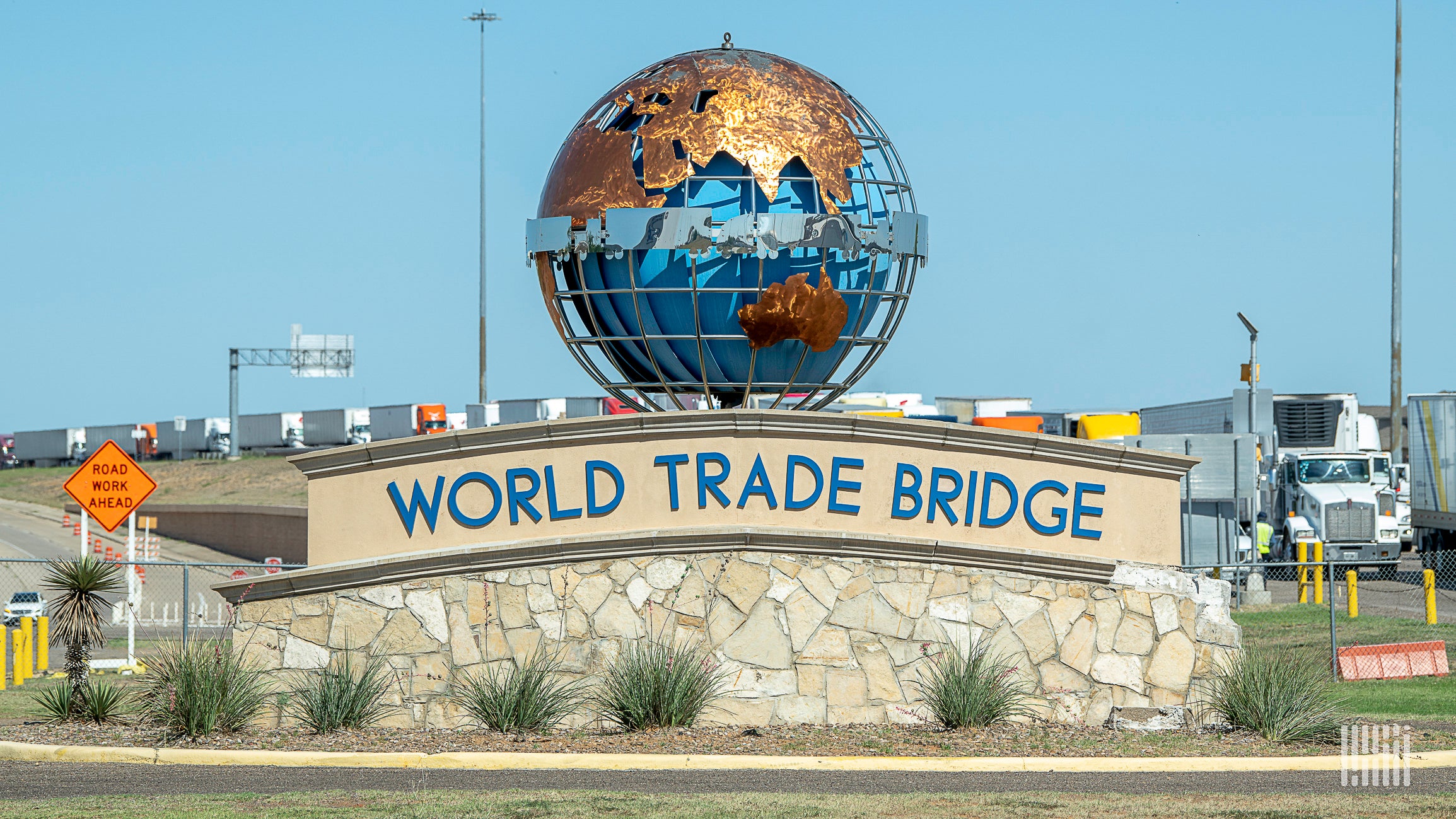
According to www.freightwaves.com, the upcoming six-year review of the United States-Mexico-Canada Agreement (USMCA) — scheduled for 2026 — represents a critical inflection point for North American supply chains, with implications for trade policy, labor enforcement, digital governance, and regional manufacturing strategy.
USMCA Review: A Non-Routine Decision Point
The USMCA includes a 16-year sunset clause and mandates a joint review at the six-year mark to determine whether the agreement will be extended. Former U.S. Trade Representative Katherine Tai emphasized this is not a routine assessment but a major decision point that will shape the future of North American economic integration. Speaking at Rice University’s Baker Institute during “The New Dynamics of North American Trade: The Review of USMCA 2026,” Tai stated:
“The operative question is what does it look like. The right USMCA should be extended.” — Katherine Tai, former U.S. Trade Representative
Core Issues Driving the Review
Tai identified five priority areas requiring updates to align USMCA with current realities:
- Supply chain resilience: Neither NAFTA nor USMCA was designed to foster resilience; Tai called it “high time to learn from the painful lessons of recent years”
- China competition and foreign investment scrutiny: “Not all foreign direct investment is the same,” she said, urging coordinated tri-national assessment of investments that strengthen regional economic security
- Automotive rules of origin: Central to both NAFTA and USMCA negotiations, these rules remain pivotal as North American automakers face intensifying global competition
- Labor enforcement: Tai highlighted the Rapid Response Mechanism (RRM), citing the first-ever RRM case in May 2021 against a General Motors facility in Silao, Mexico — which led to a rerun election, rejection of the old union, and establishment of an independent union. Under her tenure, the U.S. initiated more than 30 RRM cases, delivering back pay, worker reinstatements, and improved conditions for tens of thousands
- Digital trade, AI, and climate policy gaps: USMCA’s digital provisions — modeled on Section 230 liability protections — may no longer reflect political or economic realities; Tai noted North America missed opportunities to embed climate and energy transition policies into trade frameworks
Strategic Integration Over Fragmentation
Tai concluded that North America is moving toward what she termed “smarter, more strategic integration” — focused on economic security and resilience rather than full integration or fragmentation.
“What I would like to see for North America is smarter, more strategic integration that improves the economic security of each of the North American partners and the region as a whole.” — Katherine Tai, former U.S. Trade Representative
Operational Shifts on the Ground
Parallel to the policy-level review, companies are accelerating physical infrastructure investments across the borderlands:
- Amazon is opening an 116,000-square-foot last-mile delivery station in Beaumont, Texas — part of its $84.3 billion investment in Texas since 2010 and supporting over 86,500 full- and part-time workers statewide
- Nissan Mexicana inaugurated its Nissan Internal Fleet Terminal (NIFT) in Aguascalientes — an 861,112.83-square-foot complex between its A1 and A2 plants. The terminal supports movement of millions of parts daily and distribution of over 4,000 finished vehicles, while housing infrastructure for 260+ tractor-trailers and 400+ workers
Source: FreightWaves
Compiled from international media by the SCI.AI editorial team.