Southeast Asia Supply Chain Realignment Accelerates: 30% Drop in China Exports vs 23% Growth in ASEAN
Against the backdrop of shifting global geopolitical dynamics, Asian supply chains are undergoing an unprecedented structural transformation. According to recent data from Malaysian shipping and logistics company MTTSL, China’s exports to the United States declined by approximately 30% year-on-year in 2025, while Southeast Asia’s exports to the US surged by 23% during the same period. This striking contrast not only reflects the geographical redistribution of global supply chains but also underscores the growing strategic importance of Southeast Asia within the international trade system. As companies continue to diversify production facilities from China to Southeast Asian nations such as Vietnam, Thailand, Malaysia, and Indonesia, this trend is expected to accelerate further over the next 18-24 months, positioning the region as a new hub for global manufacturing and logistics networks.
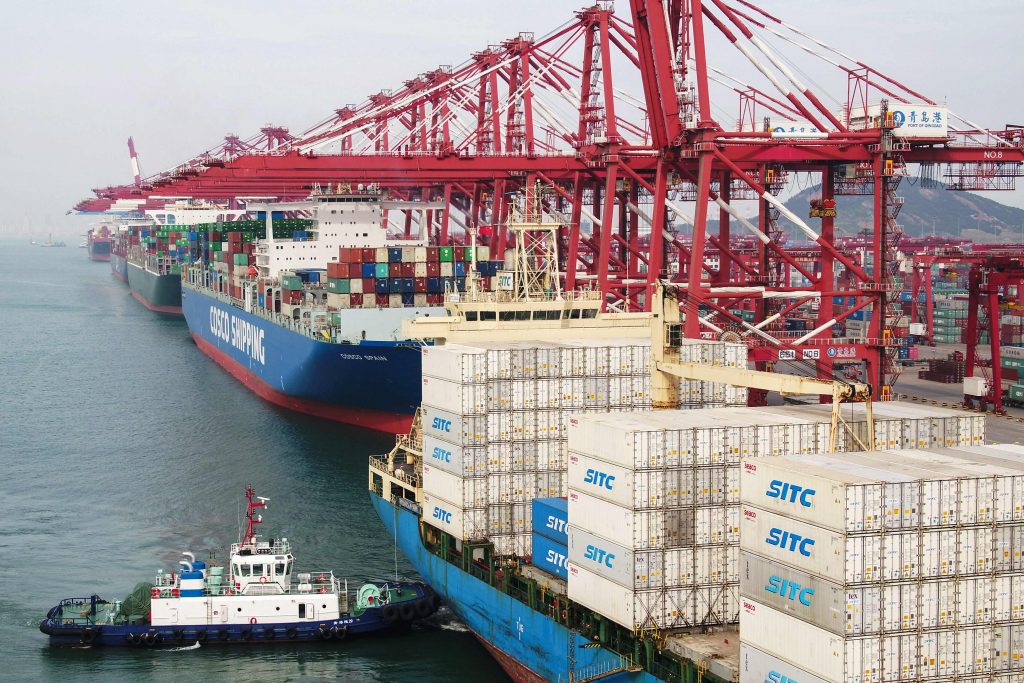
The Strait of Malacca, one of the world’s most critical maritime trade corridors, stands to benefit significantly from this supply chain realignment. Approximately one-quarter of global trade passes through this narrow waterway daily, including the majority of exports from East Asian economies like China, Japan, and South Korea to European and Middle Eastern markets. With expanding manufacturing capacity across Southeast Asia, cargo throughput at ports along the Strait of Malacca—including Singapore Port, Port Klang (Malaysia), and Port of Tanjung Pelepas (Malaysia)—is projected to experience double-digit growth. These ports not only provide efficient transshipment services but also attract international shipping lines to establish regional operational centers through their modern logistics infrastructure.
Notably, despite shipping disruptions in the Strait of Hormuz due to conflicts in West Asia, the impact on Southeast Asian supply chains remains relatively contained. MTTSL Managing Director Ooi Lean Hin points out that major Malaysian ports such as Westports have not experienced significant congestion, maintaining high operational efficiency. This resilience stems from the diversification and robustness of Southeast Asia’s supply chain networks, coupled with the region’s relatively stable geopolitical environment. Unlike the Middle East, Southeast Asian nations maintain close economic cooperation through regional organizations like ASEAN, providing institutional safeguards for smooth supply chain operations.
The Geography of Supply Chain Shift: Strategic Transformation from Concentration to Diversification
The stark contrast between China’s 30% export decline and Southeast Asia’s 23% export growth reflects a fundamental shift in global corporate supply chain strategies. Over the past two decades, China established itself as the “world’s factory” through its comprehensive industrial ecosystem, efficient logistics networks, and relatively low labor costs. However, recent factors including US-China trade tensions, geopolitical uncertainties, and rising labor costs in China have prompted multinational corporations to reassess their supply chain configurations. The “China+1” or “China+N” strategy has become increasingly popular, involving the relocation of some production capacity to Southeast Asian countries to mitigate geopolitical risks and achieve supply chain diversification.
This geographical shift encompasses not merely the relocation of production facilities but the restructuring of entire supply chain ecosystems. Vietnam has emerged as a preferred destination for electronics, textiles, and furniture manufacturing, leveraging free trade agreements with multiple countries and regions, a young workforce, and improving infrastructure. Thailand maintains competitive advantages in automotive manufacturing, electronics, and food processing, with its Eastern Economic Corridor (EEC) attracting substantial foreign investment. Malaysia capitalizes on its multilingual talent pool, relatively developed legal system, and strategic location to focus on high-value industries such as semiconductors, medical devices, and aerospace.
Indonesia, as Southeast Asia’s largest economy, is enhancing its investment climate through reforms like the Omnibus Law on Job Creation, attracting manufacturing investments particularly in resource processing. The Philippines maintains leadership in business process outsourcing (BPO) and semiconductor assembly and testing. This specialization creates a regional production network with distinct characteristics and strong complementarity, transforming Southeast Asia from merely a low-cost manufacturing base into a sophisticated industrial ecosystem. However, Ooi Lean Hin notes that production limitations across Southeast Asian nations mean the full impact of supply chain relocation will take 18-24 months to materialize completely, providing valuable adjustment windows for businesses and policymakers.
Strait of Malacca: The Strategic “Chokepoint” and Hub of Global Supply Chains
Stretching approximately 800 kilometers with its narrowest point measuring only 2.8 kilometers, the Strait of Malacca represents the shortest sea route connecting the Indian and Pacific Oceans. Approximately 90,000 vessels transit this waterway annually, carrying goods worth over $5 trillion—accounting for 25-30% of global maritime trade. As Southeast Asia’s supply chain realignment accelerates, the strategic importance of the Strait of Malacca intensifies further. The strait serves not only as a critical energy transportation corridor—the primary route for Middle Eastern oil to East Asian markets—but also as a vital pathway for manufactured goods moving from East Asian factories to European and American consumers.
The three primary littoral states—Singapore, Malaysia, and Indonesia—are actively investing in port infrastructure to capitalize on opportunities arising from supply chain restructuring. Singapore Port, among the world’s busiest transshipment hubs, maintains its competitive edge through continuous automation and digitalization upgrades. Malaysia’s Port Klang and Port of Tanjung Pelepas attract shipping lines with lower operational costs and ample expansion space. Indonesia is developing new ports like Kuala Tanjung to alleviate congestion at Jakarta’s ports and serve its rapidly growing domestic market.
Modernization efforts at these ports extend beyond hardware such as deep-water berths and automated container terminals to include technologies like digital twins, Internet of Things (IoT), and blockchain to enhance operational efficiency and transparency. For instance, Singapore’s “Digital Port” initiative connects port operators, shipping companies, logistics providers, and regulators through a data-sharing platform, enabling seamless cargo clearance and vessel scheduling. Malaysia has launched the National Trade Platform (NTP), integrating data from customs, ports, banks, and insurers to streamline trade processes. These digital initiatives will significantly boost the competitiveness of ports along the Strait of Malacca, better serving the needs of global supply chain realignment.
Assessing Southeast Asia’s Supply Chain Resilience Amid Geopolitical Risks
The current global geopolitical landscape presents numerous uncertainties, from the Russia-Ukraine conflict to Middle Eastern tensions and US-China strategic competition, all posing challenges to global supply chains. Yet Southeast Asia demonstrates remarkable resilience amidst this “perfect storm.” Unlike regions directly involved in conflicts, Southeast Asian nations generally adopt “hedging” strategies, maintaining balanced relationships with major powers and avoiding excessive dependence on any single external force. This diplomatic approach creates relatively favorable political conditions for stable supply chain operations.
Specifically regarding shipping, disruptions in the Strait of Hormuz due to West Asian conflicts have limited impact on Southeast Asian supply chains. Ooi Lean Hin explains that most Asia-Europe container trade transits the Suez Canal rather than the Strait of Hormuz, meaning disruptions primarily affect energy transportation rather than manufactured goods. For vessels requiring rerouting, alternative routes (such as around the Cape of Good Hope or using alternative ports in Oman, Turkey, and the Red Sea) add approximately two weeks of sailing time, but with carefully planned logistics solutions, the effects of such delays can be effectively managed.
More importantly, rapidly growing intra-Southeast Asia trade provides a “shock absorber” for the region’s supply chains. According to Asian Development Bank data, intra-ASEAN trade as a percentage of the region’s total trade has increased from 24% in 2010 to nearly 30% in 2025. This deepening regional trade reduces Southeast Asia’s dependence on distant markets, enhancing supply chain resilience against global shocks. For example, components produced in Vietnamese factories can supply assembly plants in Thailand or Malaysia, with finished products subsequently exported to European and American markets. Such regional production networks not only shorten supply chain lengths but also reduce concentration of geopolitical risks.
Future Outlook: The Next Phase of Supply Chain Realignment and Strategic Recommendations
Southeast Asia’s supply chain realignment represents an ongoing evolutionary process rather than a one-time event. According to MTTSL projections, the next 18-24 months will constitute a critical phase in this restructuring, as production facilities relocated from China gradually reach full operational capacity and new logistics networks become fully established. This process will generate multiple effects: on one hand, Southeast Asian ports and logistics infrastructure will face capacity pressures, requiring continued investment to meet growing demand; on the other hand, regional industrial specialization will become more refined, creating more resilient and efficient production networks.
For multinational corporations, Southeast Asia’s supply chain realignment presents both challenges and opportunities. Challenges involve managing more complex supply chain networks, coordinating production facilities, logistics providers, and regulatory requirements across multiple countries. Opportunities include leveraging comparative advantages across Southeast Asian nations to optimize cost structures, reduce geopolitical risks, and gain proximity to rapidly growing regional markets. Corporate strategies should include: 1) conducting comprehensive supply chain risk assessments to identify critical nodes and vulnerabilities; 2) investing in supply chain visibility and digitalization tools to enhance control over multi-country operations; 3) establishing long-term relationships with local partners to gain market knowledge and operational support; 4) addressing sustainability requirements to ensure supply chains comply with increasingly stringent environmental and social standards.
For Southeast Asian nations, supply chain realignment offers historic opportunities for economic development and industrial upgrading but also presents governance capacity and infrastructure challenges. Governments need to: 1) coordinate regional infrastructure planning to avoid duplication and destructive competition; 2) strengthen human resource development to cultivate skills matching modern manufacturing and logistics industry needs; 3) improve legal and regulatory frameworks to protect intellectual property and streamline business procedures; 4) promote digital transformation through smart ports and digital trade platforms. Only through such comprehensive measures can Southeast Asia fully realize its supply chain potential and assume a more significant role in the global economy.
In conclusion, Southeast Asia’s supply chain realignment constitutes a crucial component of global economic restructuring, reflecting corporate strategies to address geopolitical risks, optimize cost structures, and capitalize on emerging market opportunities. As this process deepens, Southeast Asia will not only become an important global manufacturing base but may also develop into a logistics and trade hub connecting Asia with the world. For all stakeholders—whether corporations, governments, or investors—understanding the drivers, development pathways, and potential impacts of this trend will be essential for formulating successful strategies.
Source: theleaders-online.com
This article is compiled from overseas media reports and published by the SCI.AI editorial team.