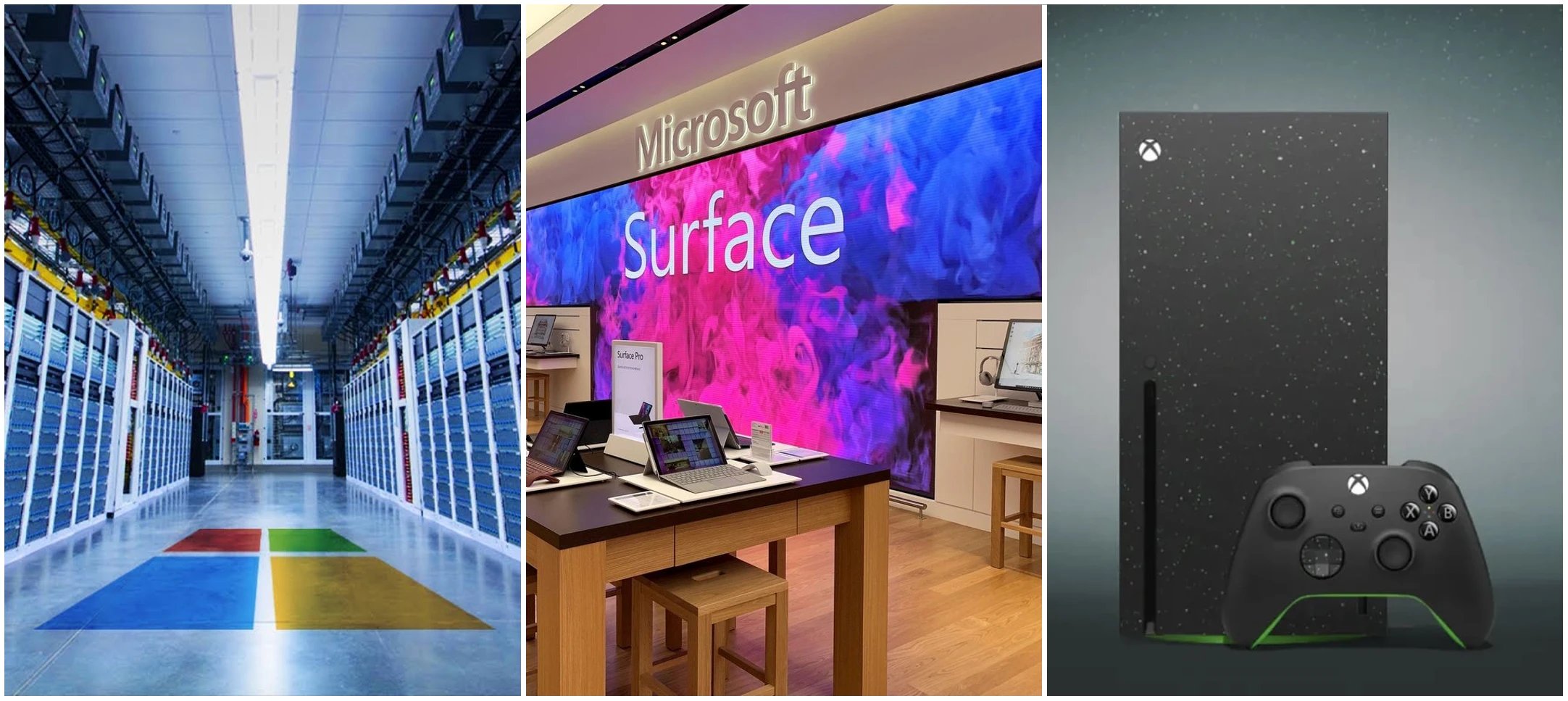
According to www.microsoft.com, Microsoft has deployed more than 25 AI agents and applications across its global supply chains — including those supporting Azure, Windows and Devices, Surface hardware, Xbox consoles, and gaming hardware — as part of its transition to an autonomous, agentic supply chain.
From reactive operations to agentic autonomy
Microsoft describes its internal supply chain as “customer zero” — a real-world testbed for next-generation logistics innovation. Once dominated by Excel-based reporting, limited visibility, and siloed data, the company began transforming in 2018 by consolidating more than 30 legacy systems into a unified supply chain data lake on Azure. This enabled predictive analytics and laid the foundation for cognitive capabilities. In 2022, Microsoft began experimenting with generative AI, then built an AI platform to operationalize agents at scale. Today, it is accelerating toward fully autonomous agents, with a target of over 100 agents by the end of 2026 and agentic support for every employee.
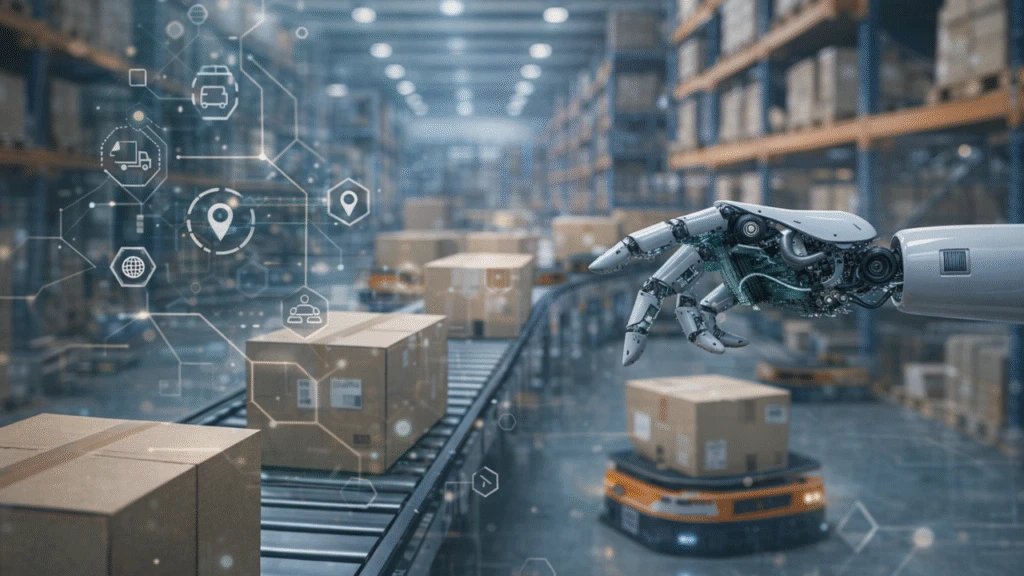
Three production-ready AI agents in action
- The Demand Planning Agent drives AI-based demand–simulations for non-IT rack components — improving forecast accuracy and reducing manual reconciliation.
- The Multi-Agent DC Spare-Part Space Solver uses computer-vision-driven monitoring and multi-agent reasoning to forecast spare-part storage needs and proactively mitigate space or stockout risks.
- The CargoPilot Agent continuously analyzes transport modes, routes, cost structures, carbon impact, and cycle times — delivering optimized shipment recommendations that balance speed, sustainability, and efficiency.
Enabling infrastructure: Simulations, agents, and physical AI
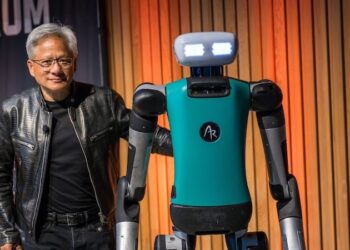
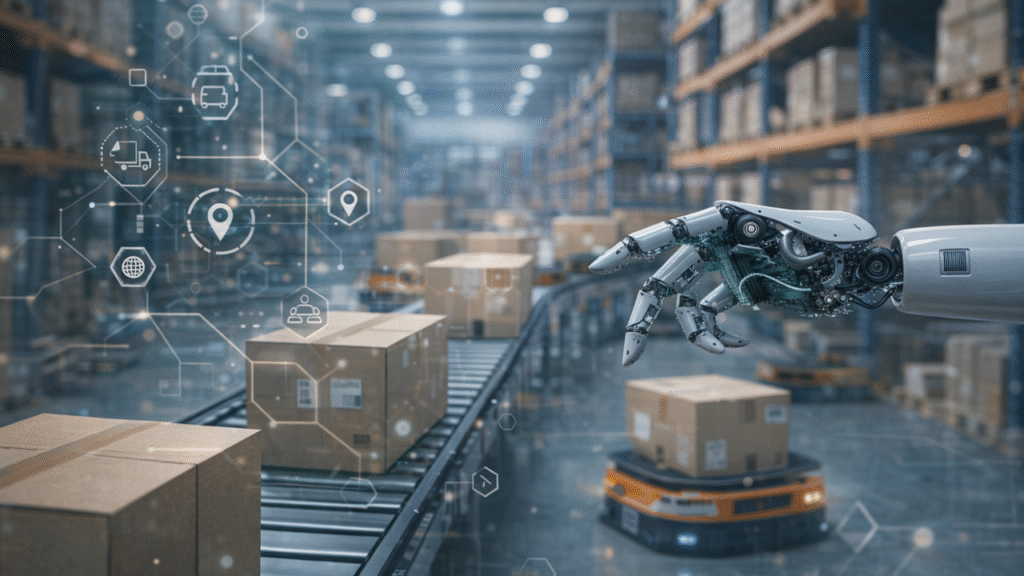
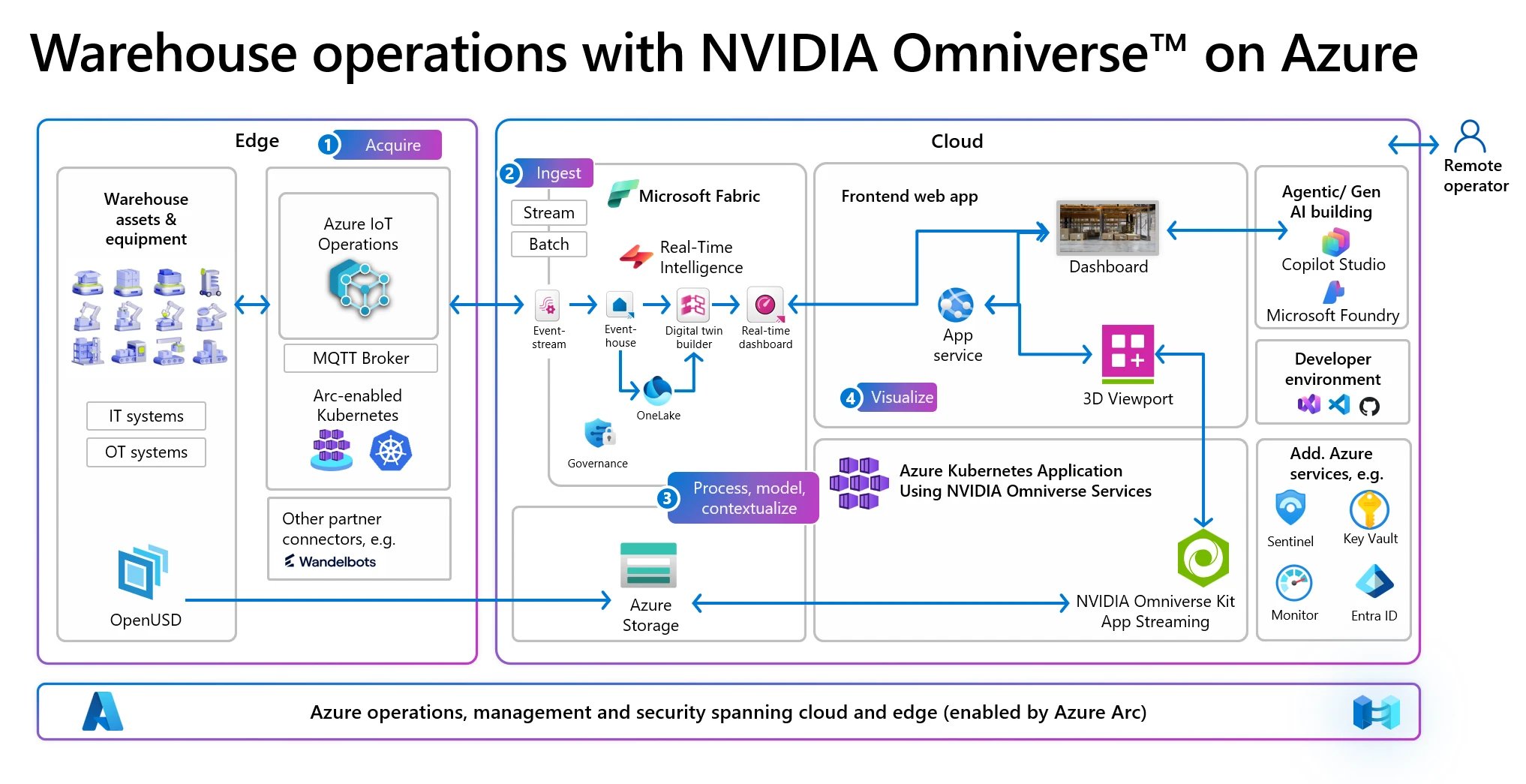
The evolution reflects broader technological shifts: the rise of the agentic era of AI, where agents can reason, plan, and act across complex workflows; the emergence of end-to-end agent hosting (e.g., Microsoft Foundry) and open protocols like the Model Context Protocol (MCP); and advances in 3D simulations, robotics, and embodied intelligence. Models such as NVIDIA Cosmos and the OSMO edge-to-cloud compute framework on Azure are enabling machines and humanoid robots to operate more effectively in physical environments — expanding automation across warehouses, distribution centers, and transportation networks.
Practitioner implications for global supply chain professionals
For supply chain practitioners, Microsoft’s journey signals a concrete shift from theoretical AI pilots to production-grade, cross-functional agent deployment. Unlike earlier generative AI use cases focused on document summarization or chat interfaces, these agents integrate directly with enterprise systems, execute decisions (e.g., rerouting shipments, reallocating warehouse space), and operate with measurable outcomes — including hundreds of hours saved per month. The integration of physical AI — via computer vision, edge-to-cloud frameworks, and robotic coordination — also underscores that digital twin and simulation investments must now interoperate with real-world automation stacks. Industry-wide, similar momentum is visible: Maersk launched its AI-powered TradeLens successor, Tive, in 2023 with multimodal tracking and predictive ETAs; DHL deployed over 200 AI use cases by 2024, including warehouse robot orchestration and carbon-aware routing; and Amazon continues scaling its Kiva-derived mobile robot fleets alongside reinforcement learning for dynamic slotting. These developments confirm that agentic supply chain systems are no longer conceptual — they are being stress-tested at enterprise scale, with interoperability, data fidelity, and human-in-the-loop governance emerging as critical success factors.
Source: www.microsoft.com
Compiled from international media by the SCI.AI editorial team.