Explore

  • Trending
  • Latest
  • Tools
  • Browse
  • AI Assistant
  • Subscription Feed

Logistics

  • Ocean
  • Air Cargo
  • Road & Rail
  • Warehousing
  • Last Mile

Regions

  • Southeast Asia
  • South Asia
  • Central Asia
  • Japan & Korea
  • Middle East
  • Europe
  • Russia
  • Africa
  • North America
  • Latin America
  • Australia
SCI.AI
  • Supply Chain
    • Strategy & Planning
    • Logistics & Transport
    • Manufacturing
    • Inventory & Fulfillment
  • Procurement
    • Strategic Sourcing
    • Supplier Management
    • Supply Chain Finance
  • Technology
    • AI & Automation
    • Robotics
    • Digital Platforms
  • Risk & Resilience
  • Sustainability
  • Research
  • Expert Columns
  • English
    • Chinese
    • English
No Result
View All Result
  • Login
  • Register
SCI.AI
No Result
View All Result
Home Supply Chain Manufacturing

5 Ways Robotics Are Reshaping Crane Trucks in Supply Chains

2026/03/28
in Manufacturing, Supply Chain
0 0
5 Ways Robotics Are Reshaping Crane Trucks in Supply Chains

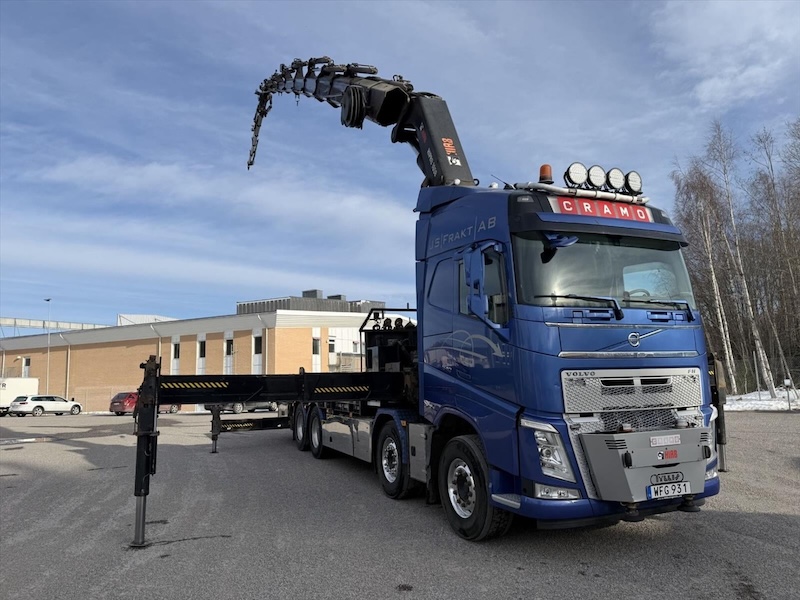
According to roboticsandautomationnews.com, heavy equipment manufacturers are integrating robotics and automation into truck-mounted cranes—not to eliminate human operators, but to enhance safety, precision, and fleet-wide decision-making in dynamic operational environments.

Assisted Operation, Not Full Autonomy

Automation in crane trucks is defined by human-in-the-loop systems rather than full autonomy. Modern truck-mounted loader cranes deploy integrated control systems that monitor boom location, load conditions, machine geometry, and stability in real time. This shifts the operator’s role from manual controller to supervisor of the lift—critical in non-ideal settings such as uneven terrain, urban delivery zones, or confined industrial sites. As Sam Francis notes in the original article:

“Automation in crane trucks is not about full autonomy… the trend is clearly toward assisted operation.” — Sam Francis, roboticsandautomationnews.com
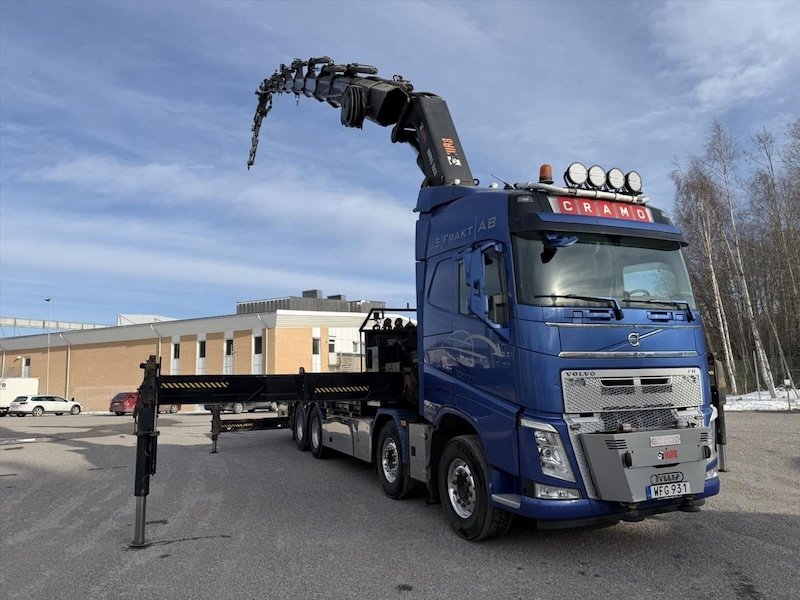
Supply chain industry image

Sensor Fusion and Stability Control as Core Robotics

The most critical automation layer lies in safety logic driven by sensor fusion. Because crane capacity varies dynamically with boom length, angle, reach, and support conditions, stability control systems, load limiting devices, and motion limiters now actively constrain permissible movements. The software—not the operator—determines safe motion parameters, while the operator decides what to lift. This real-time, physics-based boundary enforcement exemplifies robotic behavior embedded in industrial machinery.

Remote Control Redefines Operator Ergonomics and Safety

Remote-controlled and digitally enabled interfaces are transforming on-site execution. Operators gain unobstructed line-of-sight to load paths, reducing guesswork near hazards or obstructions. Crucially, this shift elevates software design to a safety-critical function: interface clarity, feedback quality, response latency, and alarm logic directly impact operational safety. Unlike legacy fixed-station controls, remote systems demand robust digital architecture—making cybersecurity and system reliability essential supply chain considerations.

Digital Fleet Intelligence Changes Asset Valuation

Telematics and operational data collection are no longer add-ons—they’re integral to crane truck functionality. Fleet managers now track usage patterns, maintenance triggers, service due dates, and typical load profiles. This creates a closed-loop feedback mechanism linking field performance to procurement decisions. As a result, crane truck value is increasingly tied to electronic system integrity, diagnostic transparency, and compliance with current safety standards—not just mechanical age or visible wear. A smaller crane with high uptime and consistent control behavior may outperform a larger unit with poor deployment characteristics.

Procurement and Maintenance Implications for Supply Chain Professionals

For global supply chain professionals managing heavy equipment fleets—including those sourcing via platforms like Truck1—the evaluation criteria have expanded significantly. Buyers must now weigh lifting class, chassis type, control configuration, and service condition alongside sensor-fusion capability, stability control certification, remote interface compatibility, and telematics readiness. European loader-crane regulations already mandate minimum design, calculation, testing, and inspection requirements—and recent updates emphasize higher safety levels in control circuits. In practice, this means pre-purchase due diligence must include verification of software update history, cybersecurity patch status, and interoperability with existing fleet management platforms. Maintenance protocols must also evolve: technicians require dual competency in hydraulics and embedded electronics, while spare parts strategies must account for obsolescence of control modules and sensor suites.

Source: Robotics & Automation News

Compiled from international media by the SCI.AI editorial team.
More on This Topic

  • CSX completes $495M Baltimore tunnel expansion (Jun 28, 2026)
  • Freight manager sentenced 18 months for Russia export violations (Jun 28, 2026)
  • COSCO, KTZ Express expand Eurasian logistics corridors (Jun 28, 2026)
  • Armstrong Transport nears $2B revenue after Quad-C investment (Jun 27, 2026)
  • Container carriers shift orders to sub-7,500 TEU vessels since June 2025 (Jun 27, 2026)
ShareTweet

Related Posts

CSX completes $495M Baltimore tunnel expansion
Inventory & Fulfillment

CSX completes $495M Baltimore tunnel expansion

June 28, 2026
1
Freight manager sentenced 18 months for Russia export violations
Logistics & Transport

Freight manager sentenced 18 months for Russia export violations

June 28, 2026
2
COSCO, KTZ Express expand Eurasian logistics corridors
Logistics & Transport

COSCO, KTZ Express expand Eurasian logistics corridors

June 28, 2026
3
Armstrong Transport nears $2B revenue after Quad-C investment
AI & Automation

Armstrong Transport nears $2B revenue after Quad-C investment

June 27, 2026
5
Container carriers shift orders to sub-7,500 TEU vessels since June 2025
Strategy & Planning

Container carriers shift orders to sub-7,500 TEU vessels since June 2025

June 27, 2026
5
Ocean carriers boost Asia-US capacity 12.1% amid $5,750 freight rates
Manufacturing

Ocean carriers boost Asia-US capacity 12.1% amid $5,750 freight rates

June 27, 2026
5

Leave a Reply Cancel reply

Your email address will not be published. Required fields are marked *

Recommended

TMS Security Blueprint: 5 Critical Defenses for Supply Chain Resilience

TMS Security Blueprint: 5 Critical Defenses for Supply Chain Resilience

14 Views
March 26, 2026
SaaSpocalypse Hits SaaS Giants: $1T Market Loss in February 2026

SaaSpocalypse Hits SaaS Giants: $1T Market Loss in February 2026

23 Views
April 16, 2026
Linde Launches myLinde Fleet Platform & E18-E20 Forklift at MODEX 2026

Linde Launches myLinde Fleet Platform & E18-E20 Forklift at MODEX 2026

25 Views
April 23, 2026
Ocean freight rates surge: U.S. West Coast up 19% to $5,700/FEU

Ocean freight rates surge: U.S. West Coast up 19% to $5,700/FEU

10 Views
June 26, 2026
Show More

SCI.AI

Global Supply Chain Intelligence. Delivering real-time news, analysis, and insights for supply chain professionals worldwide.

Categories

  • Supply Chain Management
  • Procurement
  • Technology


  • Risk & Resilience
  • Sustainability
  • Research

© 2026 SCI.AI. All rights reserved.

Powered by SCI.AI Intelligence Platform

Welcome Back!

Sign In with Facebook
Sign In with Google
Sign In with Linked In
OR

Login to your account below

Forgotten Password? Sign Up

Create New Account!

Sign Up with Facebook
Sign Up with Google
Sign Up with Linked In
OR

Fill the forms below to register

All fields are required. Log In

Retrieve your password

Please enter your username or email address to reset your password.

Log In

Scan to share via WeChat

Open WeChat and scan the QR code to share

QR Code

Add New Playlist

No Result
View All Result
  • Supply Chain
    • Strategy & Planning
    • Logistics & Transport
    • Manufacturing
    • Inventory & Fulfillment
  • Procurement
    • Strategic Sourcing
    • Supplier Management
    • Supply Chain Finance
  • Technology
    • AI & Automation
    • Robotics
    • Digital Platforms
  • Risk & Resilience
  • Sustainability
  • Research
  • Expert Columns
  • English
    • Chinese
    • English
  • Login
  • Sign Up

© 2026 SCI.AI