The U.S. has committed over $1 billion to Latin American critical minerals since January 2025—not as commodity investment, but as national security infrastructure. This analysis examines how lithium, copper, and rare earths are being repositioned within geopolitical strategy, why Latin America's geological endowment remains underutilized despite holding 60% of global lithium and Brazil's #2 rare earth reserves, how copper's irreplaceability anchors the investment surge, why China's 90%+ processing dominance remains the critical bottleneck, how Argentina's RIGI and Brazil's Sovereignty Index redefine regulatory frameworks, and how Andean nations are mastering the tightrope between Washington and Beijing to assert sovereign agency in global supply chains.
Strategic Imperative: From Commodity Markets to National Security Infrastructure
The U.S. government’s commitment of over $1 billion in critical minerals financing for Latin America since January 2025 marks a decisive departure from decades of market-driven resource diplomacy. This is not merely an economic stimulus package—it is the operationalization of a new national security doctrine that treats lithium, copper, and rare earth elements (REEs) as foundational infrastructure, akin to semiconductor fabs or secure 5G networks. Historically, U.S. mineral policy emphasized price stability, environmental compliance, and private-sector primacy—leaving supply chain resilience as an afterthought. The abrupt pivot reflects hard lessons absorbed during the pandemic-era semiconductor shortages, the Russia-Ukraine war’s disruption of fertilizer and palladium flows, and China’s tightening control over downstream processing capacity. Crucially, this shift coincides with the formal institutionalization of the U.S. National Defense Stockpile’s expanded mandate under Executive Order 14017, which now explicitly prioritizes ‘strategic acquisition’ over ‘cost-optimized procurement.’ As one senior official at the U.S. International Development Finance Corporation (DFC) explained in a closed-door briefing last March, ‘We no longer evaluate a lithium brine project on its IRR alone—we assess its geopolitical velocity: how quickly it can deliver material into a U.S.-certified cathode plant, bypassing third-country tolling arrangements.’ That metric has redefined risk modeling across multilateral lenders, pushing institutions like the Inter-American Development Bank (IDB) to co-structure debt facilities with explicit ‘supply chain sovereignty covenants’—clauses requiring borrowers to pre-commit 60–80% of output to U.S.-aligned battery manufacturers or defense contractors.
This recalibration extends beyond finance into regulatory architecture. The Inflation Reduction Act’s (IRA) 45X tax credit for domestic battery component manufacturing now requires traceability back to ‘mined or processed materials sourced from countries with which the United States has a free trade agreement or a critical minerals agreement.’ Since January 2025, the U.S. State Department has signed such agreements with Argentina, Brazil, and Chile—each containing binding provisions on data sharing, export transparency, and joint geological surveying. These are not symbolic accords; they create legally enforceable pathways for U.S. agencies to audit mine-site production logs, smelter throughput reports, and even logistics manifests. Such granularity would have been unthinkable in 2015, when the U.S. Geological Survey published its first ‘critical minerals list’ without corresponding diplomatic or financial scaffolding. Today, the list functions as a strategic targeting matrix—prioritizing investments where geological endowment intersects with political alignment and infrastructure readiness. That intersection is most acute in Latin America, where vast reserves sit atop aging rail corridors, fragmented permitting regimes, and historically undercapitalized state-owned geoscience agencies—creating both vulnerability and opportunity for coordinated intervention.
Geological Leverage: Latin America’s Unmatched Resource Endowment and Structural Gaps
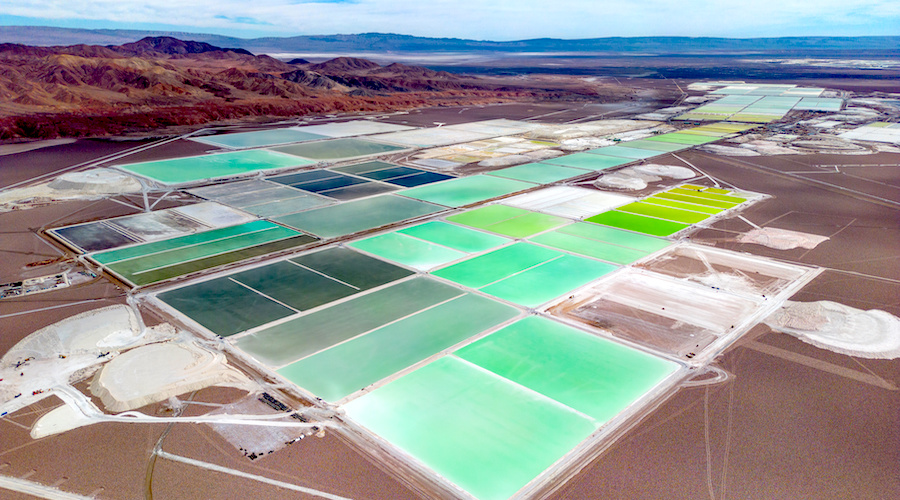
Latin America’s centrality in the global critical minerals landscape rests on extraordinary geological concentration—not just volume, but strategic composition. The region holds roughly 60% of the world’s lithium reserves, concentrated primarily in the Lithium Triangle (Argentina, Bolivia, Chile), where salar brines offer lower extraction costs and higher purity than most hard-rock alternatives. Yet this advantage masks profound asymmetries: while Chile dominates current lithium production, Argentina hosts Latin America’s largest number of lithium projects in development, many situated in Salta and Jujuy provinces where infrastructure deficits remain severe. Brazil, meanwhile, possesses the world’s second-largest rare earth reserves after China, estimated at 21 million metric tons of rare earth oxides (REO), yet contributes only 0.02% of global rare earth production. This staggering underutilization stems not from geological scarcity but from systemic bottlenecks: lack of integrated separation facilities, absence of standardized environmental licensing for REE tailings management, and insufficient skilled labor in hydrometallurgical engineering. Crucially, Brazil’s Araxá deposit contains significant quantities of niobium and phosphate—a co-product synergy that could accelerate commercial viability if processing plants were designed for multi-metal recovery rather than single-element optimization. Similarly, Peru’s emerging copper-gold porphyry systems in the Andes contain measurable concentrations of tellurium and indium, critical for next-generation photovoltaics and quantum computing chips—resources currently discarded as waste due to outdated metallurgical protocols.
The implications extend far beyond raw tonnage. Latin America’s mineral portfolio exhibits unique ‘technology-readiness alignment’: its lithium brines produce high-purity carbonate ideal for LFP (lithium iron phosphate) cathodes favored by U.S. grid storage and defense applications; its copper deposits in northern Chile feature low arsenic content essential for ultra-high-voltage transmission lines; and Brazil’s lateritic REE ores contain elevated neodymium-praseodymium (NdPr) ratios—precisely the magnet-grade composition required for permanent-magnet motors in electric vehicles and jet engines. This isn’t accidental convergence—it reflects deep-time geological processes shaped by the Andean orogeny and Amazonian craton stability. However, translating geological advantage into strategic leverage requires overcoming what industry analysts term the ‘three-layer deficit’: geological knowledge (incomplete airborne geophysics coverage), metallurgical capability (few pilot-scale solvent extraction circuits for REEs outside China), and logistical integration (only 37% of Latin American mining regions have rail access to deep-water ports capable of handling 40-foot containerized battery-grade concentrates). U.S. investment is deliberately targeting these layers: the $320 million DFC loan to Argentina’s Rincon Lithium project includes funding for a mobile XRF lab network to map brine chemistry in real time, while the $185 million IDB facility for Brazil’s Pitinga mine finances construction of South America’s first commercial-scale REE separation plant using non-Chinese solvent systems developed at Idaho National Laboratory.
Source: northernminer.com
This article was AI-assisted and reviewed by our editorial team.