Skip to content

Benchmark Practices

Analysis

Hapag-Lloyd raises 2026 EBIT to $1.25B–$1.75B, Zim bid faces Israeli resistance

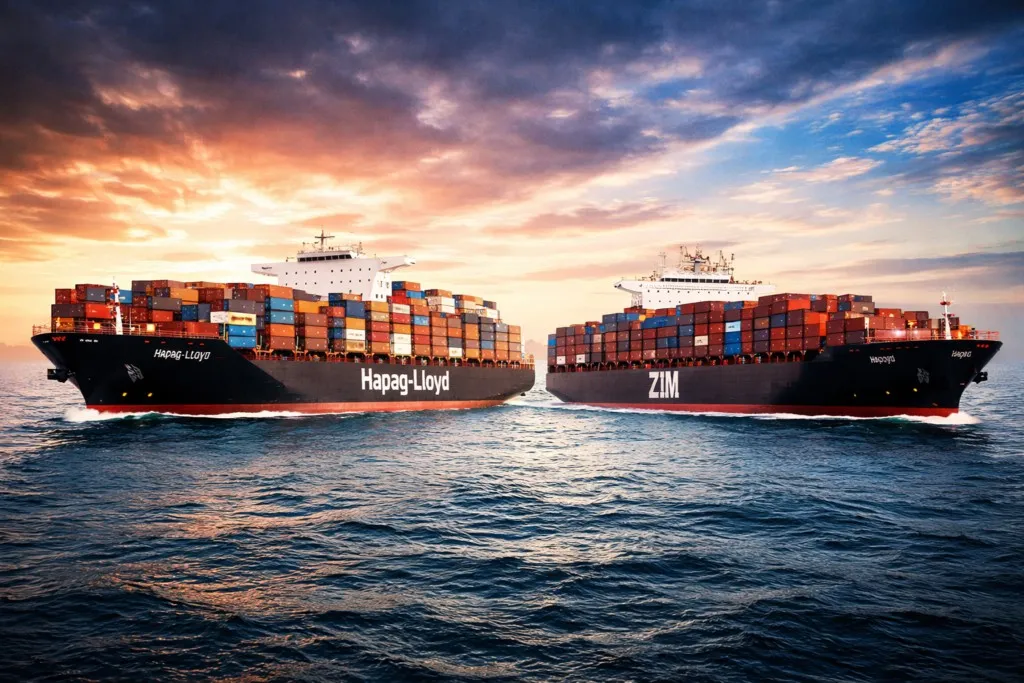
Hapag-Lloyd has upgraded its 2026 EBIT forecast to $1.25bn–$1.75bn and EBITDA to $3.9bn–$4.4bn amid strong freight demand. Its revised $1.25bn–$1.75bn acquisition proposal for Zim faces resistance from Israeli politicians, the Finance Ministry, and labor unions. Eight Israeli government bodies will submit opinions this month before a cabinet decision. The plan includes lowering the foreign shareholder approval threshold from 24% to 10% and transferring the golden share to Zim Israel, owned by FIMI. CEO Rolf Habben Jansen stressed enhanced national security and maritime independence.

Original source: Source information pending

Hapag-Lloyd raises 2026 EBIT to $1.25B–$1.75B, Zim bid faces Israeli resistance

According to www.seatrade-maritime.com, Hapag-Lloyd has raised its 2026 group EBIT forecast to $1.25bn–$1.75bn from a prior range of $0.1bn–$1.1bn, citing strong market demand and the “ongoing positive development of freight rates.” The company also increased its EBITDA outlook to $3.9bn–$4.4bn, up from $2.7bn–$3.7bn.

Revised Zim acquisition proposal under review

Hapag-Lloyd’s revised bid for Israeli container line Zim—delivered in person by CEO Rolf Habben Jansen during a visit to Israel last week—is now facing formal objections from multiple Israeli stakeholders, including Israeli politicians, the Finance Ministry, and the union representing Zim’s workers. Eight Israeli government bodies are scheduled to submit their evaluations of the deal this month ahead of a final cabinet decision. Israel holds a golden share in Zim, granting it specific authority to safeguard national security and strategic shipping interests.

The revised proposal would transfer the golden share to Zim Israel, a carrier owned and controlled by Israeli private equity firm FIMI. Under the new terms, the threshold for foreign shareholder approval would be lowered from 24% to 10%, tightening control over ownership stakes. This adjustment directly addresses concerns about foreign influence, particularly given the large holdings in Hapag-Lloyd by the sovereign wealth funds of Qatar and Saudi Arabia.

Habben Jansen emphasized that the agreement strengthens Israel’s maritime autonomy. He stated:

“By adding a route to Asia, investing in Israeli maritime personnel, keeping Israel’s shipping expertise in the country, and providing ZIM Israel with a new modern fleet, we are enhancing Israel’s shipping capabilities very significantly.” — Rolf Habben Jansen, CEO of Hapag-Lloyd

National security safeguards and cargo protection

The proposed transaction includes explicit provisions to prevent foreign interference in the transportation of sensitive Israeli cargo—a key point distinguishing it from the current arrangement. According to Habben Jansen, this represents “a significant improvement over the current arrangement.” He further positioned the deal as reinforcing bilateral ties, saying:

“We believe this transaction would mark another important milestone in the close relationship between Germany and Israel.” — Rolf Habben Jansen, CEO of Hapag-Lloyd

The timeline for resolution remains tied to the Israeli cabinet’s upcoming decision, following submissions due this month from eight government entities. The original article was published on September 29, 2026, by Gary Howard, Middle East correspondent for Seatrade Maritime News.

Source: Seatrade Maritime

Compiled from international media by the SCI.AI editorial team.
Ask SCI.AI Finished reading? Continue with SCI.AI. Explore the related policy, route, company and historical context. Continue asking
JCPenney pays $99,000 to settle EEOC disability lawsuit
Benchmark Practices

JCPenney pays $99,000 to settle EEOC disability lawsuit

JCPenney has agreed to pay $99,000 to settle a disability discrimination lawsuit brought by the U.S. Equal Employment Opportunity Commission. The settlement is part of a broader pattern of EEOC enforcement activity targeting Atlanta-area employers. Meanwhile, metro Atlanta continues to see rapid growth among local firms: CM|MC was named among Atlanta’s largest engineering firms in 2026, and SmartMED earned a spot on the Atlanta Business Chronicle’s 2026 Pacesetters list for fastest-growing private companies. SmartMED has expanded from urgent care to offer primary care, lab services, and wellness programs since opening.

Hapag-Lloyd targets $300M–$500M annual ZIM synergies
Benchmark Practices

Hapag-Lloyd targets $300M–$500M annual ZIM synergies

Hapag-Lloyd expects its $4.2 billion acquisition of ZIM to deliver $300 million–$500 million in annual synergies, according to CEO Rolf Habben Jansen. The deal, finalized in February and approved by shareholders, now faces intensified regulatory scrutiny — especially from Israeli authorities. Direct dialogue with regulators is underway, and Hapag-Lloyd is refining its proposal to address maritime security concerns under Israel’s Golden Share framework. The merged company would operate over 400 vessels, with capacity above 3 million TEU and annual transport volumes exceeding 18 million TEU.

Maersk stock surges 60% on freight rate surge
Benchmark Practices

Maersk stock surges 60% on freight rate surge

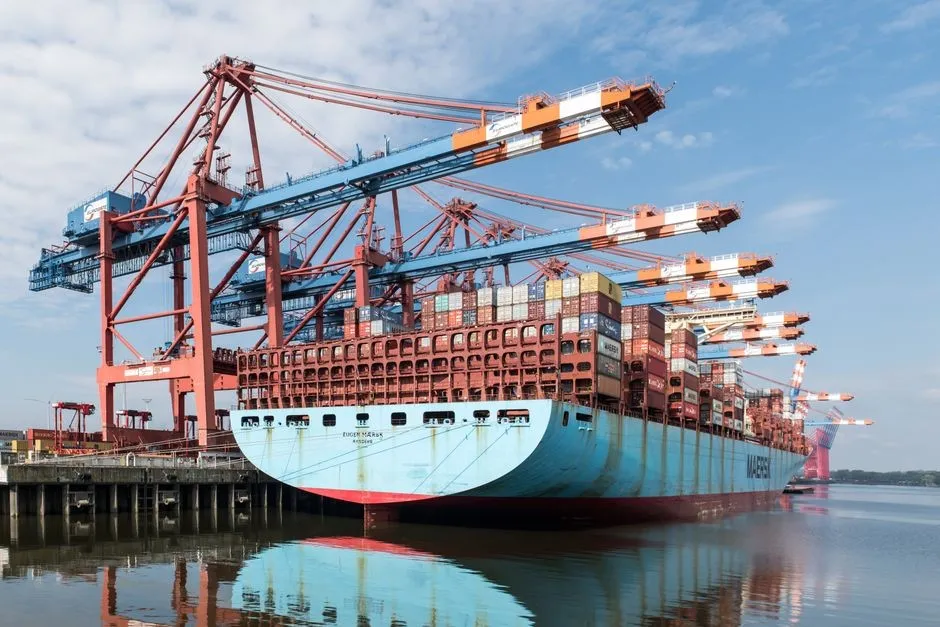
A.P. Moller-Maersk A/S shares have surged 60% in 2026, driven by elevated freight rates linked to Red Sea and Strait of Hormuz disruptions. The company upgraded guidance twice over the summer, though only one of 26 Bloomberg-tracked analysts maintains a buy rating. JPMorgan’s Alexia Dogani reiterated a 10,000 Danish kroner ($1,543) target, citing unsustainable earnings and freight rates. Short interest dropped from 20% to 10% in 2026. Maersk ranks No. 7 on Transport Topics’ Top 50, ahead of Cosco (No. 11) and Hapag-Lloyd (No. 17).

Welcome Back!

Login to your account below

Create New Account!

Fill the forms below to register

Retrieve your password

Please enter your username or email address to reset your password.

Scan to share via WeChat

Open WeChat and scan the QR code to share

QR Code

Add New Playlist