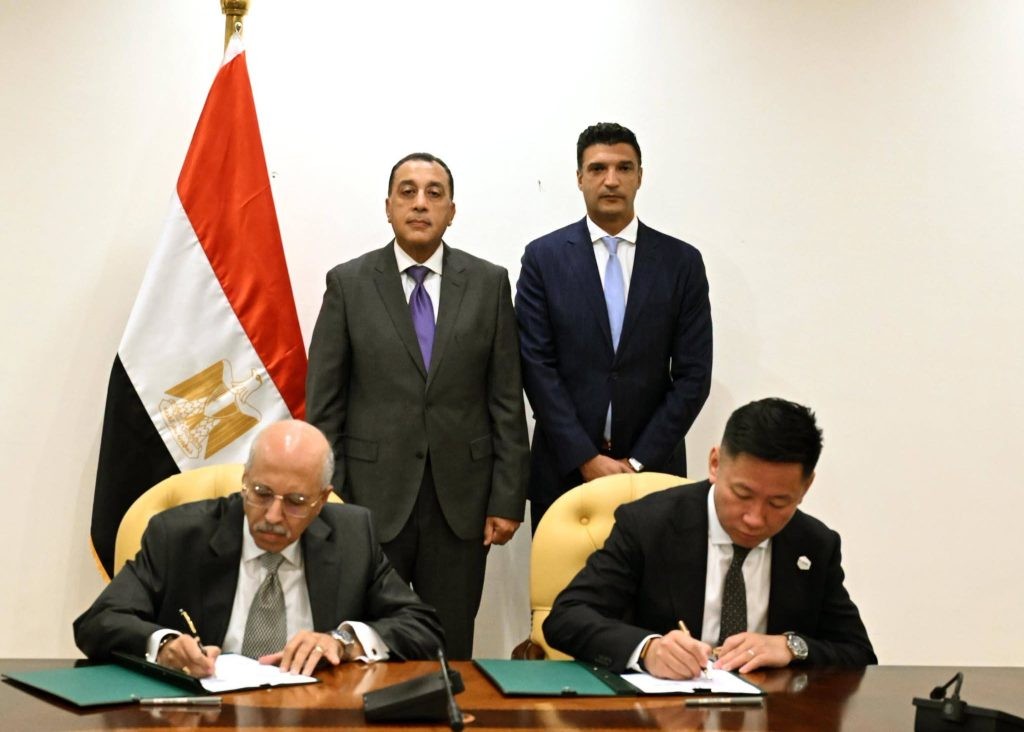
According to africasustainabilitymatters.com, Egyptian battery maker BME and China’s Contemporary Amperex Technology Co. Limited (CATL) signed an agreement on September 13 to establish a battery systems plant in Cairo with an initial investment of more than 2 billion Egyptian pounds, or approximately $39 million.
Production Phases and Technical Scope
The facility will begin operations with an annual production capacity of 1 gigawatt-hour (GWh) and target 40% local content in its first phase. A second phase aims to expand output to 5 GWh annually, broadening scope from batteries for heavy commercial vehicles to passenger-car batteries and energy-storage systems supporting solar and wind projects.
The expansion aligns with Egypt’s updated energy strategy, which targets a 45% share of renewable energy in the national mix by 2028. In March 2026, the government announced standalone battery-energy-storage projects totaling 5,620 MW — creating a direct domestic market for the plant’s later-stage output.
CATL’s involvement includes technology transfer, production equipment, and technical assistance — critical given the specialized engineering, quality-control systems, and skilled labor required for battery manufacturing. SNE Research data shows CATL shipped 464.7 GWh of electric-vehicle batteries globally in 2025, holding a 39.2% market share, and ranked first in the global lithium-ion energy-storage system market with 167 GWh shipped and a 30% share — also in 2025.
Egypt-China Industrial Strategy Alignment
The agreement followed Chinese President Xi Jinping’s state visit to Egypt on September 1 and 2, 2026, marking 70 years of diplomatic relations. The joint communiqué emphasized deeper economic and industrial cooperation, while Egyptian President Abdel Fattah El-Sisi highlighted industrial localisation and technology transfer as bilateral priorities.
Industry Minister Khaled Hashem has identified automotive manufacturing and electrical, engineering and electronics industries as national priority sectors. The BME-CATL project supports Egypt’s broader industrial strategy to deepen local production and expand non-oil exports — moving beyond import dependency toward value capture in clean-energy supply chains.
This shift responds to regional realities: BloombergNEF’s 2026 South Africa Transition Factbook found China accounted for 98% of South Africa’s solar imports and 95% of its battery imports in 2025. Egypt’s 40% local-content target is thus a concrete step toward building domestic engineering, assembly, component, maintenance, and logistics capabilities — not just final assembly.
Source: africasustainabilitymatters.com
Compiled from international media by the SCI.AI editorial team.