Skip to content

Inventory & Fulfillment · Warehousing

Analysis

Amazon sued over pregnancy accommodation denials, 99.9% approval claim disputed

Four former Amazon warehouse workers filed a nationwide class-action lawsuit in Brooklyn, N.Y., alleging systemic denial of pregnancy accommodations in violation of the 2022 Pregnant Workers Fairness Act. Plaintiff Jennifer Hatch, employed in Lancaster, N.Y., was denied a 30-pound lifting restriction and 15-minute sitting breaks in January 2025; she was fired after seeking hospital care for pregnancy-related pain. Amazon claims it approved more than 99.9% of pregnancy accommodations over the past year. The law took effect in June 2023 but faces legal challenges, including a Texas lawsuit questioning its December 2022 passage. Advocacy group A Better Balance, which spearheaded the law’s decade-long campaign, calls the denials illegal and discriminatory.

Original source: Source information pending

Amazon sued over pregnancy accommodation denials, 99.9% approval claim disputed

According to www.seattletimes.com, four former Amazon warehouse employees filed a proposed nationwide class action in Brooklyn, N.Y., federal court on Tuesday, accusing the company of systemic discrimination against pregnant workers in violation of the 2022 Pregnant Workers Fairness Act.

Allegations of Denial and Retaliation

The lawsuit claims Amazon denied basic accommodations—including stools, lighter workloads, and bathroom breaks—to pregnant employees, despite federal law requiring “reasonable accommodation” for pregnancy-related medical conditions. Under the law, which took effect in June 2023, employers with 15 or more workers must grant such accommodations unless they can demonstrate “undue hardship.” One plaintiff, Jennifer Hatch, worked in Lancaster, N.Y., processing customer returns and was advised by her doctor in January 2025 to sit regularly due to a high-risk pregnancy. Her requests for a 30-pound lifting restriction, a 15-minute sitting break every four hours, and an eight-hour maximum shift were delayed and ultimately denied.

According to the complaint, a manager refused to let Hatch sit in an available chair in early March 2025, even as she struggled to breathe. When she clocked out early multiple times to seek hospital care for pregnancy-related abdominal pain worsened by prolonged standing, Amazon docked her unpaid time off balance and later terminated her for violating attendance policy.

Inimai Chettiar, president of nonprofit A Better Balance, which represents the plaintiffs alongside law firm Emery Celli Brinckerhoff Abady Ward & Maazel, stated:

“Denying a pregnant worker a stool, a lighter workload or a bathroom break is a violation of federal law — it’s that simple.” — Inimai Chettiar, president of A Better Balance

Amazon’s Defense and Compliance Claims

Amazon spokesperson Kelly Nantel denied the allegations, calling the lawsuit’s account “inaccurate.” She asserted that Amazon has approved more than 99.9% of pregnancy related accommodations over the past year and emphasized the company’s commitment to supporting “tens of thousands of employees with pregnancy accommodations each year.” Nantel added that “the accounts shared by A Better Balance contain inaccuracies and omit important details.”

The lawsuit references prior state investigations in New York and New Jersey, as well as findings from the Equal Employment Opportunity Commission (EEOC), to support its claim that Amazon’s “discriminatory and retaliatory policies” are well-documented. The EEOC has actively enforced the Pregnant Workers Fairness Act since its implementation, even amid legal challenges—including a federal judge’s decision last year to strike down the abortion-related provision of EEOC regulations and a separate lawsuit filed by the state of Texas challenging the law’s constitutionality based on procedural concerns tied to its passage in December 2022.

Chettiar underscored the broader impact in an emailed statement to the Associated Press:

“Lower wage, shift and hourly women workers are foundational to this country’s economy — yet they’re being treated as disposable. And practices that deny pregnant workers simple accommodations that pose no threat to productivity are not just unfair, they’re illegal.” — Inimai Chettiar, president of A Better Balance

Source: seattletimes.com

Compiled from international media by the SCI.AI editorial team.
Ask SCI.AI Finished reading? Continue with SCI.AI. Explore the related policy, route, company and historical context. Continue asking
Crescent Electric CEO to Retire in April 2027, Names New Supply Chain Chief
Inventory & Fulfillment

Crescent Electric CEO to Retire in April 2027, Names New Supply Chain Chief

Crescent Electric Supply Co. announced on Sept. 10 that CEO Penny Cotner will retire in April 2027—18 months after starting Oct. 1, 2025. Board Chair Mike Sullivan confirmed a national search for her successor. Concurrently, Kristee Mitchell was promoted to Chief Supply Chain Officer effective Aug. 31, expanding oversight across fulfillment, distribution centers, and transportation. The East Dubuque–based firm operates 140+ branches across 28 U.S. states and ranked No. 13 on MDM’s 2026 Electrical Top Distributors List.

Amazon plans $1B Holbrook warehouse amid resident opposition
Inventory & Fulfillment

Amazon plans $1B Holbrook warehouse amid resident opposition

Residents of Holbrook, New York, are mobilizing against Amazon’s planned $1 billion, 4.2-million-square-foot fulfillment center on 140 acres — set to be the company’s largest on Long Island and 21 times bigger than its current Syosset facility (200,000 sq ft). Amazon projects 1,000 jobs and submitted its first application to Islip Town in July, though revisions remain pending. Over 120 attendees opposed the plan at an August fire department meeting; 50–60 residents launched a formal coalition at Sachem Public Library. Concerns center on traffic, noise, and environmental loss — especially pines and wetlands. Amazon says it welcomes community input and has adapted past projects accordingly.

ZF CEO: China electric truck share at 30%, to hit 50%
Inventory & Fulfillment

ZF CEO: China electric truck share at 30%, to hit 50%

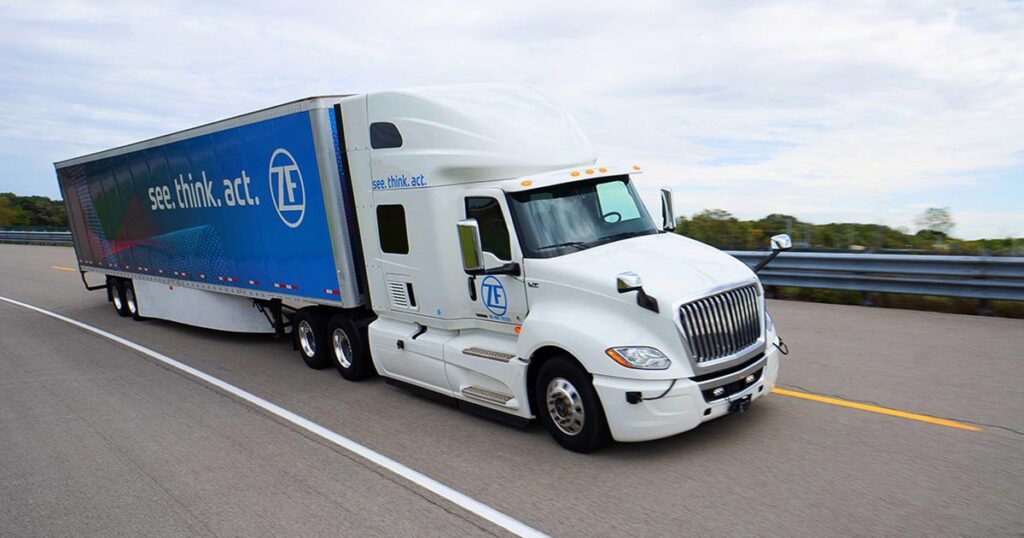
ZF CEO Mathias Miedreich declared China the 'center of gravity' for electric-truck technology on September 9, 2026, citing a current 30% market share poised to reach 50%. In contrast, Europe remains in the low single digits. ZF plans to leverage China’s rapid adoption while supporting hybrid tech in Europe. The firm took a $1.9 billion charge last year after losses on electric passenger-car drives and is cutting thousands of jobs. Key Chinese competitors include BYD, Geely, and Windrose Technology.

Welcome Back!

Login to your account below

Create New Account!

Fill the forms below to register

Retrieve your password

Please enter your username or email address to reset your password.

Scan to share via WeChat

Open WeChat and scan the QR code to share

QR Code

Add New Playlist