According to congthuong.vn, the Vietnam Ministry of Industry and Trade’s Import-Export Department held a working session with Hai Phong City’s Department of Industry and Trade on July 10, 2026, to implement the national Logistics Services Development Strategy for 2025–2035, with a vision to 2050.
Strategic Alignment and National Priority
The session centered on Prime Ministerial Decision No. 2229/QĐ-TTg dated October 9, 2025, which formally approved the national strategy. Trần Thanh Hải, Deputy Director of the Import-Export Department, led the delegation. He emphasized that Hai Phong is designated as one of six centrally governed cities positioned to become an international logistics services hub — a status first outlined in Politburo Resolution No. 45-NQ/TW issued on January 24, 2019.
Hai Phong’s expanded administrative scope following its merger with Hai Duong Province creates new spatial opportunities, requiring “decisive, breakthrough solutions” to elevate logistics into a core economic sector, according to Trần Thanh Hải. The goal is not only to serve local production and trade but also to support neighboring provinces across the Red River Delta region.
Economic Performance and Sectoral Growth
Phạm Tuấn Hải, Deputy Director of Hai Phong’s Department of Industry and Trade, reported that the city’s economy remained stable in the first half of 2026. Gross Regional Domestic Product (GRDP) rose 11.33% year-on-year — ranking third nationally behind Hà Tĩnh (12.79%) and Ninh Bình (11.44%).
Growth across economic sectors included: industry and construction (13.46%), services (10.24%), agriculture, forestry, and fisheries (2.23%), and product taxes less subsidies (8.69%). Market supply was abundant, with no localized shortages or price spikes observed.
Logistics Value Added and Structural Shifts
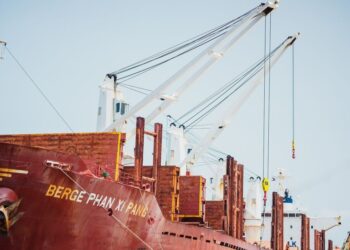
The port and logistics services sector has emerged as a key growth engine. Its value-added increased from approximately 54.095 trillion VND in 2021 to over 86.085 trillion VND in 2025 — a rise of roughly 1.5 times. This represents 33.5% to 35.4% of total service-sector value added in Hai Phong.
Average annual growth for the logistics sector between 2021 and 2025 stood at 10.2%. The expansion was driven primarily by infrastructure scaling — including port operations, warehousing, and auxiliary transport services. Warehousing and transport-support activities accounted for 60% of the sector’s total value in 2025, growing at an average rate of 12.2% annually during the same period.
Implementation Roadmap and Policy Proposals
Đỗ Thanh Tân, Deputy Head of the Investment Management and International Cooperation Division at Hai Phong’s Department of Industry and Trade, presented the city’s implementation plan for the national logistics strategy. His report covered current logistics and supply chain conditions, operational bottlenecks, and a detailed spatial development roadmap aligned with strategic objectives.
Representatives from the city’s Departments of Finance and Construction, as well as the Economic Zones Management Board, contributed additional input and recommendations. Hai Phong’s Department of Industry and Trade also proposed revising Decree No. 163/2017/NĐ-CP to better reflect contemporary logistics development needs and clarify institutional responsibilities across ministries and agencies.
The working session underscores Hai Phong’s institutional commitment to executing Vietnam’s long-term logistics agenda — leveraging its deep-water port assets, geographic position, and recent administrative consolidation to accelerate sectoral modernization.
Source: congthuong.vn
Compiled from international media by the SCI.AI editorial team.