DARTFORD, England June 4 (Reuters) – Amazon (AMZN.O), opens new tab on Thursday unveiled an upgraded AI-powered mobile robot for its warehouses that can respond to conversational prompts, as part of a €10 billion ($11.6 billion) investment in its European fulfilment network.
Investment Scale and Strategic Timing
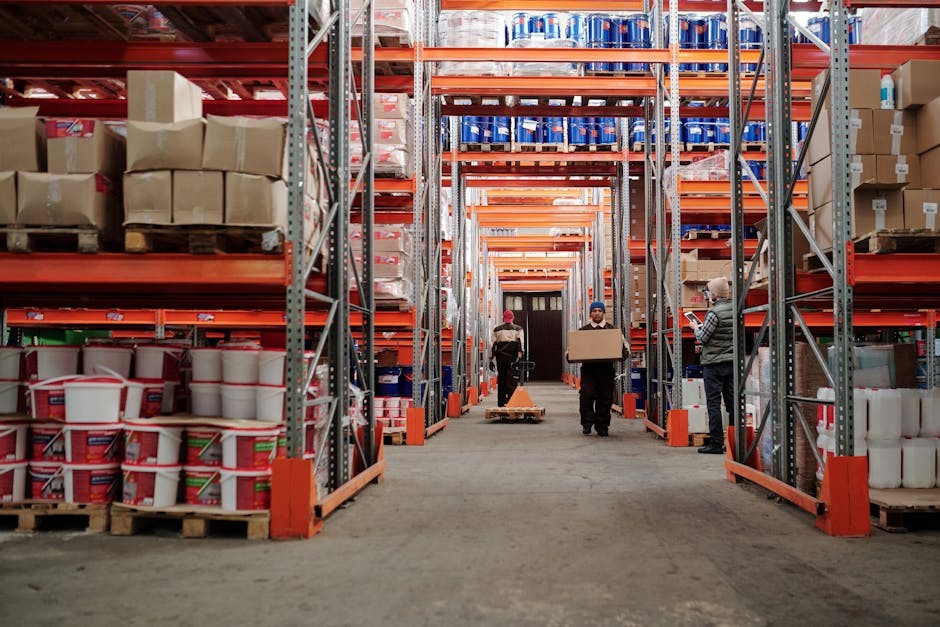
The announcement coincides with Amazon’s broader $12 billion commitment to expand infrastructure across Europe, including new fulfilment centres, sortation hubs, and delivery stations. According to the report, this represents one of the largest single-region capital deployments by the company in recent years. The upgraded robot — developed in-house and now entering pilot deployment at facilities in the UK, Germany, and France — is designed to interpret natural-language commands such as “Bring me pallets from aisle 7B” or “Re-route all priority orders to Zone C”, reducing reliance on pre-programmed workflows.
Technical Capabilities and Operational Integration
The new system integrates multimodal AI models trained on warehouse-specific speech patterns, inventory metadata, and real-time spatial mapping. Unlike earlier generations of Amazon’s robotics fleet — including the Kiva and Sparrow platforms — this iteration features on-device inference capability, enabling sub-second response times without cloud round-trips. The robot operates alongside human workers and other autonomous mobile robots (AMRs), communicating via Amazon’s proprietary FleetOS orchestration layer. As noted in the source, the technology is being rolled out first in high-volume e-commerce fulfilment centres handling fashion, electronics, and grocery verticals.
Broader Industry Context
This move follows accelerating adoption of AI-native AMRs across global logistics providers. AMR specialist Safelog, for instance, recently launched a voice-guided picking platform deployed with TGW Logistics’ LivePick solution. Similarly, Chinese firm Hai Robotics and US-based Opex Corporation have partnered with European integrators to deliver context-aware robotic systems for parcel sorting and goods-to-person workflows. Walmart investors on Thursday voted against a shareholder proposal asking it to report on how its use of AI is affecting the well-being of its workforce, according to preliminary voting results from the retailer’s annual shareholders’ meeting.
Regulatory and Labour Considerations
While Amazon emphasizes workforce augmentation over replacement, European labour unions have raised questions about training pathways and job redesign timelines. The company states that all affected employees will receive upskilling support through its TGW Logistics-aligned reskilling programme, co-developed with German vocational institutions. Concurrently, France fined Shein $26 million over consumer rule breaches; Shein plans to challenge the ruling. Pinterest deepened its Amazon partnership with a $4 billion cloud deal, underscoring cross-sector convergence between logistics automation and cloud infrastructure investment.
Source: Reuters
Compiled from international media by the SCI.AI editorial team.