Explore

  • Trending
  • Latest
  • Tools
  • Browse
  • Subscription Feed

Logistics

  • Ocean
  • Air Cargo
  • Road & Rail
  • Warehousing
  • Last Mile

Regions

  • Southeast Asia
  • South Asia
  • Central Asia
  • Japan & Korea
  • Middle East
  • Europe
  • Russia
  • Africa
  • North America
  • Latin America
  • Australia
SCI.AI
  • Supply Chain
    • Strategy & Planning
    • Logistics & Transport
    • Manufacturing
    • Inventory & Fulfillment
  • Procurement
    • Strategic Sourcing
    • Supplier Management
    • Supply Chain Finance
  • Technology
    • AI & Automation
    • Robotics
    • Digital Platforms
  • Risk & Resilience
  • Sustainability
  • Research
  • Expert Columns
  • English
    • Chinese
    • English
No Result
View All Result
  • Login
  • Register
SCI.AI
No Result
View All Result
Home Supply Chain Logistics & Transport

India’s DFCs handle 13% of rail freight, cut Mumbai-Delhi transit to <48h

2026/05/26
in Logistics & Transport, Supply Chain
0 0
India’s DFCs handle 13% of rail freight, cut Mumbai-Delhi transit to <48h

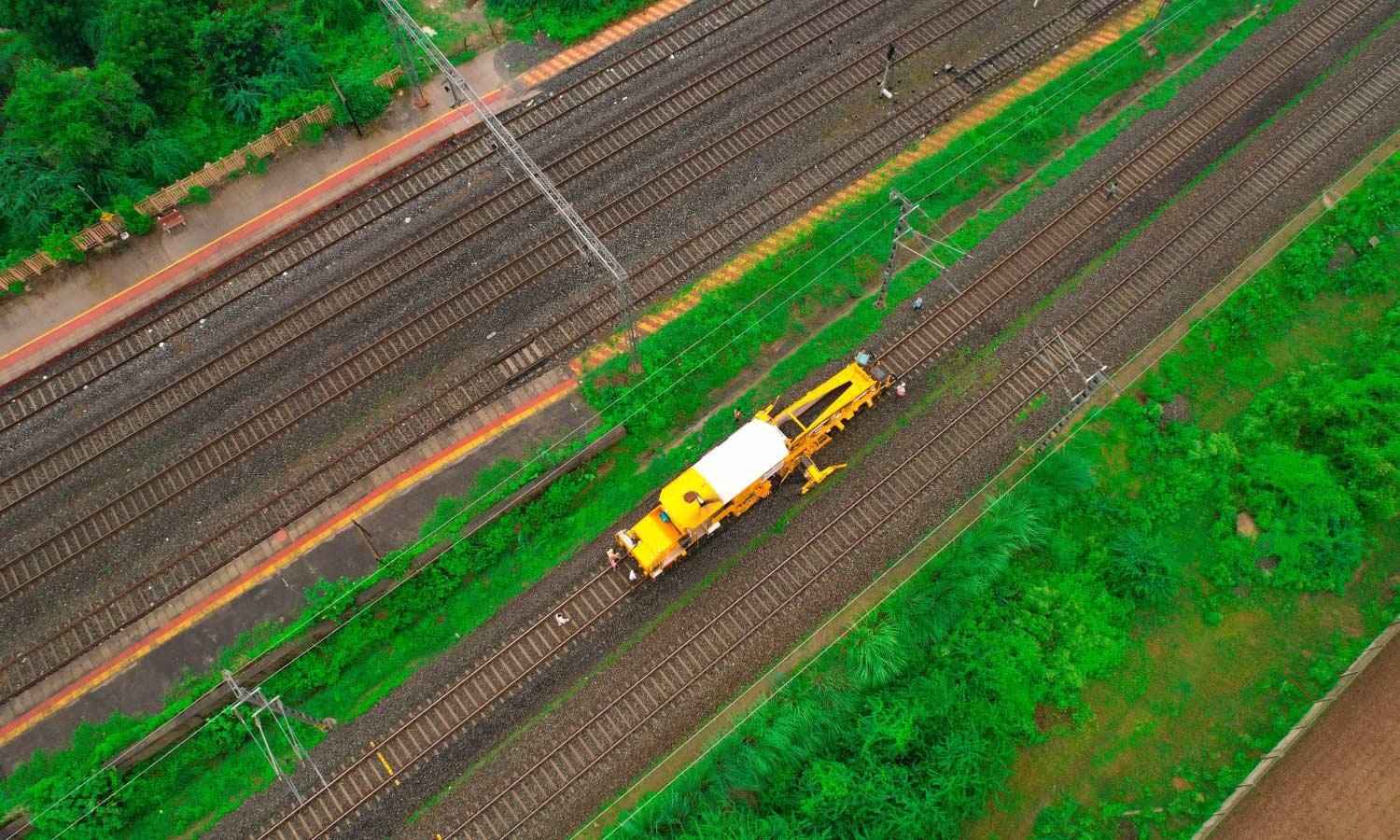
According to www.itln.in, India’s Dedicated Freight Corridors (DFCs) — fully commissioned on March 31, 2026 — now handle more than 13% of India’s total rail freight traffic, despite constituting only about 4% of the overall rail network. The Eastern and Western DFCs together span 2,843 kilometres across nine states and 77 districts, built at a cost of ₹1.25 trillion, with an additional ₹210 billion spent on land acquisition.

Operational Gains: Speed, Reliability, Capacity

Prior to the DFCs, freight trains operated at average speeds of 20–25 kilometres per hour on shared lines due to scheduling priority for passenger services. Under the segregated DFC infrastructure, freight trains now run at 60–100 kilometres per hour, reducing transit times by 40 to 50%. Cargo moving between Mumbai and Delhi — which previously required more than three days — now completes the journey in under 48 hours.

“This segregation has also significantly enhanced reliability and schedule adherence, as freight operations are no longer impacted by passenger traffic prioritisation.” — SP Verma, Group General Manager, Business Development and Analytics, Dedicated Freight Corridor Corporation of India (DFCCIL)

The performance gains translate directly into supply chain efficiency: stable transit windows reduce warehousing dependency, tighten inventory cycles, and improve production scheduling — especially critical for automotive, consumer goods, and industrial manufacturing sectors where delays inflate downstream logistics and inventory costs.

Traffic Volume and Composition

In FY 2025–26, DFCCIL operated 15,484 rakes carrying 15.87 million tonnes of freight, generating 203.6 billion gross tonne kilometres (GTKMs) — averaging 558.4 million GTKM per day. Containerised freight emerged as the fastest-growing segment: 10.06 million tonnes moved across 9,621 rakes. Cement traffic also rose, with 4.42 million tonnes transported across 1,830 rakes.

On the Eastern DFC, coal accounts for 68% of total freight movement, reflecting its role linking eastern mining regions with northern power plants. Meanwhile, containerised cargo is gaining share across long-haul routes historically dominated by trucking — supported by NITI Aayog’s finding that rail freight costs are roughly half as much as road transport per kilometre.

Port Connectivity and Intermodal Integration

The Western DFC provides faster links between ports including JNPT, Mundra, and Pipavav and inland consumption centres. Port-to-NCR transit time has reportedly fallen by nearly 50%. According to Adhendru Jain, Chief Executive Officer, Rail and Inland Terminals at DP World, freight train movements on the Eastern and Western DFCs grew 47% during 2024–25, with containers accounting for 24% of total cargo.

“The commissioning of the DFCs is transforming how cargo moves across India by enabling faster, more reliable, and higher-volume movement between ports and inland markets.” — Adhendru Jain, Chief Executive Officer, Rail and Inland Terminals, DP World

DP World operates more than 90 container trains, including double-stack services linking inland markets with gateways such as Mundra and Nhava Sheva, backed by eight rail-linked inland container terminals. DFCCIL plans to establish 114 Gati Shakti Multi-Modal Cargo Terminals along the corridor network to connect industrial clusters, inland container depots, and ports. On January 5, 2026, the DFC network handled 892 interchange trains in a single day across five Indian Railways zones — a concrete indicator of deepening system integration.

Strategic Context and Industry Response

The DFC rollout coincides with Indian Railways’ record freight loading of 1 billion tonnes in FY 2025–26 — driven by coal, iron ore, cement, and container traffic, according to the Ministry of Railways. Historically, road transport dominated India’s freight economy due to unpredictable rail schedules; trucks carried factory output, retail inventory, and export cargo despite congestion, toll delays, fuel volatility, and border bottlenecks. The DFC changes this calculus by delivering schedule consistency — a prerequisite for just-in-time manufacturing and lean inventory practices.

Private logistics operators are redesigning services around DFC access. For example, Allcargo Terminals leverages DFC connectivity to serve Exim trade, while DP World’s rail service for Reliance Industries demonstrates commercial adoption. The completion of the 1,506-km Western DFC from JNPT to Dadri is cited as a major milestone for port-led connectivity and truck traffic reduction — with measurable outcomes in lower fuel consumption per unit of cargo transported.

Source: www.itln.in

Compiled from international media by the SCI.AI editorial team.
More on This Topic

  • Sakura Internet raises AI data center capex to ¥30B, up 7x (May 26, 2026)
  • ADNOC Distribution launches 6 Hubs, non-fuel gross profit up 14% (May 26, 2026)
  • Matson Logistics sees air-to-ocean freight shift amid $ jet fuel costs (May 26, 2026)
  • Montgomery Ruling Risks Shipper Liability, Freight Rates Hit $2.64/mile — FreightWaves (May 25, 2026)
  • Albertsons Launches AI Produce Inspection Tool — Supply Chain Dive (May 25, 2026)
ShareTweet

Related Posts

Sakura Internet raises AI data center capex to ¥30B, up 7x
Inventory & Fulfillment

Sakura Internet raises AI data center capex to ¥30B, up 7x

May 26, 2026
0
ADNOC Distribution launches 6 Hubs, non-fuel gross profit up 14%
Inventory & Fulfillment

ADNOC Distribution launches 6 Hubs, non-fuel gross profit up 14%

May 26, 2026
1
Matson Logistics sees air-to-ocean freight shift amid $ jet fuel costs
Logistics & Transport

Matson Logistics sees air-to-ocean freight shift amid $ jet fuel costs

May 26, 2026
1
Montgomery Ruling Risks Shipper Liability, Freight Rates Hit $2.64/mile — FreightWaves
AI & Automation

Montgomery Ruling Risks Shipper Liability, Freight Rates Hit $2.64/mile — FreightWaves

May 25, 2026
5
Albertsons Launches AI Produce Inspection Tool — Supply Chain Dive
AI & Automation

Albertsons Launches AI Produce Inspection Tool — Supply Chain Dive

May 25, 2026
6
90% Global Trade Relies on Sea Shipping — Logistics Business
AI & Automation

90% Global Trade Relies on Sea Shipping — Logistics Business

May 25, 2026
3

Leave a Reply Cancel reply

Your email address will not be published. Required fields are marked *

Recommended

Louisville Mega-Hub Ascends: UPS Surpasses FedEx as World’s Largest Express Air Cargo Hub with 4.2 Million Daily Packages and 12% Air Freight Volume Lead

Louisville Mega-Hub Ascends: UPS Surpasses FedEx as World’s Largest Express Air Cargo Hub with 4.2 Million Daily Packages and 12% Air Freight Volume Lead

22 Views
March 6, 2026
Air Cargo Demand Fell 4.8% YoY in March 2026

Air Cargo Demand Fell 4.8% YoY in March 2026

16 Views
May 2, 2026
2026 Supply Chain Disruption: 72% Cite U.S. Tariff Volatility as Top Regulatory Risk

2026 Supply Chain Disruption: 72% Cite U.S. Tariff Volatility as Top Regulatory Risk

22 Views
April 23, 2026
Supreme Court Strikes Down IEEPA Tariffs 6-3: With $200 Billion in Refunds Unresolved and Section 232 Still Standing, What’s Next for North American Supply Chains

Supreme Court Strikes Down IEEPA Tariffs 6-3: With $200 Billion in Refunds Unresolved and Section 232 Still Standing, What’s Next for North American Supply Chains

16 Views
February 21, 2026
Show More

SCI.AI

Global Supply Chain Intelligence. Delivering real-time news, analysis, and insights for supply chain professionals worldwide.

Categories

  • Supply Chain Management
  • Procurement
  • Technology


  • Risk & Resilience
  • Sustainability
  • Research

© 2026 SCI.AI. All rights reserved.

Powered by SCI.AI Intelligence Platform

Welcome Back!

Sign In with Facebook
Sign In with Google
Sign In with Linked In
OR

Login to your account below

Forgotten Password? Sign Up

Create New Account!

Sign Up with Facebook
Sign Up with Google
Sign Up with Linked In
OR

Fill the forms below to register

All fields are required. Log In

Retrieve your password

Please enter your username or email address to reset your password.

Log In

Scan to share via WeChat

Open WeChat and scan the QR code to share

QR Code

Add New Playlist

No Result
View All Result
  • Supply Chain
    • Strategy & Planning
    • Logistics & Transport
    • Manufacturing
    • Inventory & Fulfillment
  • Procurement
    • Strategic Sourcing
    • Supplier Management
    • Supply Chain Finance
  • Technology
    • AI & Automation
    • Robotics
    • Digital Platforms
  • Risk & Resilience
  • Sustainability
  • Research
  • Expert Columns
  • English
    • Chinese
    • English
  • Login
  • Sign Up

© 2026 SCI.AI