By 2026, warehouse robots are no longer a futuristic experiment—they are the operational backbone of globally competitive logistics networks, driving a $25.41 billion market and delivering quantifiable resilience in an era defined by labor scarcity, e-commerce volatility, and geopolitical fragmentation. This transformation is not incremental; it represents a structural recalibration of how value flows across supply chains—from raw material staging to final-mile dispatch. Unlike legacy automation that optimized isolated tasks, today’s AI-integrated robotic ecosystems dynamically reconfigure workflows in real time, responding to demand spikes, labor absences, and even port congestion signals with algorithmic agility. The shift reflects deeper industry imperatives: as global trade volumes rebound post-pandemic but face mounting friction from Red Sea disruptions, U.S.-China tariff recalibrations, and EU CBAM compliance mandates, companies can no longer afford static infrastructure. Warehouse robotics now serve as both a productivity lever and a strategic shock absorber—enabling facilities to absorb 30% order volume surges without proportional headcount increases while maintaining 99.98% picking accuracy, a benchmark unattainable through manual processes alone. This isn’t just about replacing workers; it’s about redefining labor economics, safety thresholds, and system-level responsiveness across multi-tiered supply networks.
Warehouse Robots: Types, Capabilities, and Strategic Deployment Logic
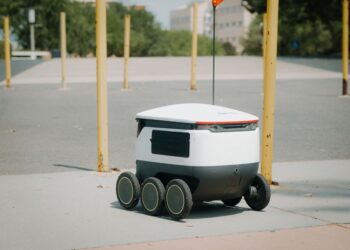
The taxonomy of warehouse robots reveals a deliberate segmentation of function, environment, and decision autonomy—each category solving distinct layers of logistical complexity. Autonomous Mobile Robots (AMRs), for instance, leverage simultaneous localization and mapping (SLAM) powered by LiDAR and neural vision stacks to navigate unstructured, human-occupied spaces with sub-centimeter precision. Unlike their predecessors, AMRs don’t require fixed infrastructure like magnetic tape or embedded sensors; instead, they build and continuously update dynamic 3D maps, enabling rapid reconfiguration when warehouse layouts shift—a critical advantage during seasonal fulfillment ramp-ups or facility expansions. Their pathfinding algorithms incorporate real-time obstacle avoidance, battery-level optimization, and priority-weighted task queuing, allowing fleets of 300+ units to coexist without central traffic control. This decentralized intelligence mirrors the agentic AI paradigm emerging in broader enterprise systems, where individual units negotiate task allocation based on proximity, payload capacity, and energy state rather than relying on rigid master scheduling. As such, AMRs represent not just mobility but distributed cognition—transforming warehouses from linear conveyor-based systems into fluid, adaptive organism-like networks.
Contrast this with Automated Guided Vehicles (AGVs), which remain indispensable for high-mass, high-reliability transport in manufacturing-adjacent distribution centers. AGVs operate within tightly constrained physical corridors—often integrated directly with production lines—carrying palletized goods weighing up to 3,000 kg at speeds exceeding 2.5 m/s with zero deviation tolerance. Their deterministic behavior stems from pre-programmed routes anchored to laser reflectors or inertial navigation systems, making them ideal for mission-critical applications where predictability outweighs adaptability. Meanwhile, goods-to-person (G2P) shuttle systems—such as Locus Robotics’ autonomous bins or AutoStore’s grid-based cube storage—redefine spatial economics by collapsing vertical and horizontal travel distance. These systems achieve throughput gains of up to 70% not by moving people faster, but by eliminating walking entirely: robotic shuttles retrieve SKUs from dense 3D storage matrices and deliver them to stationary pick stations, where human workers perform value-added tasks like quality inspection and kitting. This hybrid model acknowledges a fundamental truth: human dexterity, contextual judgment, and exception handling remain irreplaceable, but their time must be liberated from non-value-adding motion. As one Tier 1 automotive logistics director observed,
“We didn’t deploy robots to cut headcount—we deployed them to stop losing our best pickers to repetitive strain injuries and burnout. Now our retention rate is up 42%, and we’re training those same workers as robot fleet supervisors and AI prompt engineers for our WMS.” — Maria Chen, VP of Operations, Daimler Logistics North America
Logistics Automation Efficiency Gains: Beyond Labor Cost Reduction
While labor cost savings of 25–30% frequently headline ROI calculations, the true strategic value of warehouse robotics lies in systemic efficiency gains that compound across the extended supply chain. Consider inventory accuracy: traditional cycle counts yield 92–95% accuracy in high-SKU e-commerce DCs, necessitating costly buffer stock and frequent expedited air freight to cover shortfalls. Robotic systems equipped with AI-powered computer vision and RFID fusion achieve 99.98% real-time inventory visibility, reducing safety stock requirements by 18–22% and cutting working capital tied up in excess inventory by an average of $3.7 million per mid-sized facility annually. This isn’t merely data fidelity—it’s financial velocity. When Amazon’s robotics-enabled fulfillment centers process over 1.2 million orders daily with same-day dispatch rates exceeding 89%, the downstream impact reverberates across carrier networks, last-mile routing algorithms, and even regional warehousing strategies. Machine learning models trained on robotic telemetry—battery drain patterns, collision avoidance frequency, dwell times at charging stations—now feed predictive maintenance dashboards that preempt hardware failures with 94% accuracy, slashing unplanned downtime from 7.2 hours/month to under 45 minutes. Such reliability enables contract logistics providers to offer service-level agreements (SLAs) with financial penalties for latency—something previously deemed commercially untenable in volatile markets.
Moreover, the efficiency dividend extends beyond the four walls of the warehouse into network design itself. With robotic throughput enabling three times faster fulfillment rates, companies are relocating distribution centers closer to urban consumption clusters—accelerating nearshoring initiatives and reducing reliance on transcontinental air cargo. A recent Gartner study found that 68% of Fortune 500 retailers deploying AMR fleets reduced average delivery lead times by 31% while simultaneously decreasing carbon intensity per unit shipped by 14%, thanks to optimized load consolidation and fewer partial-truckload movements. These outcomes stem from integrated decision-making: AI orchestration engines don’t just route robots—they ingest weather forecasts, customs clearance timelines, fuel price indices, and port congestion metrics to dynamically allocate inventory across geographies. For example, during the 2024 Suez Canal blockage, Maersk’s AI-optimized DCs rerouted 220,000 SKUs from Asia-bound containers to European cross-dock hubs overnight, using robotic sortation to repack shipments for alternate rail corridors—achieving 98% on-time delivery despite 17-day maritime delays. This level of responsive adaptation underscores why logistics automation is now classified as critical infrastructure by the U.S. Department of Commerce’s Supply Chain Resilience Office.
- AI vision systems reduce mispicks by 99.2% compared to manual scanning
- Real-time path optimization cuts average robot travel distance by 41% per order
- Dynamic task rebalancing increases peak-hour throughput by 37% without adding hardware
Implementation Challenges: Capital, Culture, and Cyber-Resilience
Despite compelling metrics, warehouse robotics adoption remains uneven—not due to technological immaturity, but because implementation exposes deep organizational fault lines. The most cited barrier is capital intensity: a fully integrated AMR deployment—including fleet acquisition, software licensing, infrastructure upgrades (e.g., reinforced flooring, Wi-Fi 6E mesh networks), and change management—typically requires $1.2–$2.8 million per facility, with ROI horizons stretching 24–36 months depending on labor arbitrage and throughput targets. Yet this framing misses the larger risk calculus: a 2025 MIT Center for Transportation & Logistics study revealed that companies delaying automation faced 5.3x higher total cost of ownership over five years due to escalating wage inflation, turnover-related retraining costs, and regulatory penalties for OSHA-reportable injuries. More insidious are integration challenges: legacy warehouse management systems (WMS) built for batch processing often lack APIs capable of handling 500+ concurrent robotic task requests per second. Bridging this gap demands middleware development or full WMS replacement—both carrying steep opportunity costs. One major apparel distributor abandoned its $4.1 million AMR rollout after discovering its 2008-era SAP EWM module couldn’t interpret real-time robot battery telemetry, forcing manual intervention for 37% of charging cycles and negating promised uptime gains.
Cultural resistance compounds technical hurdles. Frontline workers frequently perceive robots as job threats rather than force multipliers—a perception validated when training programs focus solely on safety protocols rather than upskilling pathways. Successful deployments treat human-robot collaboration as a sociotechnical system: Walmart’s “Robotics Ambassador” program trains former pickers as fleet troubleshooters, earning $32/hour plus equity, while Ocado’s UK facilities embed union representatives in robot workflow design sprints. Crucially, cybersecurity vulnerabilities cannot be an afterthought: interconnected robotic fleets generate 12–15 TB of telemetry data daily, creating attack surfaces for ransomware targeting WMS integration points. In 2025, a coordinated cyber intrusion against a third-party logistics provider in Rotterdam disabled 412 AMRs by spoofing fleet coordination signals—causing $8.4 million in delayed shipments before containment. As such, modern implementations mandate zero-trust architecture, hardware-rooted device attestation, and AI-driven anomaly detection trained on normal robotic behavioral baselines. As cybersecurity expert Dr. Lena Petrova notes,
“A warehouse robot isn’t just a motor and a sensor—it’s a network endpoint with administrative privileges over your entire fulfillment stack. Treating it as ‘just hardware’ is like installing a bank vault door but leaving the alarm system unencrypted.” — Dr. Lena Petrova, Director of Industrial Cybersecurity, MITRE Engenuity
- Legacy WMS integration consumes 40–60% of total project timeline
- Cybersecurity hardening adds 18–22% to implementation budget
- Workforce retraining costs average $14,200 per employee for hybrid role certification
Global Market Dynamics: Regional Adoption Patterns and Geopolitical Leverage
The $25.41 billion global warehouse robotics market isn’t monolithic—it fractures along geopolitical, infrastructural, and labor-market fault lines. North America leads in AMR adoption, accounting for 41% of global installations in 2025, driven by acute labor shortages (U.S. logistics vacancy rate: 8.7%) and aggressive e-commerce growth (projected 12.3% CAGR through 2028). However, Asia-Pacific is accelerating fastest, with China’s domestic robotics ecosystem—led by Hikrobot and Geek+, achieving 68% local component content and undercutting Western pricing by 22–31%. This isn’t mere cost arbitrage; it reflects state-backed industrial policy aligning robotics with Made-in-China 2025 and dual-circulation strategies. Chinese manufacturers now embed AI chips designed specifically for warehouse vision tasks, reducing inference latency by 400ms versus off-the-shelf NVIDIA solutions—a critical edge in high-speed sortation. Meanwhile, the EU’s stringent CE marking requirements and GDPR-compliant data residency mandates have fragmented deployment models: German automotive suppliers favor AGV-heavy, on-premise deployments with localized AI training, while Dutch e-commerce hubs embrace cloud-native AMR orchestration with federated learning to comply with cross-border data rules.
Geopolitics further reshapes investment logic. U.S. CHIPS Act incentives now extend to robotics semiconductor fabrication, spurring domestic production of vision processors for warehouse applications. Conversely, export controls on advanced AI chips restrict Chinese access to top-tier inference accelerators, accelerating indigenous RISC-V chip development. This bifurcation creates divergent innovation paths: Western systems prioritize explainable AI for auditability (e.g., logging every robotic decision for ESG reporting), while Asian deployments emphasize raw throughput and density optimization. Notably, nearshoring initiatives in Mexico—fueled by USMCA compliance advantages—are seeing explosive AMR adoption: 73% of new maquiladora DCs launched since 2024 include robotics-ready infrastructure, with median payback periods shrinking to 18 months due to lower real estate and energy costs. As supply chain strategist Rajiv Mehta observes,
“The robot isn’t neutral—it’s a geopolitical artifact. Where you source it, where its AI is trained, where its data resides, and who certifies its safety all encode strategic choices about dependency, sovereignty, and resilience.” — Rajiv Mehta, Head of Global Supply Chain Strategy, Boston Consulting Group
Future Trajectory: From Automation to Cognitive Orchestration
Looking beyond 2026, warehouse robotics is evolving toward cognitive orchestration—where AI doesn’t just direct robots but anticipates systemic needs across the end-to-end supply chain. Generative AI agents are now piloted in Tier 1 logistics providers to synthesize unstructured data: supplier delay notices, social media sentiment about product launches, weather satellite feeds, and even shipping container GPS pings. These agents generate dynamic “what-if” scenarios—e.g., “If Typhoon Gaemi disrupts Shenzhen port operations for 72 hours, reroute 12,400 units via Ho Chi Minh City and adjust robotic picking sequences to prioritize high-margin SKUs.” Such capabilities transform warehouses from passive fulfillment nodes into active demand-shaping participants. Humanoid robots, though still nascent in commercial deployment, signal a paradigm shift: Tesla’s Optimus units undergoing trials at Amazon fulfillment centers demonstrate dexterous manipulation of irregular packages and stair navigation—addressing the “last 10%” of tasks (e.g., unpacking damaged cartons, re-stacking unstable pallets) that currently stall full automation. Critically, this evolution demands new governance frameworks: the EU’s upcoming AI Act classifies warehouse robotics as “high-risk AI systems,” requiring mandatory impact assessments for bias in task allocation algorithms and transparency reports on energy consumption per million picks.
Simultaneously, sustainability imperatives are rewriting performance metrics. Leading adopters now measure robotic ROI against Scope 3 emissions reduction targets, not just labor cost. Electrified AMRs paired with on-site solar microgrids are cutting facility energy use by 29%, while AI-optimized battery charging schedules reduce peak-load draw by 33%—directly supporting corporate net-zero commitments. As digital twin technology matures, virtual replicas of entire DCs simulate robotic fleet behavior under thousands of demand scenarios, enabling stress-testing of resilience strategies before physical deployment. This convergence of generative AI, embodied robotics, and environmental accountability marks the transition from automation-as-efficiency to automation-as-strategy—a shift where the warehouse ceases to be a cost center and becomes a real-time intelligence hub, continuously optimizing for economic, social, and planetary boundaries. The $25.41 billion figure is merely the foundation; the true market is the reimagined supply chain itself.
Source: www.techtimes.com
This article was AI-assisted and reviewed by our editorial team.