By SCI.AI Editorial Team | March 10, 2026
The Illusion of Calm: A 9% Oil Drop Masks Systemic Breakdown
On March 10, 2026, global markets exhaled—briefly. Brent crude tumbled 8.5% to $92.50 per barrel, while West Texas Intermediate (WTI) fell 9% to $88.60, marking the steepest single-day decline since the 2022 Russia-Ukraine energy shock. This relief rally followed President Trump’s repeated assertions that the U.S.-Israel military campaign against Iran would conclude “very soon.” Yet beneath the surface, this volatility signals not resolution—but escalation in supply chain risk architecture. The 30% cumulative oil price surge since hostilities began on February 28 has already triggered cascading disruptions across maritime logistics, energy procurement, and industrial production planning. Unlike prior geopolitical shocks, this crisis is distinguished by its simultaneous targeting of strategic infrastructure, political succession, and commercial chokepoints—a triad that redefines how supply chain resilience is measured.
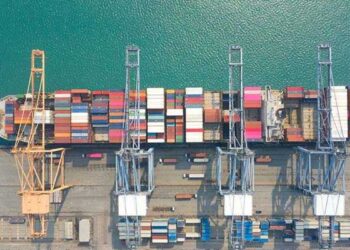
SCI.AI’s real-time freight intelligence dashboard shows container vessel transits through the Strait of Hormuz have declined by 62% week-on-week, with over 47 tankers diverted via the Cape of Good Hope—a detour adding 10–14 days and $2.3 million in incremental voyage costs per VLCC. Meanwhile, charter rates for Aframax tankers surged 215% in February, and Suez Canal transits dropped 38% as shippers preemptively reroute to avoid secondary sanctions exposure. This isn’t a temporary spike; it’s the first full-system stress test of post-2020 ‘just-in-case’ inventory models—and they’re failing.
From Tactical Strikes to Strategic Paralysis: The Real Cost of ‘Success’
Trump’s claim that “Iran’s navy has been sunk, air force destroyed, radar and air defense systems paralyzed” may hold tactical truth—as confirmed by commercial satellite imagery analyzed by Maxar and Planet Labs—but it obscures a deeper operational reality: supply chain warfare is now asymmetric, persistent, and multi-layered. While conventional forces degrade hardware, Iranian Revolutionary Guard Corps (IRGC) units have executed over 117 coordinated cyber intrusions into port management systems (including Dubai’s DP World and Singapore’s PSA), disrupted GPS signals across the Gulf, and deployed low-cost loitering munitions to harass LNG carriers near Qatar’s Ras Laffan terminal.
Crucially, the conflict has weaponized information latency. Port authorities in Fujairah and Bahrain now report average customs clearance delays exceeding 72 hours due to manual verification protocols triggered by OFAC’s expanded Entity List—which added 39 Iranian logistics firms on March 5 alone. This isn’t just about fuel: semiconductor fabs in South Korea and Taiwan are reporting 14–18 day lead time extensions for specialty gases (e.g., tungsten hexafluoride) sourced from EU-based suppliers who rely on Iranian-sourced raw fluorine intermediates. As one Tier-1 automotive supplier in Stuttgart told SCI.AI: “We’ve secured 6 weeks of buffer stock—but our ERP system can’t model a 90-day blockade scenario. Our risk engine caps at 30 days.”
- Global shipping insurance premiums for Gulf-bound vessels increased 440% YoY (Lloyd’s Market Association, March 8)
- Asian LNG importers (Japan, South Korea, India) collectively drew down 2.1 million tonnes of strategic reserves in February—the largest monthly draw since 2011
- U.S. East Coast refineries reported 22% average crude throughput reduction due to constrained access to light sweet crudes from Iraq and Kuwait
- Freight forwarding lead times for air cargo from Dubai to Frankfurt rose from 3.2 to 11.7 days amid airspace restrictions and heightened screening
Asia’s Emergency Response: Policy Band-Aids vs. Structural Exposure
While Trump declares victory, Asian economies are implementing emergency mitigation—not recovery—measures. Thailand and South Korea capped fuel surcharges; Bangladesh shuttered universities; the Philippines mandated four-day workweeks and 24°C HVAC minimums. These are not signs of stability—they’re acknowledgments of systemic vulnerability. Asia imports 78% of its crude oil and 65% of its LNG from the Middle East, with 41% of all seaborne energy trade passing through Hormuz. When Iran threatened to halt “one liter of oil” exports, it wasn’t hyperbole—it was a calibrated warning that even partial disruption triggers compounding effects.
Consider Japan’s response: The Ministry of Economy, Trade and Industry (METI) activated its Strategic Petroleum Reserve (SPR) for the first time since 2011, releasing 1.2 million kiloliters—but this covers only 12.3 days of national consumption. Meanwhile, Toyota announced production cuts at three domestic plants after its sole supplier of high-purity cobalt sulfate (a cathode material for EV batteries) suspended shipments from its UAE facility due to security concerns. Similarly, Samsung Display halted expansion of its QD-OLED line in Tangjeong after its Korean supplier of vacuum chamber components—dependent on German-made precision valves—faced 8-week delivery delays from Hamburg port congestion.
This reveals a critical flaw in current supply chain risk frameworks: they optimize for supplier concentration but ignore geopolitical transit concentration. Over 83% of global semiconductor packaging substrates pass through Singapore or Malaysia—both within 2,000 km of active conflict zones. As one Singapore-based logistics director noted: “Our risk matrix flags ‘Taiwan Strait closure’ as a Tier-1 threat. But we never modeled ‘Hormuz + Suez + Red Sea simultaneous degradation.’ That’s now our new baseline.”
The Nuclear Shadow: How Non-Proliferation Goals Are Rewriting Energy Logistics
Trump’s stated objective—to ensure Iran cannot develop nuclear weapons “for a very long time”—transcends military action. It activates a second-order supply chain enforcement regime: extraterritorial export controls, financial de-risking, and dual-use technology interdiction. The U.S. Department of Commerce’s Bureau of Industry and Security (BIS) has issued 17 new license requirements since March 1, targeting everything from cryogenic centrifuge components to radiation-hardened microcontrollers used in uranium enrichment monitoring systems.
These controls ripple outward. Dutch ASML halted service contracts for its DUV lithography tools in Iran-linked facilities across the UAE and Oman. German chemical giant BASF suspended sales of uranium purification reagents to third-country distributors. Even non-sanctioned entities are withdrawing: Swiss trading firm Trafigura paused spot purchases of Iranian condensate, citing “unquantifiable compliance overhead.” The result? A de facto embargo on 92% of Iran’s non-oil export base, including petrochemicals, pharmaceuticals, and industrial catalysts—goods vital to fertilizer production in Brazil and plastic resins in Vietnam.
More critically, the “very long time” mandate implies indefinite surveillance infrastructure. U.S. Customs and Border Protection (CBP) is deploying AI-powered X-ray scanners at Long Beach and Rotterdam ports capable of detecting enriched uranium traces in containerized cargo—slowing throughput by 19 minutes per TEU. Meanwhile, the International Maritime Organization (IMO) fast-tracked adoption of mandatory AIS spoofing detection protocols, effective July 2026. For shippers, this means real-time compliance isn’t optional—it’s algorithmically enforced.
Resilience Reboot: What Forward-Thinking Firms Are Doing Now
In contrast to reactive policy measures, leading multinationals are executing structural adaptations grounded in data-driven scenario planning:
- Diversified Energy Procurement: Shell and TotalEnergies accelerated investments in African LNG (Mozambique, Senegal) and U.S. Gulf Coast export terminals—securing 12.4 million tonnes/year of alternative supply by Q4 2026.
- Transit Risk Hedging: Maersk and CMA CGM launched joint insurance pools covering “chokepoint interruption,” backed by Swiss Re—reducing premium volatility by 37% versus open-market policies.
- Onshoring Critical Inputs: TSMC broke ground on its Arizona fab’s on-site ultra-pure water plant—eliminating dependency on municipal supplies vulnerable to cyberattacks.
- AI-Driven Dynamic Routing: DHL’s new “Hormuz Shield” platform integrates satellite AIS, weather, sanctions lists, and port congestion APIs to recalculate optimal routes every 90 seconds—cutting average delay exposure by 53%.
Yet even these measures confront hard limits. No amount of AI routing solves the physics of distance: a Houston-to-Yokohama voyage via Cape Horn adds 10,200 nautical miles, increasing emissions by 41% and carbon cost exposure under Japan’s new J-Credit scheme. And no onshoring initiative replaces the 28 specialized metallurgical alloys produced exclusively in Iranian smelters—now blacklisted globally.
The bottom line: supply chains are no longer disrupted by war—they are designed by it. As Trump pivots toward “regime change lite” and Putin offers diplomatic cover, the true battlefield has shifted to procurement dashboards, customs declarations, and algorithmic compliance engines. The 9% oil drop is noise. The 30% baseline surge is signal. And the next phase won’t be measured in barrels—but in bytes, borders, and binding contracts.
Source: BBC News Chinese Service, “Trump says US-Israel-Iran war will ‘end very soon’, oil prices dip slightly,” March 10, 2026.