In the ever-evolving landscape of global trade, tariffs continue to reshape how companies approach strategic sourcing and procurement. This analysis draws from insights shared by Rachel Levy, COO of Brooklinen, during a panel at Manifest 2026 in Las Vegas, alongside perspectives from Patagonia and Tailored Brands. The focus is the 10% global tariff and its implications for supply chain decision-making, emphasizing why rapid sourcing shifts are far harder than they appear.
The Challenges of Rapid Sourcing Shifts in Response to Tariffs
The Trump administration’s tariff policies have forced brands and retailers to reassess their sourcing strategies. Rachel Levy, COO of Brooklinen, emphasized that shifting sourcing to a new country is not a quick process, requiring significant time and resources. Levy explained that Brooklinen has chosen not to aggressively pursue new countries despite new duties imposed since April. These duties have added layers of complexity to supply chains, particularly for industries reliant on materials like cotton.
One key reason for caution is the potential for increased supply chain risks when making abrupt changes. While U.S.-sourced cotton could help mitigate some tariffs, its limited availability means that overreliance would lead to higher costs and greater complexity. Levy pointed out that even if Pima cotton is grown in the U.S., it often needs to be processed elsewhere—for yarn spinning and fabric production—which fails to fully offset the added tariff expenses.
The overarching theme is the difficulty of achieving quick diversification. The 10% global tariff, which replaced earlier IEEPA duties after a Supreme Court ruling, exemplifies how policy shifts can disrupt established supply chains. For Brooklinen, this means weighing the immediate financial burdens against long-term strategic benefits, analyzing potential increases in inventory holding costs and extended lead times.

Brooklinen’s Strategy: Stability Over Reactive Shifts
Brooklinen has adopted a measured approach to sourcing, avoiding the pitfalls of rapid changes in response to tariffs. Levy stated that the company is not “chasing countries,” prioritizing stability over reactive shifts. This strategy stems from the recognition that tariffs, such as the wave of duties imposed since April, can create more problems than they solve if not handled carefully. By maintaining their current sourcing framework, Brooklinen aims to minimize disruptions while monitoring global developments.
A critical factor in this strategy is the avoidance of single-sourcing concentration. Levy highlighted the importance of not relying on one country for all production, as this amplifies vulnerabilities to tariffs and other disruptions. Suppliers sometimes move materials between countries—cotton from China to Vietnam for fabric processing, back to China for value-added features, then to Vietnam again for cutting and sewing—to navigate duties. However, this bouncing between locations adds complexity and cost that can negate any tariff savings.
“A global supply chain, you have to understand, it’s more connected today than ever, and it’s only going to get more connected and more complicated.” — Rachel Levy, COO, Brooklinen
Looking ahead, Brooklinen’s focus on factors beyond just location—such as inventory costs and lead times—reflects a deeper understanding of supply chain resilience. In the context of the 10% global tariff reshaping operations in 2026, this approach helps the company prepare for ongoing policy unpredictability. By not overreacting to immediate changes, Brooklinen positions itself to make informed decisions that balance short-term challenges with long-term sustainability.
The Impact of the 10% Global Tariff on Procurement Architecture
The introduction of a 10% global tariff has significantly altered the dynamics of international trade. This tariff, which replaced duties struck down by the Supreme Court, affects a wide range of industries by increasing the cost of imported goods uniformly. For companies like Brooklinen, it means higher expenses for raw materials like cotton, prompting a reevaluation of sourcing options. The tariff’s broad, country-agnostic application underscores why rapid adjustments are impractical: there is no simple geographic escape.
The tariff’s imposition since April has led to a measurable slowdown in supply chain efficiency gains, as companies face elevated costs without readily available alternatives. The policy’s intent to protect domestic industries inadvertently creates hurdles for businesses dependent on international suppliers. For brands like Brooklinen, hidden costs now include increased demand for U.S.-grown Pima cotton, which drives up prices and complicates logistics—meaning the “domestic sourcing” solution is self-defeating at scale.
The broader industry implication is a push toward more resilient sourcing architectures. With the 10% tariff in effect through 2026, companies face a fundamental cost versus risk tradeoff: absorb the expenses, seek geographic diversification, or invest in deeper supplier capabilities within existing networks. Each path carries different risk profiles, and the right choice depends heavily on product category, margin structure, and brand positioning.
Divergent Paths: Patagonia and Tailored Brands
Other brands have pursued different diversification paths. Patagonia’s Chief Supply Chain Officer, Todd Soller, shared that the company has shifted some sourcing from Asia to Central America, with a very small amount in the U.S. Critically, Soller noted the overall supply base has not changed significantly because tariffs have “raised the water level fairly equally across the world in a lot of ways”—confirming that geographic arbitrage offers diminishing returns under a flat global tariff structure.
Tailored Brands, which owns Men’s Wearhouse and Jos. A. Bank, has increased nearshoring efforts. EVP and Chief Supply Chain Officer Jamie Bragg noted that the company’s factory in New Bedford, Massachusetts has provided a competitive edge in this environment. By producing closer to home, Tailored Brands mitigates import tariff exposure for tailored clothing—a high-margin category where domestic production costs can be offset by premium pricing.
Comparing these strategies:
- Brooklinen: Stability-first; no country chasing, focusing on depth over breadth in existing supplier relationships.
- Patagonia: Modest geographic shifts from Asia to Central America, accepting that tariffs affect all regions similarly.
- Tailored Brands: Nearshoring to domestic production as a strategic hedge, viable due to high-margin product lines.
This divergence confirms that sourcing strategy is not universal—it must be calibrated to each brand’s margin economics, category complexity, and competitive positioning.
Balancing Cost and Risk: The Hidden Math of Multi-Country Production
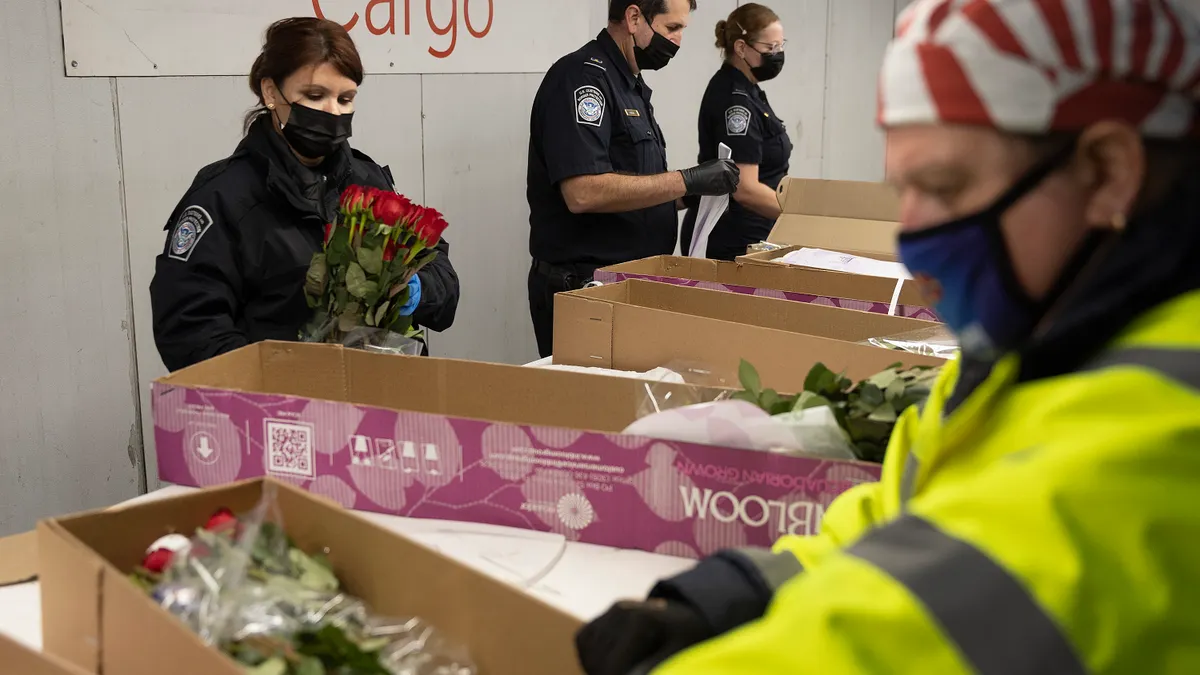
In strategic sourcing, the cost-risk tradeoff is paramount when tariffs are involved. For Brooklinen, potential cost increases from the 10% global tariff must be weighed against the risks of aggressive supply chain diversification. Levy’s core insight is that while U.S.-sourced cotton could offset some duties, its limited supply and requirement for offshore processing means that true cost savings are elusive. The hidden costs of splitting production across multiple countries—coordination overhead, quality consistency gaps, extended lead times—can easily outweigh immediate tariff benefits.
The multi-node production model illustrates this starkly: cotton moving from China to Vietnam for fabric, back to China for value-added processing, then to Vietnam again for finishing generates multiple freight, customs, and warehousing costs at each border crossing. When the net tariff saving is only a few percentage points, these transaction costs rapidly erode the benefit. Companies that model only the direct tariff differential systematically underestimate true landed cost.
Procurement leaders must therefore expand their cost function. The traditional model—total cost = purchase price + tariff + freight—must now incorporate inventory holding costs for safety stock across multiple geographies, lead time risk premiums, quality deviation losses from distributed production, and supplier relationship management overhead. When this expanded cost is calculated honestly, many apparent sourcing arbitrage opportunities disappear.
Building Sourcing Resilience for 2026 and Beyond
As 2026 unfolds, the implications of current tariff policies for global supply chains are reshaping procurement strategy fundamentally. The 10% global tariff, combined with continuing policy unpredictability, signals that supply chain resilience—not just cost optimization—will be the primary competitive differentiator going forward. For brands like Brooklinen, the challenge is building sourcing architectures that remain adaptable without sacrificing quality or customer delivery commitments.
This evolution demands a shift from reactive cost management to proactive resilience architecture. Procurement leaders must map each SKU’s true risk exposure across raw material origins, processing locations, and logistics corridors. Single-sourcing concentration in any country—however low-cost—represents systemic vulnerability in an era where tariff regimes can shift within months. Levy’s Manifest 2026 warning resonates: the global supply chain is more connected than ever, and that connectivity cuts both ways.
The key lessons from Brooklinen, Patagonia, and Tailored Brands: there are no universal solutions, only strategies calibrated to each brand’s risk tolerance, margin structure, and competitive positioning. The most resilient companies in 2026 will not be those that chased the lowest-tariff geography, but those that built sourcing architectures capable of absorbing policy shocks—whatever form they take next.
Related Reading
Source: supplychaindive.com
This article was AI-assisted and reviewed by our editorial team.