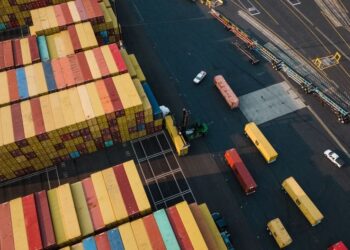
Rising Exports from Mexico Amid Supply Chain Disruptions
Mexico’s role in the Latin American supply chain has been pivotal, especially with recent increases in exports to the United States. For instance, exports from Mexico to the US in the first half of 2025 showed a 6.3% increase compared to the same period in 2024, highlighting a steady growth trajectory. This uptick is further evidenced by the total exports from January to August 2025 reaching US$425 billion, which underscores the region’s expanding trade capabilities. Analysts observe that such growth could be linked to shifting global dynamics, where companies are rerouting supply chains to leverage Mexico’s proximity to major markets.
Beyond the initial months, September 2025 exports from Mexico marked a significant 12% rise over September 2024, pointing to accelerated momentum. This follows the full-year 2024 exports to the US totaling US$503 billion, setting a high bar for ongoing performance. The implications of these figures suggest that Latin America is adapting to disruptions by enhancing export efficiencies, potentially fostering economic resilience. However, stakeholders must consider the broader context, including how these trends might influence regional competitiveness in a post-pandemic world.
Looking ahead, the uncertainty surrounding the USMCA renewal in 2026 adds a layer of complexity. With the agreement possibly shifting to a year-to-year basis, businesses may need to prepare for fluctuating trade policies. This could encourage diversification strategies, as companies weigh the risks and opportunities in maintaining supply chain stability.
The Challenge of Cargo Theft in Mexico
Cargo theft remains a pressing issue in Mexico’s supply chain logistics, with incidents occurring at an alarming frequency. Specifically, reports indicate that one transport vehicle is stolen every 38 minutes, which disrupts the flow of goods and erodes trust in transportation networks. This persistent problem not only affects economic output but also forces companies to invest in enhanced security measures, potentially increasing operational costs across the board.
The frequency of such thefts has broader implications for trade reliability, as it may deter investors and partners from engaging fully with Mexican routes. In light of this, experts suggest that the ongoing disruptions could lead to a reevaluation of supply chain strategies, emphasizing the need for robust risk management. This situation illustrates how security challenges can intersect with economic growth, making it essential for stakeholders to address these vulnerabilities proactively.
Moreover, as Latin America seeks to strengthen its position in global trade, the cargo theft issue in Mexico serves as a cautionary tale. It highlights the importance of integrating security into overall supply chain planning, particularly as regions like Central America emerge as alternatives for logistics operations.
Americas Market Intelligence recommends that logistics firms look beyond Mexico to Central America to identify potential trucking and customs partners — a strategic hedge against USMCA uncertainty that could also unlock greater opportunities in a diversifying trade landscape.
Congestion in Key Caribbean Ports
Port congestion in the Caribbean has emerged as a significant bottleneck in Latin America’s supply chains during 2025. Ports such as Cartagena, Caucedo, Kingston, Callao, and Port of Spain have faced notable challenges, leading to delays that ripple through regional and global trade networks. This congestion was primarily driven by front-loading behavior after US tariffs were suspended or delayed, compounded by a buildup of empty containers throughout the Caribbean basin.
The implications of these congested ports extend beyond immediate delays, potentially impacting trade efficiency and increasing costs for importers and exporters alike. As global demand rises, analysts argue that such issues could prompt investments in port expansions or alternative routing strategies. This situation reflects a broader trend in Latin America, where infrastructure limitations intersect with growing trade volumes, necessitating adaptive measures for sustained growth.
In the context of upcoming trade dynamics, including the EU-Mercosur free trade agreement being accelerated due to US-led disruption, port congestion might influence negotiation outcomes and logistics planning. Companies are advised to monitor these developments closely, as they could reshape logistics priorities in the region and create new service demand for shippers.
Emerging Opportunities in Critical-Metal Processing
Looking toward the future, Latin America is poised for growth in critical-metal processing, with projections indicating at least 12 critical-metal processing plants expected in the region over the next five years. These plants will focus on metals such as lithium, rare earths, copper, nickel, and cobalt, positioning Latin America as a key player in the global shift toward sustainable energy and electric vehicle supply chains. This development could diversify supply chains and reduce dependencies on traditional suppliers from adversarial geographies.
The potential for these plants to drive economic benefits is significant, as they may attract foreign investment and create domestic employment, particularly in Chile, Brazil, and Argentina. However, stakeholders must navigate challenges like regulatory hurdles, environmental compliance, and growing requirements for chain of custody documentation and non-adversarial sourcing proof. AMI emphasizes that companies unable to verify trusted sourcing origins risk exclusion from premium contracts as Western procurement standards evolve.
Furthermore, EU deforestation rules could affect related exports, particularly from Brazil, adding another layer to strategic planning. Companies are encouraged to explore joint ventures or project financing in refining facilities in countries like Brazil and Chile to secure early positioning in this value chain shift, while investing in digital traceability systems to meet emerging regulatory demands.
Major Investments Reshaping Energy and Resource Flows
Significant investments are reshaping Latin America’s energy and resource sectors. The Codelco and Rio Tinto lithium deal — valued at US$900 million and focused on Chile’s Salar de Maricunga salt flat — signals a paradigm shift toward integrated domestic processing. AMI notes this structure could serve as a replicable model for future lithium projects in the region, offering a blueprint for how state-owned miners and international majors can jointly develop critical mineral assets. Firms seeking early positioning should consider establishing similar partnerships, securing offtake agreements, and investing in midstream processing capacity aligned with US reshoring and European green energy goals.
Additionally, Canada’s Trans Mountain Expansion pipeline came online in 2024, enabling direct crude shipments from Vancouver to Asian markets. This realignment of North American energy flows has downstream implications for Latin America: if Canada significantly expands its crude exports to Asia, US Gulf Coast refiners — many of which previously relied on Canadian heavy crude — will need alternative sources, potentially turning to Guyana, Suriname, Argentina, and Venezuela. This creates both opportunity and infrastructure pressure for Latin American energy exporters.
A proposed LNG pipeline across Panama, currently in feasibility discussions, could further reshape energy logistics. Such a pipeline would allow US Gulf Coast LNG shipments to bypass the lengthy Cape Horn route and reach Asian markets more efficiently. For Trinidad, this represents a competitive threat: AMI underscores that the island nation must invest in downstream gas processing to preserve market share against cheaper US LNG alternatives already benefiting from expanded export terminals.
Strategic Priorities for 2026 and Beyond
As 2026 approaches, the convergence of USMCA renewal uncertainty, expanding critical mineral processing capacity, and energy infrastructure realignment creates both risk and strategic opportunity for supply chain operators across Latin America. The USMCA’s possible transition to a year-to-year agreement means companies reliant on stable North American trade rules must build operational flexibility into their supply chain architectures — not just in Mexico, but across the broader Central American corridor where customs partnerships and trucking networks are still developing.
European utilities are increasingly looking to diversify away from Russian gas and toward Latin American sources, which presents long-term opportunity for countries with underdeveloped gas export infrastructure. Meanwhile, Alberta’s proposal for a second pipeline to Asia — though facing opposition from British Columbia — signals the broader North American energy reconfiguration underway. How these upstream decisions resolve in 2026 will directly shape downstream sourcing strategies for petrochemical supply chains across the Americas and into European markets.
For supply chain practitioners, the overarching message from AMI’s analysis is clear: Latin America’s disruptions, from Caribbean port congestion to cargo theft to USMCA uncertainty, are not temporary impediments but structural features of the regional landscape. The firms that thrive will be those that treat these disruptions as intelligence signals, building adaptive strategies around diversified logistics networks, proven sourcing compliance, and early participation in the region’s critical mineral value chain upgrade.
Related Reading
Source: americasmi.com
This article was AI-assisted and reviewed by our editorial team.