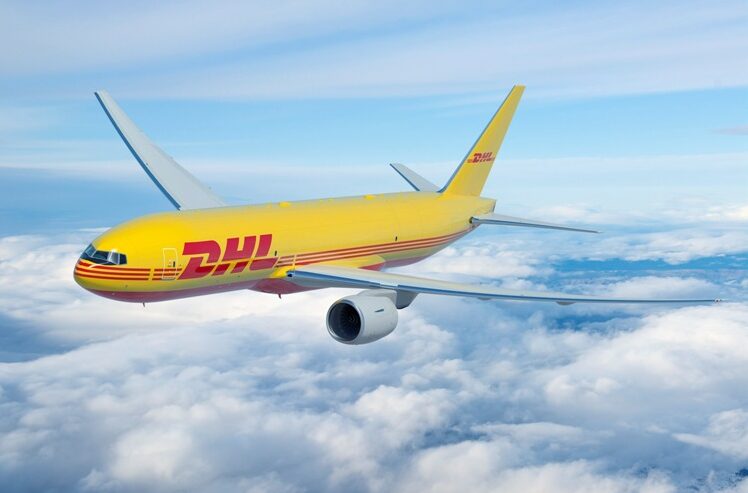
In 2025, the global airfreight industry experienced a paradoxical inflection point: while overall market volumes expanded by approximately 4%, DHL Express—the world’s largest logistics brand—recorded a 1% year-on-year decline in total airfreight volumes (to 1.8 million tonnes) and a 4.6% drop in airfreight revenue (to €6.0 billion). More strikingly, its Global Forwarding, Freight (GFF) division reported a 29.6% contraction in EBIT (to €756 million) and an 8.4% quarterly revenue decline. Yet, against this backdrop, DHL Group’s consolidated EBIT rose 3.7% to €6.0 billion, and its overall revenue held relatively steady at €82.9 billion—down just 1.6% year-on-year. This divergence is not statistical noise; it is a structural signal. It reflects a deliberate, multi-year strategic pivot—one that prioritizes margin resilience, network efficiency, and sectoral specialization over pure volume growth. As geopolitical volatility intensifies, capacity normalizes, and digital infrastructure demand surges, DHL’s performance illuminates a broader industry transition: from commodity-driven freight forwarding toward value-engineered, asset-light, and vertically aligned supply chain orchestration.
The Volume-Value Decoupling: Why Falling Tonnage Doesn’t Mean Failing Strategy
DHL’s airfreight tonnage dip—459,000 tonnes in Q4 2025 versus 468,000 tonnes in Q4 2024—must be interpreted not as underperformance, but as selective optimization. Unlike peers pursuing scale through rate-sensitive spot-market exposure, DHL executed what it calls a “significant structural air network reset” across Europe and the U.S., integrating air-to-truck modal handoffs, retiring underperforming assets, and rationalizing partnerships. Most notably, DHL exited its Polar Air Cargo joint venture with Atlas Air—a move that reduced operational complexity and eliminated shared governance friction. Concurrently, it completed delivery of its final Boeing 777F freighter, replacing aging MD-11s and older 767Fs with fuel-efficient, longer-range aircraft optimized for high-yield lanes—not just high-volume ones.
This recalibration directly impacted volume metrics—but intentionally so. By exiting low-margin, highly competitive lanes (e.g., transatlantic e-commerce parcels during peak season), DHL accepted lower tonnage to protect gross profit margins. Indeed, while airfreight revenue fell 10.3% YoY in Q4, gross profit declined only 6.6%, signaling improved yield management. In contrast, Kuehne+Nagel grew airfreight volumes 7% to 2.2 million tonnes, and DSV surged 44% to 2.0 million tonnes—largely driven by its €14.9 billion acquisition of DB Schenker in early 2025. But those gains came with integration costs, margin dilution, and exposure to volatile ocean-air intermodal pricing. DHL’s restraint reveals a different playbook: volume discipline in service of structural profitability.
Geopolitics, Capacity Normalization, and the End of the ‘Super-Cycle’ Premium
DHL explicitly attributed its airfreight revenue pressure to lower freight rates, citing two converging forces: easing capacity constraints and gradual stabilization in the Red Sea corridor. After the Houthi attacks disrupted Suez Canal traffic beginning in late 2023, air cargo absorbed massive overflow demand—pushing average spot rates up over 60% YoY in Q1 2024. By mid-2025, however, rerouted ocean vessels, expanded charter flights, and diplomatic de-escalation had restored 85–90% of pre-crisis throughput. Simultaneously, new widebody freighters entered service globally: 112 new freighter deliveries occurred in 2025 (per IATA), including 47 Boeing 777Fs and 32 converted A330s—increasing available belly and dedicated capacity by an estimated 3.8 million tonnes.
The result was a rapid normalization—and compression—of rates. According to Xeneta’s Air Index, average global airfreight spot rates fell 22% between January and December 2025, with Asia-Europe lanes down 29% and Transpacific routes off 18%. For forwarders reliant on transactional pricing, this eroded top-line growth. DHL’s GFF division revenue dropped 5.1% for the full year (to €18.5 billion), yet its EBIT decline (29.6%) outpaced revenue erosion—a red flag for cost structure rigidity. Still, DHL’s ability to grow Group EBIT while GFF contracted underscores its diversification: Express (B2C express parcels), Supply Chain (contract logistics), and eCommerce Solutions contributed more resilient, contractually anchored revenue streams that insulated the Group from GFF’s cyclical headwinds.
Datacenters as the New Airfreight Anchor: Sectoral Shifts Driving Yield Resilience
Perhaps the most consequential insight from DHL’s earnings commentary is its identification of datacenter demand as a key offset to slower international e-commerce volume. While cross-border B2C parcel growth decelerated—impacted by tariff uncertainty, consumer spending moderation, and platform-level inventory rationalization—hyperscale datacenter buildouts accelerated dramatically. In 2025, global datacenter capex reached $72 billion (Synergy Research), with AI-driven hardware deployments (GPUs, NVMe SSDs, liquid-cooled servers) requiring urgent, high-value, time-definite air transport. These shipments are characterized by:
- Extremely high value density (often >€50,000/kg), enabling premium pricing;
- Strict temperature, shock, and humidity controls, demanding specialized handling and certified facilities;
- Just-in-time sequencing tied to construction milestones—creating predictable, long-term contractual commitments rather than volatile spot bookings.
DHL has invested heavily in this vertical: expanding its DHL Tech Logistics Network with 23 certified tech hubs across 15 countries, launching AI-powered predictive routing for high-value IT equipment, and signing multi-year framework agreements with three of the top five cloud providers. This shift explains why DHL describes airfreight volumes as “stable” despite falling rates—it signals that tonnage composition is changing, not just quantity. A 1-ton shipment of NVIDIA H100 GPUs generates more gross profit than 50 tons of apparel. The implication is profound: forwarders who fail to develop vertical expertise in high-tech, pharma, or automotive will increasingly compete on price alone—while leaders like DHL capture value through embedded services, compliance assurance, and end-to-end visibility.
Strategic Positioning vs. Tactical Growth: What DHL’s Results Reveal About Industry Trajectories
DHL’s financial outcome in 2025 crystallizes a fundamental bifurcation emerging across the third-party logistics (3PL) landscape:
- Scale-First Operators (e.g., DSV, K+N): Prioritize volume growth via M&A, accepting short-term margin drag to achieve critical mass, cross-selling leverage, and negotiating power with carriers.
- Profit-First Orchestrators (e.g., DHL, UPS Supply Chain Solutions): Focus on portfolio rationalization, technology-enabled yield management, and deep vertical integration—sacrificing headline tonnage for higher-margin, less cyclical business.
This distinction extends beyond finance into operations. DHL’s exit from Polar Air Cargo wasn’t just about cost—it was about regaining control over scheduling, slot allocation, and service design. Its fleet renewal program isn’t merely replacement; it’s a network architecture upgrade enabling direct point-to-point flows instead of hub-and-spoke inefficiencies. And its investment in digital twin capabilities for air network simulation allows dynamic re-routing around weather, congestion, or regulatory changes—reducing delays and improving on-time performance without adding capacity.
Looking ahead to 2026, DHL CEO Tobias Meyer’s comment—“Economic volatility will persist… we are very well-positioned both globally and locally”—is not mere rhetoric. With 87% of its GFF revenue now under contract (up from 79% in 2023), 32% of its air network operated with owned or long-term leased aircraft, and €1.2 billion invested in automation and AI across its Express and Supply Chain divisions in 2025, DHL has engineered resilience into its operating model. That resilience won’t show up in tonnage rankings—but it will appear in shareholder returns, customer retention rates, and, critically, in the strength of its clients’ supply chains when the next disruption hits.
Conclusion: The Future Belongs to Orchestrators, Not Just Forwarders
The 2025 airfreight narrative is not one of decline—it is one of structural maturation. As the market transitions from post-pandemic distortion to a more balanced, capacity-adequate equilibrium, winners will be defined not by how much they move, but by how intelligently, reliably, and profitably they move what matters most. DHL’s volume dip is a feature, not a bug: evidence of disciplined portfolio management in an era where tariffs, climate regulations, and AI-driven demand volatility demand agility over inertia. While competitors chase tonnage, DHL is building end-to-end supply chain sovereignty—from chip fab logistics to hyperscaler datacenter deployment, from pharma cold chain integrity to sustainable aviation fuel procurement. In doing so, it is redefining what it means to be a global forwarder: no longer a middleman in the movement of goods, but a trusted architect of mission-critical infrastructure. As geopolitical tensions simmer, trade policy remains uncertain, and digital transformation accelerates, the question for every shipper is no longer, “Who can move my cargo fastest?” but rather, “Who can ensure my supply chain survives—and thrives—in chaos?” DHL’s 2025 results suggest it already has the blueprint.
Source: Rebecca Jeffrey, “DHL airfreight volumes dip in 2025, while revenue drops,” Air Cargo News, 5 March 2026.