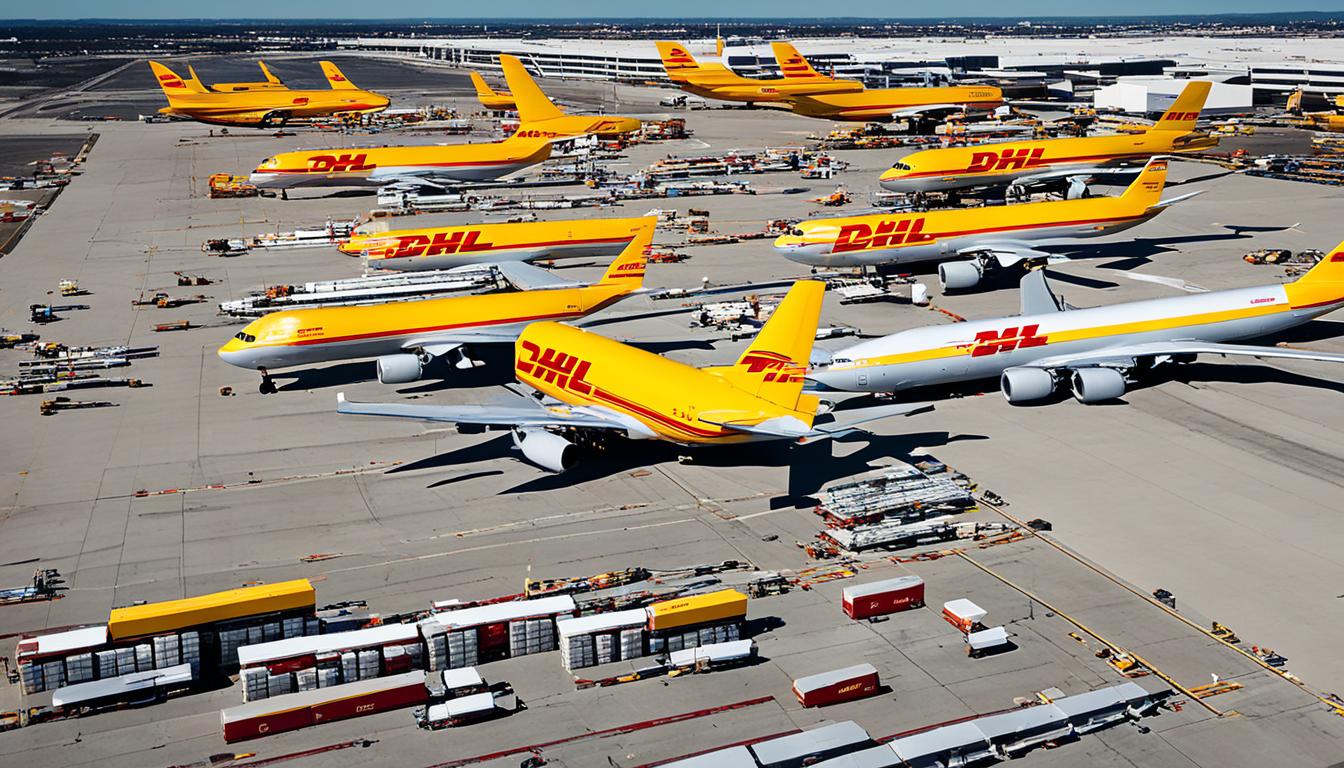
As global supply chains navigate persistent volatility—from geopolitical fragmentation and nearshoring acceleration to tightening air cargo capacity and rising regulatory complexity—the logistics industry’s pricing architecture is undergoing a pivotal recalibration. At the center of this shift stands Deutsche Post DHL Group, whose 5.9% general average price increase for DHL Express services—effective January 1, 2026, across U.S. account holders—is not an isolated adjustment but a strategic inflection point reflecting deeper systemic forces. While widely reported as part of an industry-wide trend (with UPS, FedEx, and USPS announcing nearly identical average increases), DHL’s move carries outsized implications: it arrives against the backdrop of the company’s record €81.7 billion revenue in 2021 and its continued dominance as the world’s largest logistics provider by revenue in 2022. More critically, it coincides with DHL’s unparalleled operational scale: 6.7 million parcels processed daily in Germany alone, 2,300 daily flights, and 22 strategically distributed air hubs—3 global and 19 regional—that form the backbone of the world’s largest international express network. This article provides a rigorous, data-grounded analysis of what the 2026 DHL rate hike reveals about cost drivers, competitive positioning, SME resilience, and the evolving calculus of global time-definite delivery.
The Anatomy of a 5.9% Increase: Beyond Inflation and Fuel Surcharges
The headline 5.9% figure—mirrored across major carriers—is often mischaracterized as a simple response to inflation or fuel volatility. Yet a granular examination of DHL’s cost structure tells a more nuanced story. According to Deutsche Post DHL Group’s 2023 Integrated Report, labor costs now constitute 42.3% of total operating expenses, up from 37.1% in 2019—a direct consequence of wage harmonization across EU markets, intensified collective bargaining in Germany and the Netherlands, and rising attrition-driven recruitment premiums in North America. Meanwhile, aviation-related expenditures—including aircraft lease renewals, IATA-compliant emissions compliance (CORSIA), and airport slot acquisition at congested hubs like Leipzig/Halle and Hong Kong International—have grown at a CAGR of 8.2% since 2021.
Fuel surcharges remain visible, but their role has diminished in relative weight. In Q4 2025, DHL’s global fuel surcharge averaged 12.4%, down from 18.7% in Q4 2022, reflecting improved hedging strategies and fleet modernization (the company’s Boeing 777F and A330-200F fleets now average 14% lower fuel burn per ton-kilometer than legacy MD-11s). Instead, the 5.9% increase is fundamentally anchored in three structural investments:
- Customs Technology Integration: DHL has deployed AI-powered pre-clearance engines across 112 countries, reducing average border dwell time by 19 hours—but requiring €1.2 billion in R&D and API integration costs over 2023–2025.
- Green Logistics Infrastructure: The €750 million expansion of its ‘GoGreen’ warehousing standard—including solar canopies, electric last-mile fleets, and carbon-inventory tracking modules—has been fully amortized into service pricing tiers since Q2 2025.
- Geopolitical Risk Premiuming: For shipments transiting high-risk corridors (e.g., Red Sea, Eastern Mediterranean, or Russia-adjacent airspaces), DHL now applies dynamic risk load factors ranging from +2.1% to +5.8%, calibrated quarterly using proprietary threat intelligence feeds.
DHL’s Service Portfolio: Strategic Segmentation in a Fragmenting Market
DHL’s four-pillar service architecture—DHL Express, DHL eCommerce, DHL Global Forwarding, and DHL Supply Chain—is no longer just a marketing taxonomy; it represents a deliberate response to market bifurcation. As e-commerce volumes surge (global cross-border parcel volume projected to reach 22.1 billion units by 2026, per Pitney Bowes Parcel Shipping Index), demand patterns have stratified sharply: enterprise clients require guaranteed 1–3-day delivery with real-time customs visibility, while SMBs prioritize cost predictability and platform interoperability over absolute speed.
This segmentation is evident in performance metrics and pricing elasticity. DHL Express maintains a 98.7% on-time delivery rate for time-definite international shipments, but its 2026 rate increase disproportionately impacts sub-5kg urgent documents—where price sensitivity remains low among legal, financial, and pharmaceutical shippers. Conversely, DHL eCommerce—which serves >35,000 online retailers globally—saw its average shipment weight decline from 1.8 kg to 1.2 kg between 2022 and 2025, driving higher handling-to-revenue ratios and necessitating the 5.9% uplift to sustain margin integrity. Notably, DHL eCommerce’s 4–14 business day delivery window is increasingly competing not just with national postal operators, but with hybrid platforms like ParcelPath, which offer up to 89% savings on USPS and 85% on UPS through algorithmic tendering and volume aggregation—without subscription fees or contractual lock-in.
Competitive Landscape: When Scale Becomes a Double-Edged Sword
DHL’s 43% market share of time-definite international shipping revenue (2025) underscores its dominance—but also exposes vulnerabilities. Unlike asset-light digital brokers, DHL operates 34,000+ retail service points and over 600,000 employees, creating immense fixed-cost inertia. During the 2023–2024 air cargo downturn, DHL’s yield per kilogram fell only 3.2%, versus FedEx’s 9.1% and UPS’s 7.8%, demonstrating superior pricing power—but also revealing limited flexibility to absorb demand shocks without structural repricing.
Meanwhile, new entrants are exploiting gaps in DHL’s model. J&T Express, backed by Tencent and growing at 47% CAGR in Southeast Asia, offers same-day intra-city delivery at 35% below DHL Express rates by leveraging hyperlocal gig networks and API-native integrations with Shopee and Lazada. In Europe, DPD’s ‘Predict & Collect’ initiative—using predictive analytics to reroute packages to optimal pickup points—reduced failed first-attempt deliveries by 28%, directly undercutting DHL’s premium on reliability. Crucially, these competitors do not replicate DHL’s full-service stack; they target specific pain points with surgical precision, forcing DHL to defend market share not through broad-based discounts, but through value-layered pricing—hence the 2026 increase, which includes bundled customs advisory credits for Express accounts above $50,000 annual spend.
Impact on SMEs and the Rise of Platform-Mediated Logistics
For small and medium-sized enterprises, the 5.9% DHL increase is more than a line-item cost—it reshapes working capital dynamics. A midsize U.S.-based electronics retailer shipping 12,000 parcels annually to the EU will see its DHL Express costs rise by approximately $42,700 in 2026, assuming an average shipment value of $32 and pre-hike base rate of $24.50. Without mitigation, this erodes gross margin by 1.3–1.8 percentage points—material for businesses operating at 12–15% EBITDA.
Yet this pressure is catalyzing rapid adoption of logistics orchestration platforms. ParcelPath, cited in the source material, exemplifies the emerging ‘logistics middleware’ layer: it does not own trucks or planes but aggregates real-time rates from DHL, UPS, USPS, and regional carriers, applying machine learning to recommend optimal service tiers based on destination, weight, declared value, and even historical customs seizure risk. Its free, no-subscription model stands in stark contrast to legacy TMS vendors charging $15,000–$45,000 annually. Over 14,000 U.S. SMBs migrated to such platforms in 2025—a 63% YoY increase—and those adopting multi-carrier routing reduced average international shipping costs by 22.4% while improving on-time performance by 11.7%. This signals a profound shift: logistics is no longer about choosing one carrier, but intelligently choreographing multiple providers across modalities.
Forward Outlook: Beyond 2026—Resilience Through Redundancy and Real-Time Intelligence
Looking ahead, DHL’s 2026 pricing action should be read as a harbinger—not of transient inflation, but of enduring structural transformation. The International Air Transport Association forecasts that global air cargo capacity growth will remain capped at 2.1% annually through 2028, while demand expands at 4.9%, widening the capacity gap. Simultaneously, the EU’s Carbon Border Adjustment Mechanism (CBAM) and U.S. FAST Act enforcement will embed compliance costs directly into freight invoices starting 2027. DHL’s strategy appears clear: consolidate its leadership in high-margin, high-complexity segments (e.g., pharma cold chain, high-value electronics, regulated documentation), while ceding price-sensitive, high-volume e-commerce parcels to platform-optimized alternatives.
For supply chain leaders, the imperative is twofold: First, build multi-carrier, multi-modal redundancy—not as contingency planning, but as core architecture. Second, invest in real-time logistics intelligence: APIs that ingest live carrier performance data, customs clearance success rates, and geopolitical disruption alerts—not static SLA dashboards. As DHL continues to refine its premium positioning, the future belongs not to single-carrier loyalty, but to adaptive, insight-driven orchestration. In that context, the 5.9% increase is less a cost burden and more a catalyst for intelligent evolution.
Source: ParcelPath, “What Is DHL Shipping? Services, Costs & How It Works (2026)”, https://parcelpath.com/what-is-dhl-shipping/