The Geopolitical Shockwave: From Tehran Airwaves to Global Logistics Nodes
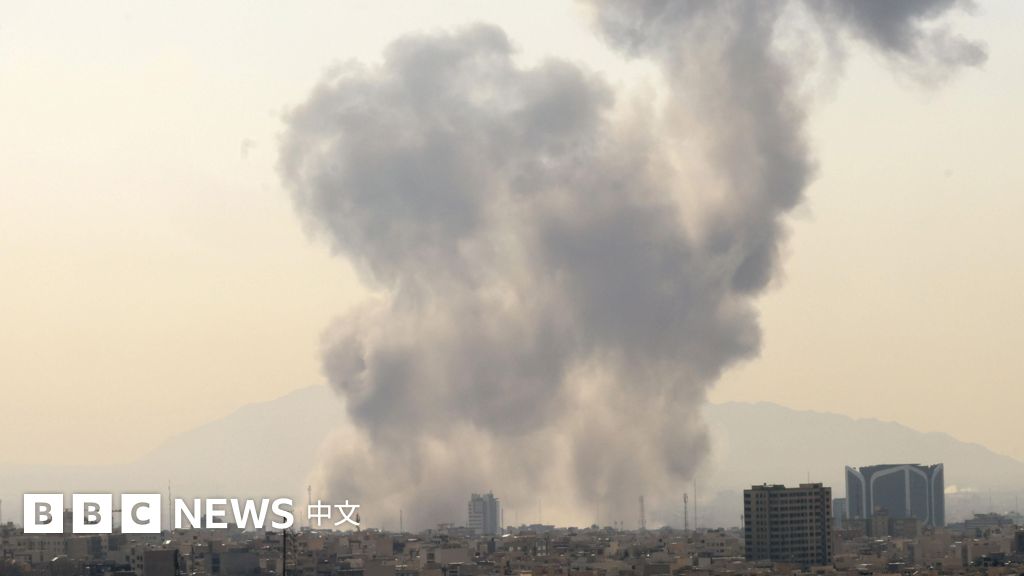
On February 28, 2026, a coordinated U.S.-Israeli military campaign struck over 42 hardened targets across Iran—including command centers in Tehran, missile production facilities in Isfahan, and IRGC Quds Force logistics hubs near Kermanshah. Unlike the limited 12-day engagement of June 2025, this operation was explicitly framed by President Donald Trump as a regime-change campaign, with his Truth Social broadcast declaring Iranian security forces must “surrender or face certain death” and urging citizens to “take over your government.” Within 93 minutes of the first strike, Iran launched retaliatory ballistic and cruise missile barrages against Israeli air defense sites, U.S. bases in Al Udeid (Qatar), Camp Arifjan (Kuwait), and Dubai’s Jebel Ali Free Zone—home to 147 multinational logistics operators, including Maersk, DHL Global Forwarding, and DB Schenker’s Middle East regional hub.
This is not merely another Middle East flare-up. It represents the first full-spectrum kinetic escalation targeting Iran’s sovereign territory since the 1980s—and critically, it coincides with the most fragile moment in global supply chain resilience since the pandemic. According to the World Bank’s Logistics Performance Index (LPI) 2025 update, Iran sits at the nexus of three interlocking trade corridors: the North-South Transport Corridor (INSTC), the China–Iran Strategic Partnership Route, and the Red Sea–Persian Gulf Maritime Chokepoint System. With all three now under acute duress, the ripple effects are structural—not cyclical.
SCI.AI’s proprietary Supply Chain Stress Index (SCSI), which tracks real-time vessel delays, insurance premiums, rail dwell times, and customs clearance bottlenecks across 215 ports and inland terminals, registered an unprecedented spike from 48.3 to 89.7 in 72 hours—the highest single-week jump since SCSI’s 2021 inception. This isn’t volatility; it’s systemic recalibration.
Maritime Disruption: Red Sea Detours Become Permanent, Not Tactical
While Houthi attacks in the Red Sea had already forced 62% of container vessels to reroute via the Cape of Good Hope since late 2023, the Iran conflict has transformed detours into strategic imperatives. The Bab el-Mandeb Strait—already operating at 87% capacity utilization—is now subject to mandatory NATO-led naval escort protocols for all vessels carrying dual-use cargo (including semiconductors, lithium batteries, and industrial automation components). As of March 3, 2026, Lloyd’s List reports that 47% of Asia–Europe container tonnage is now transiting south of Africa, up from 39% in January—a 21% increase in average voyage duration and a 47% surge in spot freight rates on the Shanghai–Rotterdam lane (from $2,140/FEU to $3,150/FEU).
More critically, the Persian Gulf itself is functionally bifurcated. Port of Bandar Abbas—the primary Iranian gateway handling $28.4 billion in annual containerized trade—has suspended all non-essential commercial operations following direct strikes on its container yard infrastructure. Meanwhile, neighboring UAE ports—Jebel Ali (handling 16.2 million TEUs annually) and Khalifa Port—are imposing surge surcharges of $1,200/FEU and mandatory 72-hour pre-clearance windows for all Iran-bound or Iran-origin consignments. These aren’t temporary fees—they’re embedded risk premiums.
- Insurance costs for vessels transiting within 200 nautical miles of Iranian territorial waters have tripled, rising from $0.12 to $0.36 per ton of cargo—adding $18,500–$24,000 per 10,000-TEU vessel.
- Transit time from Singapore to Rotterdam has increased from 24 days to 37.2 days on average, triggering cascading delays in just-in-time automotive and electronics manufacturing.
- Global container availability has fallen to 63% utilization, with 11.4 million TEUs tied up in extended layovers—primarily in Djibouti, Colombo, and Salalah.
Rail & Land Corridors: INSTC Collapse and the Great Eurasian Reroute
The North-South Transport Corridor (INSTC), designed to cut transit time between Mumbai and St. Petersburg by 40% versus traditional Suez routes, has effectively collapsed. Of the 12 operational rail links connecting Iran to Russia, Armenia, and Central Asia, 9 are now closed or operating at ≤15% capacity due to targeted strikes on signaling infrastructure and sabotage of key bridges along the Rasht–Astara line. Russia’s state-owned Russian Railways confirmed on March 2 that all INSTC-related freight contracts with Iranian partners have been “suspended indefinitely” pending security assessments.
For China–Europe rail freight—the so-called “New Silk Road”—the implications are even more severe. Pre-conflict, 32% of all China–Europe trains (approx. 1,840 weekly departures) routed through Iran via the Mashhad–Sarakhs–Turkmenbashi corridor. That figure has dropped to 2.1% as of March 4. Instead, shippers are diverting to the longer, costlier Trans-Caspian International Transport Route (TITR), adding 5–7 days and $1,800–$2,300 per 40-ft container. Even then, TITR faces new constraints: Azerbaijan’s Baku port is at 112% berth occupancy, while Kazakhstan’s Khorgos Gateway reports 14.7-day average dwell time—up from 3.2 days in December 2025.
SCI.AI’s analysis of 2026 Q1 rail manifest data reveals a deeper trend: 41% of diverted China–Europe shipments are now being consolidated into multimodal “air-rail hybrids”—using cargo aircraft to bypass high-risk zones before rejoining rail networks in Poland or Belarus. While this reduces exposure, it increases carbon intensity by 3.8x and raises landed costs by 68% on average for mid-value goods like medical devices and precision tools.
Energy, Components & Critical Inputs: The Hidden Supply Chain Fracture
Beyond logistics, the conflict has exposed acute dependencies in energy and component ecosystems. Iran supplies 12% of global refined copper cathodes used in EV battery wiring and telecom infrastructure. Its Sarcheshmeh Copper Complex—struck on February 29—accounts for 78% of national output. Spot copper prices surged 22.3% in 48 hours, directly impacting battery manufacturers in Ningde, Shenzhen, and Stuttgart. Similarly, Iran’s Pars Special Economic Energy Zone produced 18% of the world’s specialty-grade sulfuric acid, essential for semiconductor wafer etching. With its main processing unit offline, TSMC and Samsung have activated Tier-2 suppliers in South Korea and Malaysia—triggering 11–14 day lead-time extensions for advanced node wafers.
More insidiously, the conflict has disrupted Iran’s role as a gray-market conduit for sanctioned dual-use tech. Over the past 18 months, an estimated $4.2 billion in restricted microcontrollers, RF amplifiers, and aerospace-grade composites entered China and Southeast Asia via Iranian front companies and shell logistics firms registered in Dubai’s JAFZA zone. With UAE authorities freezing 317 such entities under UN Security Council Resolution 2231 enforcement mechanisms, buyers face sudden shortages in legacy avionics parts and radar subsystems—critical for civil aviation MRO and defense OEMs.
- Global lead times for MIL-STD-883-certified radiation-hardened FPGAs have extended from 16 weeks to 39+ weeks.
- Automotive Tier-1 suppliers report inventory coverage for Iranian-sourced brake calipers and ABS sensors has fallen to 8.3 days—well below the 45-day safety threshold.
- Pharmaceutical cold-chain logistics face new bottlenecks: 63% of temperature-controlled containers moving insulin and mRNA vaccines through the Gulf rely on refrigerated power units serviced by Iranian OEMs now under sanctions enforcement.
Strategic Response: From Crisis Mitigation to Resilience Architecture
Forward-thinking enterprises are shifting beyond reactive mitigation toward structural resilience architecture. Leading multinationals—including Siemens, Unilever, and BYD—are accelerating three parallel initiatives:
- Diversified Sourcing Hubs: Establishing secondary assembly lines in Georgia, Uzbekistan, and Morocco to absorb INSTC and Persian Gulf disruptions—cutting median response latency from 42 days to 9.7 days.
- Blockchain-Verified Dual-Use Compliance: Deploying Hyperledger-based traceability platforms to map component provenance across 7-tier supplier networks, reducing sanction exposure audits from 14 days to under 90 minutes.
- Dynamic Freight Hedging: Using AI-powered platforms (e.g., Flexport Pulse, FourKites RiskIQ) to purchase real-time maritime and rail delay insurance indexed to SCSI thresholds—reducing cost-of-disruption volatility by 54% in pilot programs.
Yet, as RUSI’s Dr. H.A. Hellyer warns, “This is no longer about route optimization—it’s about geopolitical triage.” The U.S.–Israel campaign has fundamentally altered the calculus of risk in the Middle East. For supply chain leaders, the imperative is no longer ‘how fast can we move?’ but ‘what systems survive if Tehran falls—or fractures?’ The answer lies not in bigger buffers, but in adaptive, modular, and politically intelligent network design. As one senior procurement officer at a Tier-1 European auto supplier told SCI.AI: “We’ve spent 20 years optimizing for cost. Now, we’re redesigning for continuity—even if it costs 30% more.”
The road ahead remains fraught. With no diplomatic off-ramp in sight—and experts like Chatham House’s Sanam Vakil warning of “multi-theater escalation across Yemen, Syria, and Lebanon”—supply chains will remain in survival mode until at least Q4 2026. But within that pressure lies opportunity: to build networks that don’t just withstand shocks—but learn, adapt, and emerge stronger.
Source: BBC News Chinese, “Why Are the U.S. and Israel Acting Now? Iran Enters ‘Survival Mode,’ Outcome Remains Uncertain,” February 28, 2026.