The Historic Supreme Court Ruling Unraveling Trump’s Aggressive Tariff Regime
In a monumental and profoundly disruptive 6-3 decision, the United States Supreme Court delivered a decisive blow to President Donald Trump’s expansive use of executive authority, striking down the administration’s sweeping tariff policies instituted under the International Emergency Economic Powers Act (IEEPA) of 1977. Chief Justice John Roberts, authoring the majority opinion, definitively clarified that the IEEPA was never intended by Congress to serve as an unchecked regulatory mechanism for the executive branch to unilaterally levy unconstrained and indefinite tariffs on a vast array of global imports. This finding fundamentally destabilizes the legal foundation upon which the Trump administration had constructed much of its aggressive economic statecraft over the past several years.
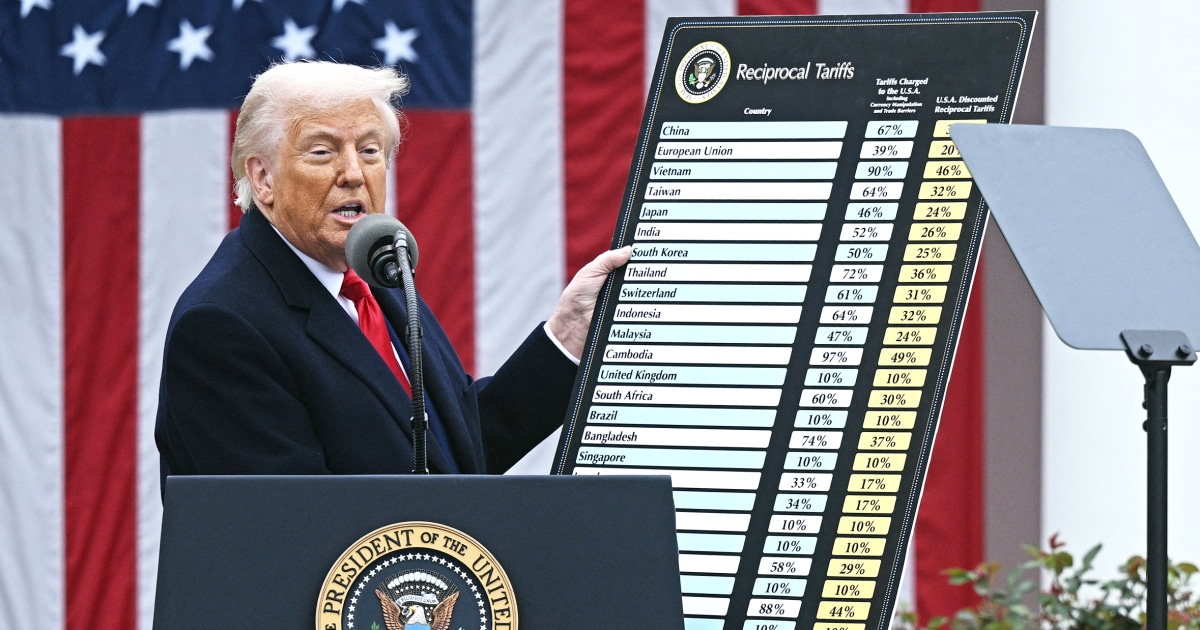
The immediate and tangible consequence of this ruling is the nullification of a vast swath of reciprocal and punitive tariffs that have severely disrupted international trade flows. This includes the baseline 10% reciprocal country-by-country tariffs, the steep 34% punitive tariffs exclusively targeting specific Chinese goods, and the highly controversial 25% tariffs imposed on imports from Canada, Mexico, and China—a measure previously justified by the administration as a blunt instrument to coerce cooperation on curbing illicit cross-border fentanyl trafficking. These financial barriers had become a seemingly permanent fixture of the global trade landscape, driving inflation and compressing corporate profit margins globally.
While the ruling successfully dismantled the use of the IEEPA for general tariff imposition, it is critical to note that it leaves intact other trade barriers established under divergent legal frameworks, such as the Section 232 tariffs concerning national security implications on steel and aluminum. Nonetheless, this partial dismantling has catalyzed global shockwaves. Importers and global conglomerates are hurriedly preparing litigation and administrative claims to recoup potentially hundreds of billions of dollars in unlawfully collected duties. However, the regulatory landscape remains highly volatile; mere hours after the ruling, President Trump pivotally announced the implementation of a new universal 10% global tariff utilizing Section 122 of the Trade Act of 1974, indicating that the era of erratic trade policies is far from concluded.
The Imminent Logistics of a Multi-Billion Dollar Tariff Refund Wave
The immediate economic fallout from the Supreme Court decision is centered squarely on the potential for a colossal financial reimbursement to the private sector. The U.S. Customs and Border Protection (CBP) officially reported that as of December, approximately $130 billion had been aggressively collected explicitly under the auspices of the now-invalidated IEEPA tariff mechanisms. Although the former president continually boasted that his comprehensive tariff framework generated up to $3 trillion in strategic economic leverage, the tangible liquidity available for direct refunds represents one of the largest sudden capital redistributions in modern supply chain history.
Hundreds of American corporations, alongside powerful industrial coalitions and small business advocacy groups like ‘We Pay the Tariffs,’ have instantaneously mobilized, demanding that the U.S. Treasury Department institute a “full, fast, and automatic” restitution process. For countless small and medium-sized enterprises (SMEs) operating on razor-thin logistical margins, these tariffs were not merely an inconvenience but an existential financial drain. A rapid influx of reclaimed capital could profoundly repair damaged corporate balance sheets, enabling delayed capital expenditure, workforce expansion, and overdue investments in logistical automation and technology upgrades.
However, supply chain directors must temper their optimism with administrative realism. The bureaucratic machinery required to audit, verify, and disburse hundreds of billions of dollars is notoriously cumbersome and prone to extensive legal stalling. Justice Brett Kavanaugh, in his dissenting opinion, explicitly warned of the catastrophic fiscal complexity facing the U.S. Treasury. Consequently, corporate financial officers are plunged into an operational dichotomy: they must aggressively pursue and document historical refund claims through costly legal and forensic accounting channels, while simultaneously bracing their current cash flows for the sudden impact of Trump’s newly minted Section 122 tariffs scheduled for immediate enforcement.
Immediate Operational Chaos in Trade Compliance and Customs Strategy
For global trade compliance officers and freight forwarders, the Supreme Court’s ruling initiates a period of acute operational whiplash. Over the preceding years, supply chain paradigms were fundamentally re-engineered to navigate and mitigate the punitive costs associated with the varying strata of IEEPA tariffs. Sophisticated algorithms were deployed specifically to manage the complex algebra of Total Landed Costs, where mitigating astronomical duty penalties outweighed the conventional goals of raw transport efficiency or geographic proximity.
The abrupt invalidation of these specific tariffs, coupled simultaneously with the rapid introduction of a new, blanket 10% global tariff under alternative legislation, creates unparalleled chaos within digital customs management systems (CMS).
- Tariff Code Obsolescence: Millions of Harmonized System (HS) classifications and their associated duty rates must be updated literally overnight across global enterprise resource planning (ERP) systems to prevent shipments from being impounded or incorrectly taxed at ports of entry.
- Inventory Routing Disruption: Cargo currently traversing the Pacific Ocean or staged in transshipment hubs may suddenly find its intended financial rationale obsolete, necessitating frantic mid-voyage rerouting decisions to optimize for the volatile new regulatory reality.
- Compliance Volatility: The very definition of “compliance” has devolved into an exercise in high-frequency trading. Goods that were categorized as tax-exempt on Friday are unexpectedly subject to universal levies by Tuesday.
This environment underscores an existential imperative for digital agility within logistics management. Supply chains reliant on static spreadsheets or legacy compliance software are fundamentally ill-equipped to survive this era. Advanced digital twins, real-time geopolitical intelligence integration, and AI-driven scenario modeling are transitioning from luxury corporate assets to baseline requirements for ensuring cross-border goods remain economically viable.
The Forced Reassessment of “China Plus One” and Nearshoring Imperatives
The psychological impact of the ruling deeply unsettles the dominant narratives that have dictated foreign direct investment (FDI) and factory relocations since 2018. The escalating severity of bilateral trade tensions had galvanized the “China Plus One” strategy and accelerated the momentum toward nearshoring, driving massive industrial migrations into Mexico, India, Vietnam, and Eastern Europe. The fundamental thesis driving these multi-billion-dollar investments was the assumption that U.S. tariffs constituted a permanent, structurally unyielding barrier to direct trans-Pacific commerce.
By exposing the legal fragility and transient nature of these politically motivated trade barriers, the Supreme Court has forced corporate boards to aggressively re-evaluate their strategic capital allocations. Relocating a primary manufacturing facility demands extraordinary capital expenditure, decades of localized workforce training, and the complete reconstruction of Tier 2 and Tier 3 supplier ecosystems. When the primary economic justification for such an extreme maneuver is exposed as a legally tenuous executive order—one that can be entirely erased by a judicial stroke—the risk calculus shifts dramatically.
Moving forward, Chief Supply Chain Officers (CSCOs) must deliberately decouple their profound network design from the erratic pendulum of localized political administrations. The architecture of a resilient 2026 supply chain will not be defined by frantic evasion of a specific nation’s tariffs, but by the cultivation of hyper-flexible, modular ecosystems. Manufacturers will increasingly prioritize strategic redundancy, ensuring that intellectual property, tooling capabilities, and sourcing contracts are distributed across multiple geopolitical jurisdictions, allowing for instantaneous operational pivoting whenever—not if—the next arbitrary trade barrier is erected.
Trump’s Section 122 Pivot: The Dawn of Trade War 2.0
If global markets anticipated a brief respite following the judicial neutralization of the IEEPA tariffs, President Trump’s immediate counter-maneuver swiftly shattered those illusions. By invoking Section 122 of the Trade Act of 1974—a statute historically designed to address severe, foundational international balance-of-payments deficits—to impose a blanket 10% temporary import duty globally, the administration effectively initiated “Trade War 2.0.” This strategic pivot signifies a profound escalation from targeted, punitive bilateral disputes to a posture of universal economic protectionism.
The indiscriminate application of a universal baseline tariff fundamentally disrupts the strategic logic of traditional alliances. It negates the foundational benefits painstakingly negotiated within localized frameworks such as the United States-Mexico-Canada Agreement (USMCA) or established European Union partnerships. Companies that engaged in arduous nearshoring efforts, relocating operations to Mexico or Canada specifically to secure tariff-free access to the American consumer base, now find themselves ensnared in the exact same protective net that target overseas competitors.
This aggressive, unipolar approach significantly amplifies the probability of synchronized global retaliation. If major economic blocs—including the EU, ASEAN, and the BRICS nations—choose to reciprocate symmetrically, the global economy risks fracturing into profoundly isolated, highly fortified regional trading blocs. In such a dystopian trade environment, the traditional model of hyper-efficient, planet-spanning supply chains will collapse entirely, replaced by localized, inward-facing operational silos designed more for survival and political compliance than for economic optimization.
Strategic Imperatives for Global Supply Chain Leaders in 2026
The confluence of the Supreme Court’s landmark ruling and the immediate executive pivot to universal tariffs forces supply chain leadership into an unprecedented crucible of decision-making. The sheer volatility of the regulatory landscape dictates that operational paralysis is functionally equivalent to corporate failure. Leaders must immediately institute multi-disciplinary “tariff war rooms” that integrate logistics, legal compliance, corporate finance, and strategic sourcing into a single, cohesive command structure.
First, absolute priority must be given to aggressive digital modernization. Supply chains devoid of end-to-end visibility and real-time analytical capabilities will be crushed under the weight of fluctuating customs calculations and erratic delivery schedules. Second, businesses must fundamentally restructure their contractual relationships with global suppliers, embedding aggressive flexibility clauses that allow for rapid geographical pivoting without triggering catastrophic financial penalties.
Ultimately, the events of 2026 clearly demonstrate that geopolitics and international jurisprudence have permanently superseded traditional metrics of transport cost and manufacturing efficiency as the primary drivers of supply chain strategy. The most successful organizations of the coming decade will be those that engineer their networks not to rigidly withstand specific political shocks, but to fluidly adapt and mutate in harmonious response to an era defined by permanent, structural trade uncertainty.
Source: nbcnews.com