USITC Fires the Starting Gun on a Landmark Investigation
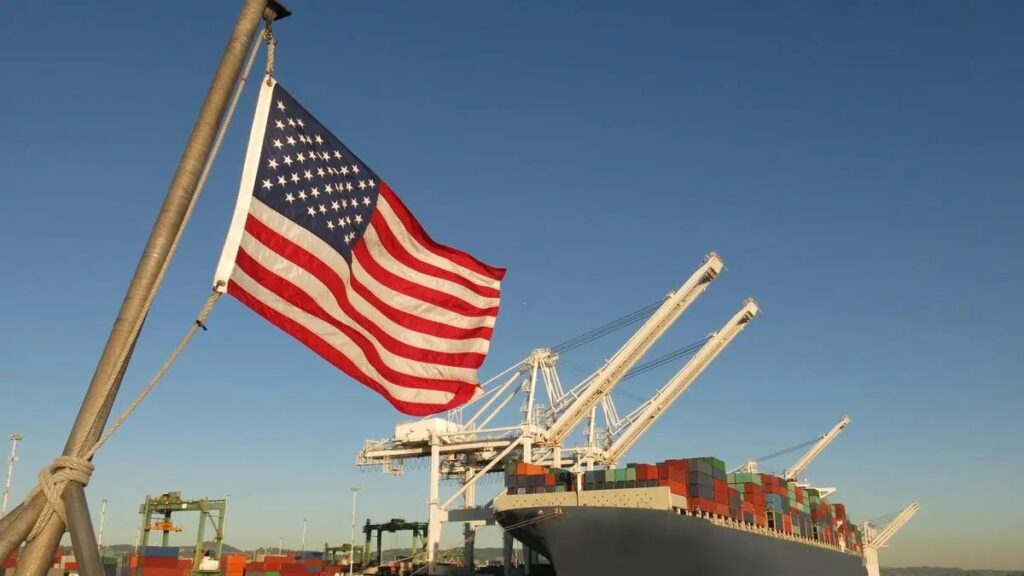
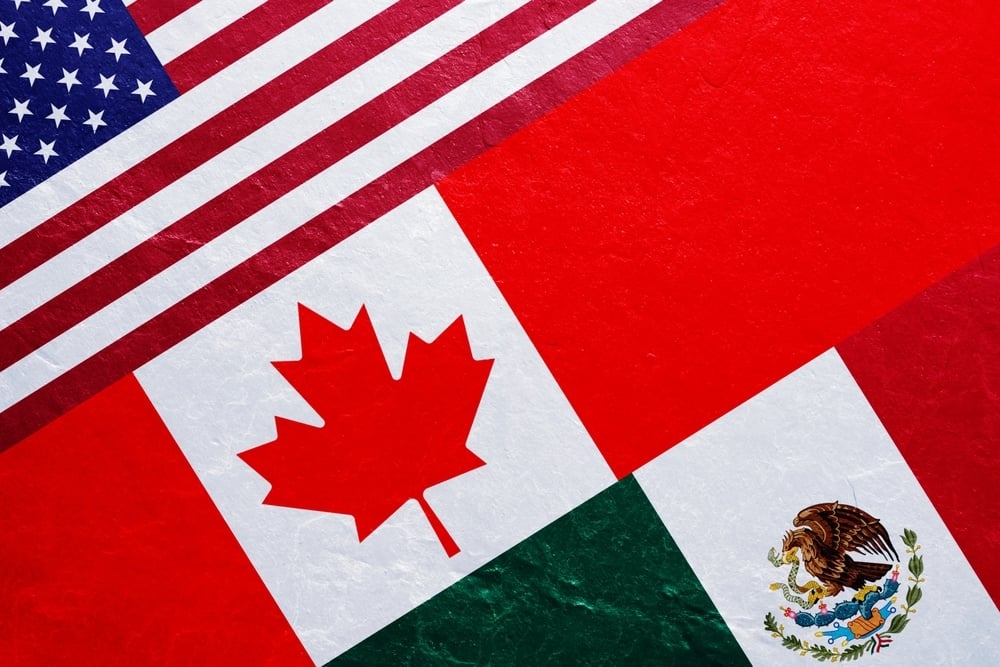
On February 19, 2026, the United States International Trade Commission (USITC) formally announced the launch of a comprehensive investigation into the automotive rules of origin under the United States-Mexico-Canada Agreement (USMCA). The probe will examine the rules’ “impact on the U.S. economy, effect on U.S. competitiveness, and relevancy considering recent technology changes.” A public hearing is planned for later this year, with the final report due by July 2027. While the investigation is technically advisory, its findings will serve as the foundational reference for what promises to be the most consequential trade renegotiation in North America since the original NAFTA transition.
The current USMCA framework imposes the strictest automotive origin requirements of any major free trade agreement in the world. To qualify for duty-free access to the U.S. market, vehicles must contain at least 75% North American regional value content, up from NAFTA’s 62.5%. Passenger vehicles must have at least 40% of their content manufactured in the United States or Canada, based on a specified list of “core parts” including engines, transmissions, body panels, and chassis components. For pickup trucks, the threshold rises to 45%. These rules have already forced automakers including General Motors, Ford, Toyota, and Tesla to fundamentally restructure their supplier networks, bringing billions of dollars in procurement back within North American borders. The central question now is whether these thresholds will be raised further — and how the rules will adapt to accommodate electric vehicles, battery chemistries, and critical mineral supply chains that barely existed when USMCA was negotiated.
Three Scenarios for July 1: Extension, Revision, or the Ten-Year Runway
USMCA’s built-in six-year review mechanism triggers for the first time on July 1, 2026, when the United States, Mexico, and Canada must decide whether to extend the agreement. Three outcomes are realistically on the table. The most favorable scenario sees all three parties agree to a straightforward 16-year extension through 2042, providing maximum certainty for long-term investment decisions. The second — and most widely expected by trade analysts — involves negotiated revisions followed by extension: tighter automotive content rules, new EV and critical minerals provisions, restrictions on Chinese-affiliated manufacturing, and enhanced labor enforcement. The third scenario, which has generated the most alarming headlines, sees one or more parties decline to extend, triggering annual reviews and a 10-year sunset clause that would keep the agreement fully operational through 2036.
That third scenario deserves demystification. Even a failure to extend does not create an immediate trade cliff. Every existing provision remains in force for a full decade, creating a long runway for adjustment rather than the overnight disruption some commentary implies. The distinction matters because it directly affects how companies should calibrate their risk response. Over 75% of stakeholders who submitted comments to the USTR support maintaining the USMCA framework. General Motors, Tesla, Toyota, and Ford have publicly urged the administration to extend the agreement, which they describe as crucial to American auto production. Stellantis has taken a more aggressive stance, demanding that vehicles manufactured outside North America face component origin rules that “mirror or effectively match” USMCA requirements, while warning that under 15% tariffs with Japan, USMCA-compliant U.S. vehicles “will continue to lose market share to Asian imports.”
Washington’s Five Priorities: From Tariff Leverage to ‘Fortress North America’
The U.S. government has made clear that it views the USMCA review as a strategic lever rather than a procedural formality. White House trade advisor Peter Navarro described “significant” flaws in the current agreement in a February 2026 Bloomberg interview, though he deliberately avoided discussing withdrawal. The USTR received over 1,500 written submissions during its public comment period — far exceeding expectations for what was supposed to be a routine review. Five priority areas have crystallized: tightening automotive rules of origin to further increase North American localization; restricting Chinese-affiliated manufacturers’ operations within North America, a position enjoying bipartisan support; strengthening labor enforcement through the Rapid Response Labor Mechanism (which has already been invoked 13 times with eight positive outcomes); adding new provisions for electric vehicle supply chains and battery materials; and establishing regional self-sufficiency requirements for critical minerals and rare earths.
The Center for Strategic and International Studies (CSIS) has framed the review as an opportunity to build a “Fortress North America” — a systematic effort to reduce the continent’s supply chain dependence on China. This strategic framework carries profound implications for Chinese companies that have been evaluating North American market entry through Mexico-based manufacturing. BYD, CATL, and other Chinese manufacturers have been assessing factory sites in Mexico, but potential “foreign entity of concern” restrictions or Chinese capital exclusion clauses in a revised USMCA could fundamentally alter the viability of using Mexico as a springboard into the U.S. market. The Baker Institute’s analysis identifies battery supply chains and rare earth sourcing as areas where all three countries have aligned incentives to create a more insular regional ecosystem.
Behind the Tariff Headlines: How 88.7% USMCA Utilization Is Rewriting Trade Flows
Understanding the real impact of the USMCA review requires looking past headline tariff figures to the underlying compliance dynamics. In March 2025, the U.S. imposed a 25% tariff on all imports from Canada and Mexico — but immediately exempted USMCA-compliant goods. This distinction has become the single most important variable in North American trade economics. According to Penn Wharton Budget Model data, the actual effective tariff rate on Mexican imports has ranged between just 3.8% and 8% throughout 2025, a fraction of the 25% headline figure. The reason is straightforward: the vast majority of cross-border goods already meet USMCA origin requirements.
The compliance acceleration has been dramatic. BBVA Research reports that USMCA utilization among Mexican exporters surged from 44.8% in January 2025 to 88.7% by November — a near-doubling that signals a massive, real-time restructuring of North American supply chains to qualify for preferential treatment. The Federal Reserve’s July 2025 analysis estimated that total USMCA compliance costs amount to an equivalent tariff of 1.4% to 2.5% on top of production costs — a worthwhile premium compared to the 25% penalty for non-qualifying goods. Tetakawi’s operational data from over 60 manufacturers in Mexico confirms that approximately 85% of client exports qualify under USMCA and enter the U.S. at preferential rates. However, if the review results in tighter content requirements — say, raising the threshold from 75% to 80% or higher — a significant portion of currently qualifying products would need to re-engineer their supplier networks, particularly in EV components where critical materials remain heavily sourced from Asia-Pacific supply chains.
The Structural Labor Divide: Why $40.9 Billion in FDI Flows to Mexico Regardless
Among all factors shaping the USMCA review’s trajectory, the structural divergence in labor supply across North America may be the most irreversible. The United States currently faces approximately 450,000 unfilled manufacturing positions, with Deloitte projecting the gap will widen to nearly two million by 2033. Manufacturing turnover hovers around 31%, and labor force participation continues to decline as baby boomers retire at a rate of roughly 10,000 per day. Canada faces a parallel challenge, with over 70% of organizations reporting difficulty filling skilled trades positions. These are not cyclical fluctuations but deep demographic trends that no trade agreement can reverse.
Mexico presents a demographic mirror image. With a median age of just 29 years, 91% of the population under 65, and over two million new workers entering the labor force annually, Mexico offers the kind of scalable talent pipeline that simply does not exist in the United States or Canada. This demographic advantage is projected to persist for at least another decade. The market has already priced in this reality: foreign direct investment into Mexico reached a record $40.9 billion through the first three quarters of 2025, a 15% year-over-year increase. Crucially, this FDI surge has occurred against a backdrop of maximum trade policy uncertainty — USMCA review pending, 25% tariff threats, and potential Chinese manufacturing restrictions. Companies are making long-term capital allocation decisions based on structural factors — labor availability, geographic proximity, cost competitiveness — that exist independently of any single trade agreement’s outcome.
The Five-Step Stress Test: What Every Manufacturer Should Complete Before July
Trade analysts and industry advisors broadly agree that passive waiting is the worst possible strategy ahead of the July 1 review date. Five critical preparation steps have emerged as consensus best practices. First, conduct a compliance baseline audit: assess whether your current exports qualify under existing USMCA rules, because products that fail today’s 75% threshold will certainly fail under tighter requirements. Second, perform supply chain origin mapping down to Tier 2 and Tier 3 suppliers — many manufacturers lack clear visibility into where their sub-components originate, and if content requirements increase or critical mineral provisions are added, knowing which inputs are at risk becomes essential. Request detailed origin certifications from suppliers now, before the review deadline creates urgency.
Third, run multi-scenario cost stress tests: model how your Mexico-based operations perform under different tariff rates, content requirements, and labor cost scenarios to identify your specific tipping points. Fourth, get ahead of evolving labor provisions — the USMCA’s Rapid Response Mechanism has already driven measurable improvements in wages and working conditions, and this trend will only accelerate. Fifth, commission a customs-specific analysis of your actual duty exposure: the interaction between USMCA provisions, current tariff schedules, and specific product classifications creates a complex picture where perceived tariff impact often diverges significantly from actual cost exposure. The Wilson Center’s practical guide to the review offers a framework of “3 principles and 5 rules for success” that deserves careful study by every North American supply chain participant. For Chinese companies with existing or planned North American operations, these same five steps apply with added urgency — particularly given the near-certainty that Chinese-affiliated manufacturing restrictions will feature in any revised agreement.