The $70.3 Billion Reality Check: Tariffs and the Stubborn Trade Deficit
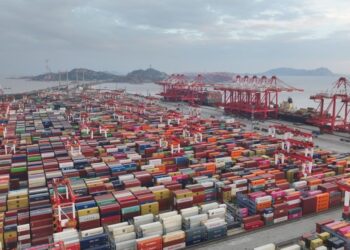
The latest trade data from the U.S. Bureau of Economic Analysis paints a sobering picture for proponents of tariff-driven trade rebalancing. In December 2025, the U.S. goods and services trade deficit surged to $70.3 billion, up $17.3 billion from November’s $53 billion figure. Imports climbed 3.6% to $357.6 billion while exports fell to $287.3 billion, widening the gap that President Trump’s aggressive tariff regime was explicitly designed to close. The services trade surplus, long a bright spot in America’s international accounts, also contracted by $1.6 billion to $29 billion in December, signaling weakness even in sectors where the U.S. traditionally dominates.
On an annual basis, the picture is marginally better but hardly encouraging. The 2025 goods and services deficit decreased by just $2.1 billion, or 0.2%, compared with 2024 — a rounding error in the context of an economy that imports more than $4 trillion in goods and services annually. Industrial supplies and materials tell a particularly troubling story: U.S. exports in this category dropped by $8.7 billion while imports in the same sector rose by $7 billion. This divergence suggests that tariffs, rather than boosting domestic manufacturing competitiveness, may have inadvertently raised input costs for American producers, further eroding their export position in global markets.
The monthly trajectory adds another layer of complexity. Between July and October 2025, the trade deficit had been trending downward, briefly fueling optimism that tariff policies were gaining traction. However, the fourth-quarter reversal was swift and decisive, pushing the December deficit back to levels roughly equivalent to December 2024 — before Trump’s second-term tariff escalation began in earnest. This boom-bust pattern suggests that short-term trade flow adjustments driven by tariff anticipation and front-loading of imports may have created misleading signals that were subsequently corrected by market fundamentals.
The 7% Milestone: US-China Decoupling by the Numbers
While the headline trade deficit numbers disappoint tariff advocates, the bilateral U.S.-China data tells a dramatically different story. The 2025 goods trade deficit with China plunged by $93.4 billion to $202.1 billion. Chinese exports to the U.S. collapsed by $130.4 billion to $308.4 billion, while U.S. exports to China also declined by $36.9 billion to $106.3 billion. Deutsche Bank’s Jim Reid captured the significance succinctly: “The latest data highlights the extent of U.S.-China decoupling, with China now accounting for only 7% of U.S. imports, down from 13% in 2024 and above 20% prior to President Trump’s first China tariffs in 2018.”
This represents one of the most rapid trade realignments in modern economic history. In less than seven years, China’s share of U.S. imports has been cut by nearly two-thirds — a seismic shift that has fundamentally altered global supply chain geography. Academic research tracking firm-level disclosures has identified at least 244 discrete relocation decisions by 141 manufacturers between 2018 and 2023 alone, with the pace accelerating sharply in 2024-2025. Vietnam, Mexico, India, Thailand, and Malaysia have emerged as primary beneficiaries, absorbing manufacturing capacity in electronics assembly, textiles, furniture, and consumer goods that previously flowed through Chinese factories.
However, the decoupling narrative requires careful nuance. Multiple studies have shown that much of the trade diversion follows a pattern of “connector country” intermediation — goods are increasingly routed through Southeast Asian nations that themselves depend heavily on Chinese intermediate inputs and components. China’s share of global intermediate goods trade actually rose by 2 percentage points in 2025, even as its share of U.S. final goods imports plummeted. This suggests a supply chain that has become longer and more circuitous rather than truly independent from Chinese manufacturing capabilities, creating what analysts call “surface decoupling with deep dependency” — a model that increases costs and transit times without meaningfully reducing strategic vulnerability.
National Security as Trade Policy: The Liberation Day Framework
The intellectual foundation for America’s current tariff regime was laid in President Trump’s April 2025 “Liberation Day” executive order, which framed persistent trade deficits as existential threats to national security. The order declared that “large and persistent annual U.S. goods trade deficits have led to the hollowing out of our manufacturing base; inhibited our ability to scale advanced domestic manufacturing capacity; undermined critical supply chains; and rendered our defense-industrial base dependent on foreign adversaries.” This framing elevated trade policy from an economic optimization problem to a geostrategic imperative, providing political justification for tariff levels that would have been inconceivable in previous administrations.
The national security rationale found powerful allies in the corporate world. JPMorgan CEO Jamie Dimon articulated the business case in his 2023 shareholder letter: “The United States cannot rely on any potential adversaries for materials essential to our national security… We also cannot be sharing vital technologies that can enhance an adversary’s military capabilities.” This convergence of government policy and corporate sentiment has created a durable consensus around “selective decoupling” — maintaining broad economic engagement with China while systematically reducing dependency in sectors deemed strategically critical, including semiconductors, rare earth minerals, pharmaceutical ingredients, and advanced manufacturing equipment.
Yet the blunt instrument of across-the-board tariffs has proven poorly suited to the precision this strategy demands. Multiple research institutions estimate that U.S. businesses absorbed more than $80 billion in direct tariff costs in 2025, with a significant portion passed through to consumers in the form of higher prices. More damaging still, the policy uncertainty generated by unpredictable tariff escalations has chilled long-term capital investment. Several reshoring projects that were announced with fanfare in 2024 have been quietly delayed or relocated to other countries, as companies struggle to build business cases around a trade policy environment that could shift dramatically with each presidential term.
The Great Supply Chain Migration: Winners, Losers, and Structural Bottlenecks
The decoupling-driven supply chain migration is creating a new global manufacturing geography, but the transition is far from smooth. Vietnam has been perhaps the most visible beneficiary, with exports to the U.S. growing more than 25% in 2025 across textiles, electronics assembly, and furniture. Mexico, leveraging its USMCA proximity advantages, has attracted substantial automotive and electronics manufacturing investment, positioning itself as the linchpin of North American supply chain restructuring. India’s massive labor pool and government incentive programs have driven rapid growth in smartphone assembly, pharmaceuticals, and chemical manufacturing.
Each of these alternative manufacturing hubs, however, faces significant scaling constraints. Vietnam’s port infrastructure, power grid reliability, and skilled labor availability are all approaching capacity limits. Mexico’s security challenges and water scarcity in key industrial corridors threaten further expansion. India’s business environment complexity and logistics infrastructure gaps continue to deter some potential investors. Most critically, all three countries remain deeply dependent on Chinese suppliers for key components, raw materials, and manufacturing equipment — creating what Boston Consulting Group researchers describe as a “de-Sinicization paradox” where the effort to reduce China dependency actually reinforces it at the intermediate goods level.
For supply chain professionals, this new landscape demands fundamentally different management approaches. McKinsey’s latest supply chain survey found that global companies increased their average number of suppliers by 35% in 2025, while investment in supply chain visibility and risk monitoring technology grew by 40%. Multi-node sourcing strategies add coordination complexity, longer supply chain routes increase inventory carrying costs and delivery time variability, and the competing pulls of friendshoring, nearshoring, and cost optimization create difficult tradeoffs. The era of optimizing for cost alone is definitively over; supply chain leaders must now balance cost, speed, resilience, compliance, and geopolitical risk in an increasingly fragmented trading environment.
Implications for Chinese Companies Going Global
The acceleration of U.S.-China supply chain decoupling has profound and immediate implications for Chinese enterprises with international ambitions. For manufacturers that historically relied on the American market as a primary export destination, the collapse from 20% to 7% import share represents not just a market contraction but a fundamental strategic pivot point. Companies like BYD, CATL, and numerous mid-tier manufacturers have responded by accelerating overseas factory construction in Hungary, Mexico, Morocco, and Southeast Asia — seeking to serve global customers from locations that circumvent tariff barriers while maintaining access to Chinese component supply networks.
However, the regulatory environment is tightening around these workaround strategies. The U.S. has pioneered the use of tariffs as sanction enforcement mechanisms, conditioning market access on supply chain alignment with American strategic objectives. Rules of origin investigations, anti-circumvention duties, and transshipment audits are all intensifying, targeting goods that are assembled in third countries but derive substantial value from Chinese inputs. The expansion of technology alliance frameworks like Pax Silica further constrains Chinese companies’ access to advanced semiconductor and AI supply chains, creating a two-tier technology ecosystem that threatens to permanently bifurcate global innovation networks.
China’s response has been to aggressively build alternative trade architectures. RCEP deepening with ASEAN, the emerging “Bio-Digital Silk Road” with GCC nations, and zero-tariff market access for African countries represent a systematic effort to construct a parallel trading system less dependent on Western markets. The effectiveness of this “dual circulation” supply chain strategy will be a defining factor in determining whether the current decoupling trend leads to a genuinely multipolar trade order or simply creates a more fragmented and less efficient version of the existing system. For supply chain practitioners worldwide, the message is clear: the rules of global trade are being rewritten in real time, and the ability to navigate multiple regulatory regimes simultaneously has become a core competitive capability.
2026 Outlook: From Tariff Games to a New Supply Chain Order
Looking ahead, the global supply chain is entering an era defined by geopolitical competition rather than economic efficiency. The Brookings Institution’s latest analysis argues that U.S. trade policy has moved beyond simple tariff adjustment into a “structural shift whose durability remains untested.” The World Trade Organization reports that while global trade in goods and services reached record levels in 2025, growth is decelerating — projected to slow from 3.3% in 2025 to approximately 2.5% in 2026 — as the cumulative weight of tariff barriers, regulatory divergence, and geopolitical uncertainty takes its toll on cross-border commerce.
Several critical trends will shape the supply chain landscape in 2026 and beyond. First, “deglobalization” is giving way to “reglobalization” — trade volumes are not declining but are being rerouted through new corridors organized around regional trading blocs and political alliances. Second, compliance costs will continue to escalate as tariff classification, rules of origin certification, export controls, and sanctions screening consume ever-larger shares of corporate budgets. Third, technology is emerging as the decisive competitive differentiator in supply chain management, with AI-powered trade risk prediction, real-time tariff impact simulation, and dynamic routing optimization becoming table stakes for large multinational supply chains.
The $70.3 billion monthly trade deficit figure ultimately serves as a powerful reminder that tariffs are a blunt instrument. They can redirect trade flows but cannot resolve the structural factors — savings rates, fiscal deficits, currency dynamics, and comparative advantage patterns — that drive trade imbalances. True supply chain resilience is not built through walls but through diversified, transparent, and intelligent supply networks. In this ongoing geoeconomic contest, the enterprises and nations that adapt fastest to new rules and deploy global resources most flexibly will emerge as the ultimate winners of the great supply chain reorganization.
Source: fortune.com