The Abrupt End of Blue Jay: What Went Wrong
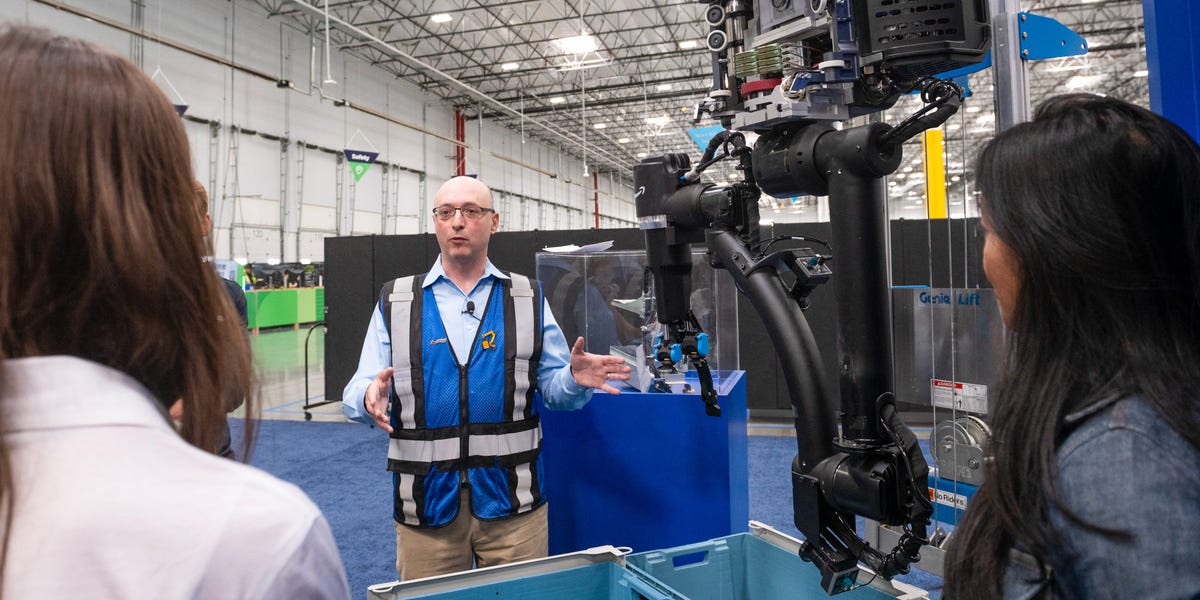
Amazon’s decision to shut down Blue Jay, its ceiling-mounted multi-armed robotic system, just months after its high-profile October 2025 unveiling, sends a stark message about the gap between warehouse automation ambition and operational reality. The system, piloted at a fulfillment center in South Carolina, was designed to boost productivity in same-day delivery warehouses by simultaneously handling multiple items from overhead rails. But internally, the project ran headlong into three critical barriers: prohibitive manufacturing costs, implementation complexity, and the fundamental challenge of integrating ceiling-mounted robotics into existing warehouse infrastructure.
The shutdown was swift and decisive. By January 2026, Blue Jay operations had ceased, and the majority of team members were reassigned to Amazon’s other robotics programs, including Vulcan, Sparrow, and Proteus. Amazon spokesperson Terrence Clark confirmed that Blue Jay’s core technology would be repurposed for future initiatives, framing the discontinuation as part of the company’s broader experimentation strategy. Yet the speed of the project’s demise — developed in just over a year and shelved within months of deployment — underscores a recurring pattern in warehouse robotics: the enormous difficulty of moving from controlled demonstrations to scalable, cost-effective real-world operations.
From LVM to Orbital: A Fundamental Architecture Shift
Blue Jay’s failure is inseparable from a larger strategic pivot at Amazon. The company is abandoning its legacy “Local Vending Machine” (LVM) warehouse architecture — a monolithic, tightly integrated automation system designed for large fulfillment centers — in favor of a radically different approach called “Orbital.” Where LVM treated each warehouse as a single, indivisible system with automation baked into its physical structure, Orbital embraces modularity. Its components can be mixed, matched, and reconfigured to suit different facility sizes, product categories, and operational requirements.
This architectural shift has profound implications. Orbital is specifically designed for smaller same-day delivery warehouses, a growing priority as consumer expectations for rapid fulfillment continue to accelerate. The system’s modular nature means Amazon can deploy it incrementally, reducing upfront capital expenditure and allowing for iterative optimization. Perhaps most significantly, Orbital is being engineered to operate as a micro-fulfillment solution within Whole Foods stores, positioning Amazon to compete more aggressively with Walmart in the grocery sector. The system will also support chilled and perishable products — a capability that LVM lacked and that is essential for Amazon’s grocery ambitions.
The Physical AI Challenge: Why Warehouse Robots Keep Failing
Blue Jay’s shutdown illuminates a broader industry problem that extends well beyond Amazon. While generative AI has achieved remarkable breakthroughs in digital domains — powered by vast datasets freely available on the internet — the physical world presents fundamentally different challenges. Training data for warehouse robots is expensive, scarce, and highly context-dependent. A picking algorithm that works perfectly in a controlled lab environment may fail when confronted with the infinite variability of real warehouse conditions: irregular package shapes, shifting inventory layouts, temperature fluctuations, and the unpredictable movements of human co-workers.
The ceiling-mounted design of Blue Jay exemplified these challenges. While theoretically elegant — overhead mounting frees up valuable floor space — the approach introduced significant complications around maintenance access, safety protocols for workers below, vibration management, and the structural requirements for ceiling reinforcement. These physical-world constraints are often underestimated during the design phase, where simulation environments can mask the messy realities of industrial deployment. The warehouse robotics industry as a whole is learning a humbling lesson: the last mile of automation — bridging from 90% to 100% reliability in unstructured environments — is exponentially harder than the first 90%.
Flex Cell and Amazon’s Multi-Robot Strategy
Rather than writing off Blue Jay entirely, Amazon is channeling its technological DNA into “Flex Cell,” a floor-mounted successor that addresses many of the practical shortcomings of the ceiling-based approach. Floor mounting dramatically simplifies installation, reduces structural requirements, and makes ongoing maintenance far more accessible. Flex Cell represents Amazon’s pragmatic recalibration: retaining the most valuable innovations from Blue Jay while discarding the architectural choices that proved unworkable at scale.
Amazon’s broader robotics portfolio reveals a sophisticated multi-pronged strategy. Vulcan handles sorting operations, Sparrow specializes in item picking with computer vision, and Proteus operates as a fully autonomous mobile robot that can navigate alongside human workers. This diversified approach reflects an industry-wide recognition that no single robotic system can address the full complexity of warehouse operations. Instead, the future lies in orchestrating multiple specialized robots working in concert — what the industry calls “heterogeneous fleet management.” Amazon’s ability to cross-pollinate technologies across these programs, using Blue Jay’s learnings to enhance Flex Cell and beyond, demonstrates the strategic value of maintaining parallel innovation tracks even when individual projects fail.
Micro-Fulfillment: The $9.4 Billion Battleground
Orbital’s potential deployment inside Whole Foods stores positions Amazon at the center of one of the fastest-growing segments in logistics technology. The global micro-fulfillment market is projected to reach $9.39 billion in 2026, growing at a compound annual rate of 44.5%. This explosive growth is driven by consumer demand for ultra-fast delivery of everyday essentials, particularly groceries and perishable goods. By embedding automated fulfillment capabilities directly within retail locations, companies can dramatically reduce the distance between inventory and customer, enabling delivery windows measured in minutes rather than hours.
Amazon’s grocery business has long been its Achilles’ heel in the competition with Walmart, which leverages its vast network of physical stores as de facto fulfillment centers. Orbital’s cold-chain capabilities and compact, modular form factor could finally give Amazon the infrastructure it needs to compete on equal footing. However, the first Orbital-equipped warehouse is not expected to open until 2027, giving competitors a significant window to fortify their own positions. Kroger’s partnership with Ocado, Walmart’s continued investment in store-based fulfillment, and the rapid expansion of players like Instacart all underscore the intensity of competition in this space.
Lessons for the Industry: Failing Fast in Warehouse Automation
Amazon’s Blue Jay episode offers critical lessons for the entire supply chain technology ecosystem. First, it validates the principle of “failing fast” — the willingness to terminate underperforming projects quickly rather than sinking additional resources into diminishing returns. Amazon developed Blue Jay in roughly a year and pulled the plug within months of deployment, preserving capital and talent for more promising initiatives. This stands in contrast to the many warehouse automation startups and corporate programs that persist with flawed approaches for years, consuming resources that could be better allocated elsewhere.
Second, the pivot from Blue Jay to Orbital reflects a maturation in thinking about warehouse automation. The industry is moving away from monolithic, one-size-fits-all solutions toward modular, configurable systems that can be adapted to diverse operational contexts. This mirrors broader trends in software architecture — the shift from monoliths to microservices — and suggests that the most successful warehouse automation platforms of the future will be those that prioritize flexibility, incremental deployment, and interoperability over raw technological sophistication. As Amazon’s spokesperson noted, the company is “always experimenting with new ways to improve the customer experience” — a philosophy that treats each project not as a pass-fail test, but as a data point in an ongoing optimization process.
Source: Business Insider