Amazon Adds “Grade and Resell” Option for Product Returns for Sellers
By PYMNTS | September 19, 2024
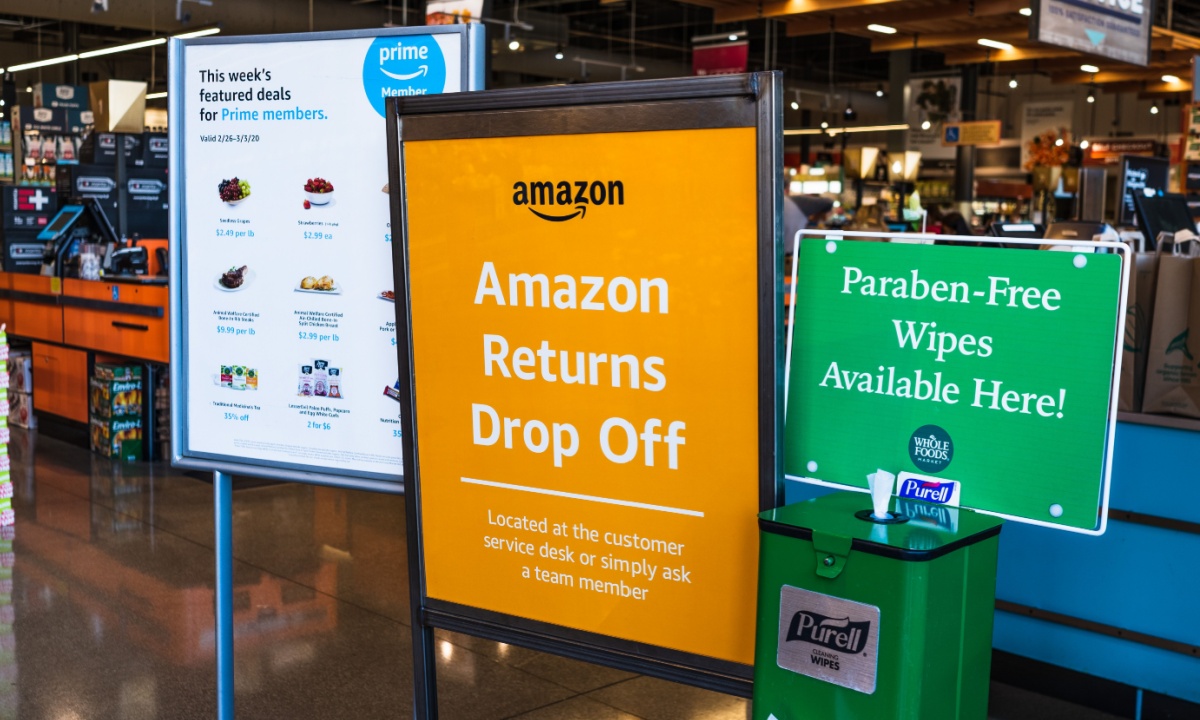
Amazon now offers independent sellers in the U.S. using Amazon Logistics (FBA) a new option to manage product returns: grading and resale.
In a blog post on Thursday (September 19), Amazon stated that this optional program was previously available only to retail brands, providing a resale channel to help sellers recover value from returned inventory and offer customers more second-hand and open-box options.
According to the article, items returned to Amazon’s return centers under this program will be inspected before being resold.
“Before an item can be sold through grading and resale, we conduct a thorough inspection to rigorously test each product’s condition and provide detailed descriptions of its condition to help customers make more informed purchasing decisions,” wrote Gopal Pillai, Amazon’s Vice President of Global Returns and Resales, in the article. “For electronics, we power them on, perform tests, and reset to factory settings as part of the assessment.”
“Based on quality checks, each item will be assigned one of four listing conditions: ‘Like New,’ ‘Very Good,’ ‘Good,’ or ‘Acceptable,'” Pillai added.
Grading and resale join other options available for sellers using FBA in the U.S., including product support aimed at preventing returns by providing help with product setup and other issues; FBA No-Return Solution, which allows sellers to issue refunds without requiring customers to physically return items; and FBA Donation, allowing sellers to donate eligible products to families and individuals in need.
“If a customer decides to return an item, we make the process convenient and easy—tailored to both customer and seller partner needs to streamline returns,” Pillai wrote in the article.
According to PYMNTS Intelligence and Adobe’s collaboration on “driving consumer shopping with brands, retailers or marketplaces online,” simple and convenient return and refund processes can attract customers.
The report found that 47.1% of consumers consider easy return and refund procedures when shopping on online marketplaces. Similarly, 27.9% of consumers take this into account when shopping at retailer websites or mobile apps outside brand sites, while the figure is 25% for those shopping directly on brand websites or mobile apps.
Fabric CEO: ‘Peak Site’ Helps Retailers Win Efficiency Battle Post-Sale
By PYMNTS | September 24, 2024
“This is where the battle will be won,” fabric CEO Mike Micucci told PYMNTS’s Karen Webster.
The “battle” refers to retailers being able to provide a seamless, efficient, and reliable shopping experience wherever consumers are—whether online, offline, or on social media.
Consumers might discover a product on social media, browse it on marketplaces, or find it through searches. Retailers need to adapt to this multi-faceted consumer journey and organize inventory accordingly. This requires flexibility and agility that many traditional systems cannot provide.
“A term we often discuss internally is the concept of ‘peak site,'” he added, explaining that this reflects an idea where the traditional e-commerce model—where retailers drive traffic to their sites for direct sales—may no longer be sufficient because consumers are flexible in their shopping journey, often starting online and ending in-store or purchasing directly through social media.
“Your consumer customer will appear wherever they want,” Micucci said.
This is not a new story nor a new project on the retailer agenda. However, achieving this result is complex despite numerous digital innovations at retailers’ disposal, including advancements like artificial intelligence (AI) to help them.
Without systems that provide visibility and flexibility, retailers struggle with the complexity of omnichannel fulfillment. Historically, retailers have relied on outdated enterprise resource planning (ERP) systems and spreadsheets, creating an inefficient back-end process prone to errors, delays, and poor customer experiences. For example, Micucci described a scenario where an online order is fulfilled by multiple stores, leading to partial shipments or cancellations that can damage customer trust and loyalty.
“I just finished a client meeting that was conducted between a spreadsheet and a 25-year-old ERP system without APIs,” Micucci said. “ERP systems are designed for financial control rather than the flexibility needed to deliver these experiences.”
Traditional Systems Hinder Retailers
Micucci explained that from 2010 until the pandemic, e-commerce and retail experienced steady, predictable growth with physical retail maintaining a roughly 4% growth rate while e-commerce grew at about three times that rate, around 12%.
Then, COVID-19 accelerated e-commerce adoption as consumers flocked to online shopping platforms. However, as the pandemic subsided, the retail industry found itself at a turning point—e-commerce began leveling off, and core retail rebounded.
“It’s not that consumers are no longer buying online; rather, more transactions and spending are being captured by marketplaces such as Amazon, Walmart, or Chinese direct sales models like Temu and TikTok,” Micucci said. “About 55% of spending is captured by these platforms.”
Why? These digital platforms have backend systems that enable them to meet shopper expectations.
This forces traditional retailers to reconsider their digital strategies. According to Micucci, the challenge lies in what happens after a consumer clicks the ‘checkout’ button. This is where inventory orchestration, order fulfillment, and delivery become critical. He emphasized that the true battleground for retailers isn’t necessarily creating a beautiful, user-friendly website but ensuring backend systems can meet consumers’ expectations for fast and reliable deliveries.
As Micucci described the challenge, retailers need to find customers where they are and provide the right products and inventory at the right time—a concept known in business as “customer customization.”
Rear-End Shifts Towards Business Agility
Micucci pointed out that the solution lies in adopting cloud-native backend systems that give retailers the visibility and control needed to seamlessly manage complex order fulfillment processes. He emphasized that these systems must not only handle the complexities of inventory management and order orchestration but also provide the agility required to deal with future major disruptions, whatever they may be.
Micucci noted that even now, buy online pick up in-store (BOPIS) remains a challenge for many retailers. Although this model has significant potential to drive foot traffic and sales, execution often falls short due to systems struggling with cross-channel inventory management.
Traditional systems cannot handle such demands, Micucci said, and retailers that fail to modernize risk falling behind.
However, hope always emerges from technological innovation, particularly for those creating seamless customer experiences.
As an example, Webster shared her experience shopping at a Celine store in Paris where she purchased an item. Later, after returning to the U.S., she added her name to a waitlist for another luxury product by the same brand. That evening, she received a text from the same salesperson who had served her in Paris, informing her that the item was available in her size.
“A great omnichannel experience stems from using the same systems behind the scenes that operate both digital sites and other parts of the retailer to create a seamless customer journey,” Micucci said about the Celine experience. “Unifying this journey and orchestrating it behind the scenes is how winners are made.”
Source: PYMNTS.com