# Foreign Trade Zones (FTZ) in the USA: A Key to Resilience
## The FTZ program aims to balance transparency and confidentiality—there are now more ways to leverage this program to further enhance economic security in the US. Are your operations fully utilizing these advantages?
Author: Melissa Irmen
October 1, 2024

**Excerpt from Logistics Management October 2024 Issue**
In recent years, the resilience of the US supply chain has become a focal point for policymakers and industry leaders. As the Office of the United States Trade Representative (USTR) and other entities seek to strengthen domestic supply chains, the Foreign Trade Zones (FTZ) program has emerged as a critical component of this strategy.
Currently, FTZs in the USA employ approximately 550,000 American workers across all 50 states and Puerto Rico. They have long been a cornerstone of international trade, driving economic growth.
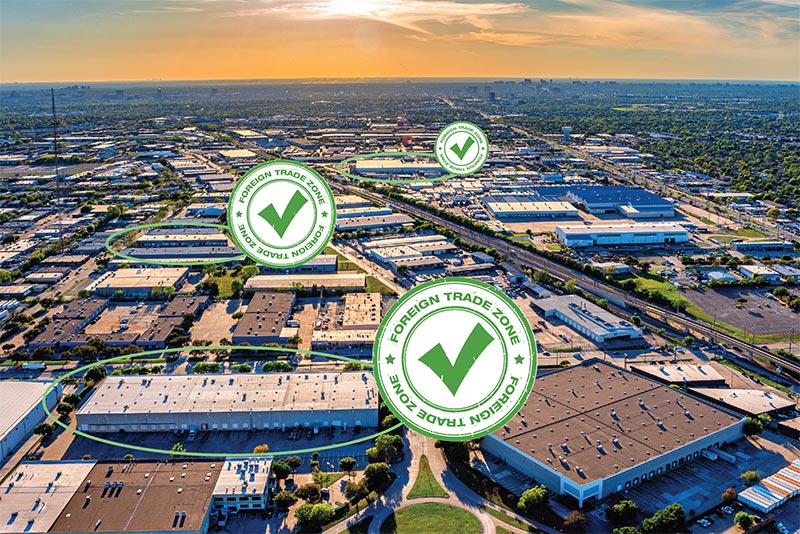
These designated areas within the US allow businesses to import, store, process, re-export, or introduce goods into the domestic market with significant advantages such as deferred tariffs and simplified regulatory procedures.
The FTZ program aims to promote global trade and enhance economic competitiveness. Established by Congress in 1934, it has continually adapted its role to meet changing economic environments.
An FTZ can be a manufacturing plant, a distribution warehouse, or even a storage area. In these secure locations, companies can conduct value-added operations such as manufacturing, warehousing, distribution, assembly, kitting, and blending.
The US FTZ program helps American companies contribute to the US economy while creating jobs domestically. It also assists companies in sourcing high-quality and competitive inputs, whether produced domestically or abroad, and leveraging US labor for their value-added processes.
While FTZs have supported supply chain resilience, let’s consider additional ways to leverage this program further to enhance economic security in the USA.
## Promoting Supply Chain Transparency
Transparency in the supply chain is crucial for companies to manage operations effectively while protecting sensitive information.
The FTZ program aims to balance transparency and confidentiality. It provides detailed reports and data on import transactions and economic benefits, while safeguarding proprietary information.
This process begins with a rigorous application submitted to the US Foreign-Trade Zones Board, which includes comprehensive details about the goods and their sources that will be used in company operations. The application undergoes review by local economic development entities and is open for public comment.
The US FTZ Board, composed of members from the Department of Commerce and the Treasury, reviews applications to ensure they align with trade policies and proposed activities meet economic interests. Customs and Border Protection (CBP) further validates security and inventory tracking to comply with US import and FTZ regulations, proper tariff payments, and prevent unauthorized goods from entering the US market.
Once approved, operations in FTZs involve strict reporting requirements. Goods entering an FTZ are tracked through the Inventory Control and Recordkeeping System (ICRS), which includes detailed information on country of origin, manufacturer, and tariffs. Regular compliance visits by CBP ensure ongoing adherence to regulations, providing unmatched transparency compared to other import regimes.
## Encouraging Supply Chain Diversity
The FTZ program embodies supply chain diversity, covering a wide range of industries and stakeholders. According to the US Foreign-Trade Zones Board’s 2023 report, the program supports 30 warehouse/distribution sectors and 27 production operations sectors. This broad adoption highlights its role in promoting investment and maintaining competitiveness across various industries.
The nationwide coverage of the FTZ program, spanning all US states and Puerto Rico, further underscores its versatility. It encompasses multiple entry points including ports, airports, and land corridors, collaborating with a wide range of stakeholders from local governments to importers and logistics providers. This extensive network supports small and medium-sized enterprises (SMEs), enhancing their global competitiveness.
## Enhancing Supply Chain Security
Security is the cornerstone of the US FTZ program. As recognized best practices under CTPAT (Customs-Trade Partnership Against Terrorism), FTZs are among the safest supply chain environments. Companies undergo rigorous inspections by CBP before activation to ensure compliance with security and inventory control standards.
The US FTZ offers higher security than other import regimes. All foreign goods are meticulously accounted for, and regular compliance reviews by CBP maintain security measures. This comprehensive approach includes multi-layered bonding programs. Additionally, the capability to export or destroy non-compliant goods enhances the program’s utility in safeguarding US commerce.
## Promoting Supply Chain Sustainability
The FTZ program promotes sustainability in American supply chains through enhanced global competitiveness and encouragement of domestic operations.
By providing special customs procedures, FTZs help manage or reduce tariff costs, benefiting US consumers and manufacturers. Proximity to local markets reduces risks associated with global disruptions such as port congestion or geopolitical instability.
This proximity, combined with adherence to high labor and environmental standards, aligns FTZ operations with sustainability goals.
The robust inventory control and record-keeping required in US FTZs further improve operational efficiency, reinforcing the program’s role in a sustainable supply chain ecosystem.
## Opportunities for Program Improvement
While the FTZ program offers substantial benefits, there are areas where improvements can be made.
### De Minimis Treatment
Currently, goods shipped from US FTZs do not qualify for de minimis entry treatment compared to facilities outside the US. Although Congress is considering several changes to the de minimis process, allowing US FTZs equal de minimis entry rights as foreign distributors would incentivize companies to maintain operations in the USA and enhance competitiveness.
### Competitiveness of Free Trade Agreements (FTA)
US FTZs are at a disadvantage under agreements like the USMCA (United States-Mexico-Canada Agreement), which require tariffs on goods exported from US FTZs according to the agreement, limiting the use of origin rules. Addressing these restrictions would foster fair competition, boost US manufacturing jobs, and promote US exports.
### Promotion Task Force for Foreign Trade Zones
While other governments actively promote their free trade zones globally to attract foreign investment, the USA relies on local entities to highlight the benefits of its program. Establishing a global promotion task force for US FTZs as an economic development tool would enhance visibility and support.
### Simplifying Authorization Processes
Streamlining the process to obtain production authorization within FTZs can reduce delays and improve accessibility. Prioritizing applications from key industries such as aerospace, agriculture, and pharmaceuticals will strengthen supply chain resilience.
### Expanding Direct Delivery Privileges
Extending direct delivery privileges to all FTZ operators and users would enhance operational efficiency and resilience. Currently, these privileges are limited; expanding their use would increase the program’s benefits.
### FDA Weekly Entry Process
Modifying the FDA’s Weekly Entry Form (WEF) process to provide clearer guidance and faster approval for low-risk goods can improve efficiency and reduce delays.
### Funding and Resources for CBP
Ensuring Customs and Border Protection has adequate funding and resources to support the FTZ program is critical. Addressing operational and funding challenges will enhance program management and facilitate modernization efforts.
## Ensuring Access to US Goods
Companies often face complex cost-benefit analyses when deciding whether to locate operations in the USA or abroad, especially under tariff challenges.
US FTZs continue to thrive to meet the needs of American companies in a global economy. The FTZ program aims to incentivize manufacturing and distribution in the USA, particularly where foreign entities enjoy tariff advantages.
The economic benefits of US FTZs extend beyond their immediate communities to other US companies that supply goods or services to FTZ operators. According to the US International Trade Commission’s April 2023 report, products entering the US market from US production within FTZs contain 56% domestic content, 31% US value-added, and only 13% foreign content.
The US FTZ program plays a vital role in enhancing supply chain resilience through transparency, diversity, security, and sustainability. By addressing identified areas for improvement and leveraging the program’s advantages, policymakers can further strengthen American supply chains and support economic development.
Implementing these recommendations will unlock the full potential of the US FTZ program, driving innovation and competitiveness in the rapidly changing global market.
—
Source: Logistics Management