Skip to content

Disruptions

Analysis

Hapag-Lloyd CEO cites $50M–$60M weekly disruption costs

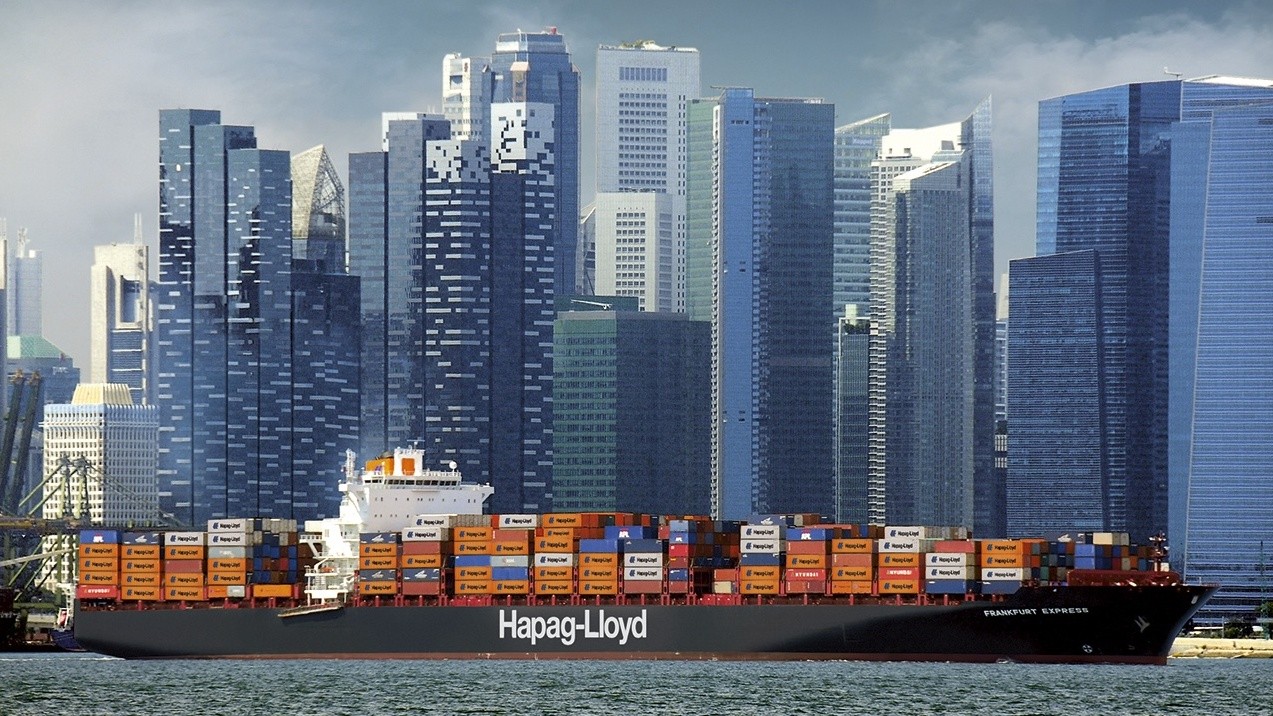
Hapag-Lloyd CEO Rolf Habben Jansen reported $50M–$60M in weekly disruption costs tied to Middle East instability, including suspended Strait of Hormuz transits and elevated bunker, insurance, and handling expenses. The carrier, alongside Maersk, has normalized four Suez Canal services, while revising its $4.2 billion Zim acquisition to address Israeli security concerns. Annual synergies from the deal are projected at $300M–$500M, with combined capacity exceeding 3 million TEUs and volumes surpassing 18 million TEUs.

Original source: Source information pending

Hapag-Lloyd CEO cites $50M–$60M weekly disruption costs

According to www.freightwaves.com, Hapag-Lloyd Chief Executive Rolf Habben Jansen reported that Middle East conflict-related disruptions are costing the carrier between $50 million and $60 million per week, as of its June customer call.

Liner normalizes Suez routings amid Red Sea volatility

Hapag-Lloyd has suspended transits through the Strait of Hormuz to prioritize crew safety, citing a regional security situation that Habben Jansen described as “very strained and fluid.” The company, in partnership with Maersk, has shifted four additional container services back to Suez Canal routing — including two Asia-Mediterranean, one Asia-North Europe, and one Indian subcontinent-Europe rotation. According to analyst Lars Jensen, Gemini has now normalized three of four Asia-Med services and one of four Asia-North Europe services.

These adjustments come as port congestion intensifies across major European hubs and Houthi attacks on Saudi targets along the Red Sea escalate. While rerouting via the Cape of Good Hope increased voyage distances and operational expenses, a broad return to Suez would release effective vessel capacity into an already softening freight-rate environment.

The carrier’s operating cost increases span bunker fuel, insurance, container handling, and inland transportation — all amplified by persistent regional instability. Habben Jansen emphasized that these pressures coexist with unexpectedly robust global demand, noting in an August CNBC interview that container-shipping resilience had been “surprisingly strong” despite low Rhine water levels and geopolitical headwinds.

Zim acquisition revised to address Israeli security concerns

Hapag-Lloyd is revising its proposed $4.2 billion acquisition of Zim to meet Israeli government security requirements, with CEO Habben Jansen confirming on September 7, 2026 that an improved proposal is under development. In comments reported on September 15, 2026, he stated the combined entity would generate annual synergies valued between $300 million and $500 million.

The merged operation would operate more than 400 vessels, hold over 3 million TEUs of capacity, and handle annual volumes exceeding 18 million TEUs. However, the deal would not elevate Hapag-Lloyd past China’s COSCO to become the world’s fourth-largest container line.

“We have listened carefully to the needs raised during our discussions with the Israeli government and the relevant authorities. Together with our partners, we are now developing an improved proposal designed to further strengthen Israel’s maritime security and independence.” — Rolf Habben Jansen, CEO of Hapag-Lloyd

Habben Jansen also assessed trade policy impacts, stating that tariffs in the 15% to 20% range “are not great” and harm global commerce, yet “that doesn’t stop global trade.” He noted demand performance improved after volatile conditions earlier in the year and that freight-rate declines have moderated in pace.

Source: FreightWaves

Compiled from international media by the SCI.AI editorial team.

Ask SCI.AI Finished reading? Continue with SCI.AI. Explore the related policy, route, company and historical context. Continue asking
Oil Tankers Earn $1M Daily Amid War-Driven Ship Shortage
Disruptions

Oil Tankers Earn $1M Daily Amid War-Driven Ship Shortage

Oil tankers are generating $1 million in daily earnings amid a war-induced shortage of available vessels, according to Bloomberg. The conflict has removed significant tonnage from service, pushing VLCC rates to levels unseen since 2000. War-risk insurance premiums rose 37% in early 2026, and rerouting has extended voyage times across key corridors including the Red Sea. Market tightness is expected to persist through 2026 as fleet growth lags and operators prioritize high-margin routes.

USCG Report: 44% of US Ports Lack Updated Waterway Safety Reviews
Disruptions

USCG Report: 44% of US Ports Lack Updated Waterway Safety Reviews

A U.S. Coast Guard report released on 4 September 2026 reveals that 18 of 41 surveyed ports — 44% — lack updated Waterways Analysis and Management System (WAMS) reviews since 2015, despite federal mandates. The findings follow the 2024 Dali allision that killed six and closed Baltimore’s port. The Board of Inquiry assessed 11 ports, recommended expanding the Maritime Port Metrics Dashboard to 361 ports, and opened a public comment period through 28 February 2027. A final action memorandum is due in August 2027.

Taiwan, EU Strengthen Chip Ties Amid Supply Chain Resilience Push
Disruptions

Taiwan, EU Strengthen Chip Ties Amid Supply Chain Resilience Push

Taiwan and Europe are intensifying semiconductor cooperation to bolster supply chain resilience amid geopolitical strain and pandemic-related vulnerabilities. At the third Taiwan-Europe Chip Innovation Forum in Antwerp on September 9–10, Wu Cheng-wen of Taiwan’s National Science and Technology Council underscored shared democratic goals for secure supply networks. The second EU-Taiwan Semiconductor Industry Dialogue convened in Taipei on August 31, 2026, aligning Taiwan’s foundry and packaging strengths with Europe’s equipment and IP ambitions. A May 2026 Istituto Affari Internazionali report proposed early-warning systems and EDA software autonomy. Talent programs span the Czech Republic, Poland, and Germany, while TSMC’s Dresden investment anchors broader European supply-chain development.

Welcome Back!

Login to your account below

Create New Account!

Fill the forms below to register

Retrieve your password

Please enter your username or email address to reset your password.

Scan to share via WeChat

Open WeChat and scan the QR code to share

QR Code

Add New Playlist