
Skip to content

Digital Platforms

Analysis

UAE Leads Globally with 69% of Firms Planning Digital Supply Chain Finance Investment

The UAE ranks first globally among 27 markets for planned digital supply chain finance investment, with 69% of local businesses planning deployment within three to five years, per Standard Chartered’s Future of Trade report. The UAE also leads in anticipated cost reductions from digitalisation — including a 10%+ cut in logistics coordination costs — and shows outsized gains in supplier resilience (+26 percentage points year-on-year) and digital adoption benefits (90% report faster disruption response vs. 83% globally). The report projects global trade could rise by 6.9%, or US$2.8 trillion, by 2031 under accelerated digitalisation.

Original source: Source information pending

UAE Leads Globally with 69% of Firms Planning Digital Supply Chain Finance Investment

According to techafricanews.com, the United Arab Emirates ranks first globally among 27 surveyed markets for planned investment in digital supply chain finance platforms, with 69% of UAE businesses intending to deploy such platforms over the next three to five years.

Digital Investment Leadership

Standard Chartered’s latest Future of Trade report — titled Navigating an Age of Structural Uncertainty — draws on survey responses from 2,100 senior corporate decision-makers across 27 markets. The UAE not only leads in digital supply chain finance planning but also ranks third globally for planned investment in real-time cash visibility (76% of respondents) and second for automated payments (53%).

Resilience and Strategic Shifts

The UAE’s focus on supplier resilience has intensified markedly: priority given to supplier-focused strategies rose by 26 percentage points year-on-year, far exceeding the global increase of 4.3 percentage points. Inventory management emphasis rose by 7 percentage points in the UAE, compared with 2.9 percentage points globally. As Syed Khurrum Zaeem, Managing Director and Head of Trade and Transactional Banking for the Middle East, Pakistan and Africa at Standard Chartered, stated:

“The UAE’s leading position in planned digital supply chain finance investment reflects the continued evolution of its trade ecosystem. Businesses are placing greater emphasis on strengthening supplier networks, improving visibility and connecting treasury more closely with trade. As businesses operate across increasingly complex international markets, these capabilities will be increasingly important to strengthening resilience and supporting growth.” — Syed Khurrum Zaeem, Managing Director, Head of Trade and Transactional Banking for the Middle East, Pakistan and Africa, Standard Chartered

Measurable Digital Benefits

Digital tools deliver tangible advantages for UAE firms: 90% report faster response to supply-chain disruption — higher than the global average of 83%. Additionally, 85% say digital tools improve decision-making through better visibility and forecasting, while 87% report clear, measurable benefits from at least one digital capability.

Treasury–Supply Chain Integration

Integration between treasury and supply-chain functions is accelerating: 44% of UAE businesses plan to adjust their treasury management strategies over the next three to five years, and 40% plan to increase use of digital tools and systems. Currently, 42% report partial integration and 13% full integration. The most frequently cited gap remains end-to-end visibility across supply-chain and financial flows — cited by 46% of respondents.

Cost Efficiency Gains

Digitalisation is expected to yield significant cost reductions: the UAE ranks first globally for the share of businesses anticipating at least a 10% reduction in shipment and logistics coordination costs. It also ranks among the top three for projected savings in compliance and regulatory requirements, payments and settlements, and engagement with overseas counterparties. The broader Future of Trade report estimates that accelerated trade digitalisation could lift global trade by 6.9% — equivalent to US$2.8 trillion — by 2031.

Source: techafricanews.com

Compiled from international media by the SCI.AI editorial team.
Ask SCI.AI Finished reading? Continue with SCI.AI. Explore the related policy, route, company and historical context. Continue asking
CMA CGM, RSGT to invest $434M in Jeddah Terminal 4
Digital Platforms

CMA CGM, RSGT to invest $434M in Jeddah Terminal 4

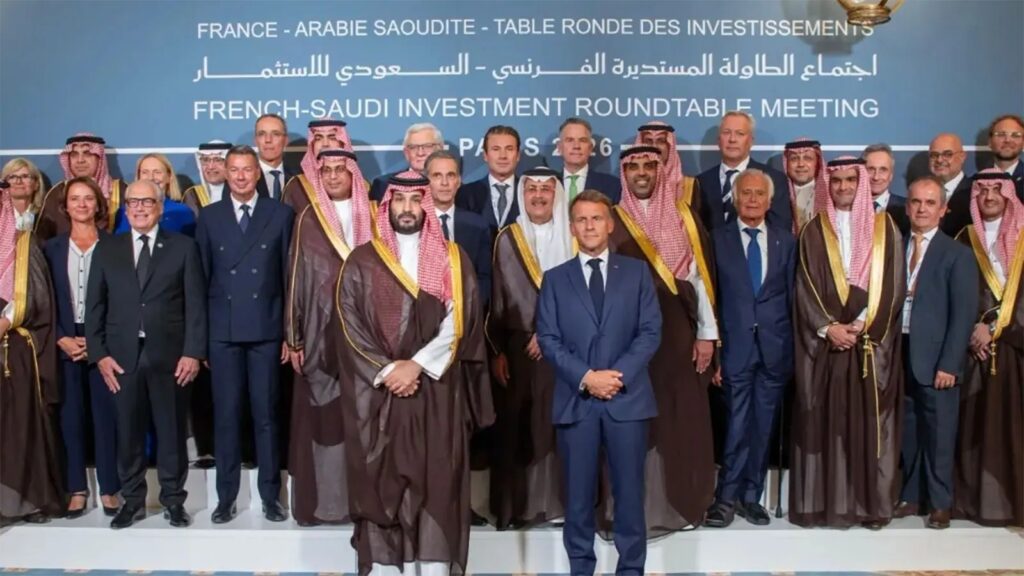
CMA CGM and Saudi operator Red Sea Gateway Terminal (RSGT) will invest $434 million (1.6 billion riyals) to build Terminal 4 at Jeddah’s Islamic Port, adding 2.6 million TEUs of annual capacity. The project, signed in Paris with Crown Prince Mohammed bin Salman and President Emmanuel Macron present, aligns with Saudi Vision 2030 and the National Transportation and Logistics Strategy. It includes deep-water docks, ten new STS cranes, and systems to handle the world’s largest container ships — timed with the Red Sea corridor’s post-2023 recovery. Mawani, RSGT, and CMA CGM jointly emphasize the deal’s role in boosting Saudi Arabia’s global logistics standing.

project44 launches LSP44 AI unit, splits operations
Digital Platforms

project44 launches LSP44 AI unit, splits operations

Chicago-based project44 has split into two independent businesses as of July 14, 2026: the original project44 serving enterprise shippers, and LSP44—a new AI-dedicated platform for logistics service providers. LSP44 processes 2.3 million shipment events per hour, reduced manual tendering time by 68% in pilots, and launches commercially in Q3 2026. The move reflects accelerating AI adoption among LSPs, which grew 41% year-over-year in 2026 per the 37th State of Logistics Report. Early deployments are underway in Chicago, Dallas, and Rotterdam.

Mahindra to IPO Last Mile Mobility in H2 2027, merges truck unit with SML
Digital Platforms

Mahindra to IPO Last Mile Mobility in H2 2027, merges truck unit with SML

Mahindra & Mahindra confirmed its Last Mile Mobility electric three-wheeler business remains on track for an IPO in H2 2027. Simultaneously, it merged its Truck and Bus Division into SML Mahindra via a slump sale set for completion in FY27, retaining 59% of the combined entity. Group CEO Anish Shah described the move as part of a 'platform over exit' strategy, aiming to build scalable, listed businesses. Executive Rajesh Jejurikar noted the integration will enhance competitiveness against Tata Motors and Ashok Leyland. The company already operates multiple listed subsidiaries, including Mahindra Logistics and Mahindra Holidays.

Welcome Back!

Login to your account below

Create New Account!

Fill the forms below to register

Retrieve your password

Please enter your username or email address to reset your password.

Scan to share via WeChat

Open WeChat and scan the QR code to share

QR Code

Add New Playlist