Skip to content

Manufacturing · Supply Chain

China Port Delays Push Stranded Containers to 4.3M TEUs

China’s port delays — intensified by typhoons in eastern regions — have pushed global stranded container capacity to 4.3 million TEUs, exceeding the 4 million TEU pandemic peak of 2022. Shanghai saw 139 vessels queued, Ningbo 77 ships, and Maersk rerouted the Delos Wave 630N away from Shanghai on Aug. 15. Over two weeks, 320,000 TEUs avoided Shanghai under Gemini Cooperation, while 70,000 TEUs skipped Ningbo and 75,000 TEUs were lost at Yantian. Freight rates surged: Shanghai–New York hit $9,507/40ft, Los Angeles $6,802, and intra-Asia rates rose 6% to $1,091/40ft. Maersk CEO Vincent Clerc cited 12-day berthing waits as evidence of urgent infrastructure needs.

Original source: Source information pending

China Port Delays Push Stranded Containers to 4.3M TEUs

According to wwd.com, container port congestion in eastern China — triggered by multiple typhoons — has driven global stranded container capacity to 4.3 million 20-foot equivalent units (TEUs), surpassing the 4 million TEU peak recorded during the Covid-19 pandemic in 2022.

Global Berthing Backlogs Hit Record Levels

Linerlytica’s Monday data shows that 139 vessels were queued at the Port of Shanghai last Monday — the highest count observed across both 2025 and 2026. At the Port of Ningbo, 77 ships waited to berth, also marking recent highs. Though the total fleet capacity has expanded to 34.4 million TEUs — up from 25.3 million TEUs in 2022 — stranded containers still represent 12.6 percent of the global fleet, compared to the 15.7 percent peak during pandemic-era bottlenecks.

Carrier Adjustments and Service Cancellations

Maersk confirmed in a customer advisory that the Malta-flagged Delos Wave 630N, part of the Asia-to-Oceania Northern Star service, will omit its call at the Port of Shanghai to preserve schedule integrity. The vessel departed New Zealand’s Port of Tauranga on Aug. 15 and will instead dock at Xiamen on Friday before proceeding to Hong Kong. This cancellation followed two earlier reroutings — the Seaspan Guayaquil and AS California — both shifted from Shanghai to Xiamen. Maersk expects those vessels to resume Shanghai calls by October.

Capacity Avoidance and Terminal Impacts

Per Hapag-Lloyd’s operational update dated Aug. 18, at least 320,000 TEUs of capacity under the Gemini Cooperation avoided Shanghai over a two-week period. An additional 70,000 TEUs — primarily operating on Hapag-Lloyd’s Latin American services — bypassed Ningbo, while roughly 75,000 TEUs were lost at Yantian Container Terminal after Shenzhen was omitted from rotations. One shared Asia-to-Mediterranean loop (AE15/SE3) departing Qingdao was canceled outright; it had been scheduled to leave on Sept. 7.

Freight Rate Surge Amid Infrastructure Strain

Shanghai-to-U.S. ocean spot freight rates rose 9 percent on both West and East Coast routes, according to Drewry’s World Container Index (WCI) as of Thursday. Cargo to New York reached a 2026 peak of $9,507 per 40-foot container, while Los Angeles averaged $6,802. Capacity declined 9 percent month-over-month on the Asia-to-U.S. East Coast route in August and fell 0.4 percent sequentially on the West Coast path. Drewry’s Intra-Asia Container Index (IACI) climbed 6 percent this week to $1,091 per 40-foot container — the third straight weekly increase.

Infrastructure Gaps Under Global Scrutiny

Maersk CEO Vincent Clerc stated earlier this month that Shanghai’s waiting-to-berth times reached as much as 12 days, underscoring broader infrastructure gaps. He noted that port congestion reflects a wider need for global gateways to strengthen terminal and inland infrastructure as container demand grows. Hapag-Lloyd reported average waiting times of five to six days for Gemini Cooperation services at Shanghai’s Yangshan deepwater port, and seven to eight days for non-Gemini services. At Ningbo, wait times range from three to four days for Gemini loops and three days for non-alliance services; Qingdao averages 72 hours for both service types.

Source: wwd.com

Compiled from international media by the SCI.AI editorial team.
Ask SCI.AI Finished reading? Continue with SCI.AI. Explore the related policy, route, company and historical context. Continue asking
Gatik AI raises $200M, total funding reaches $500M
AI & Automation

Gatik AI raises $200M, total funding reaches $500M

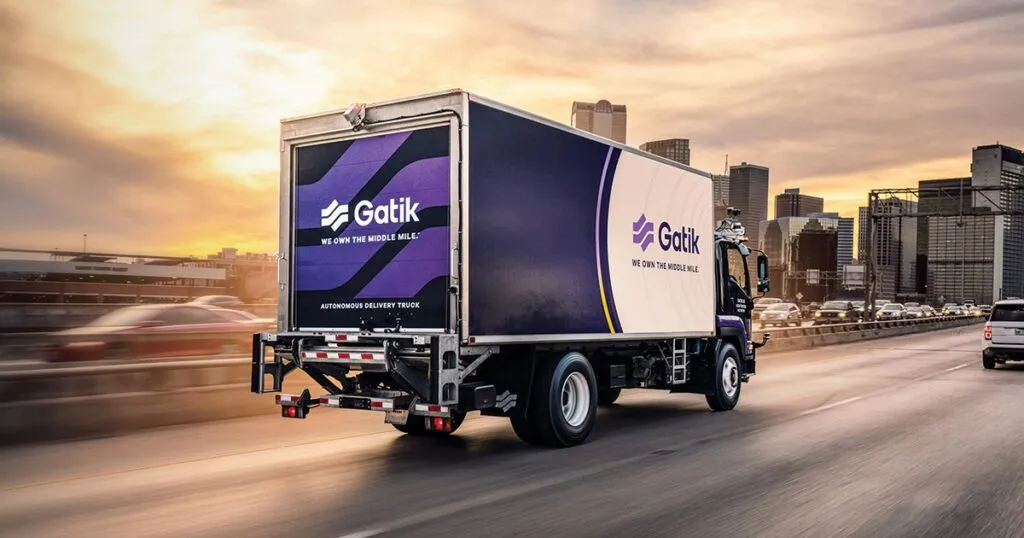
Gatik AI raised $200 million in its largest funding round to date, bringing its total capital raised to approximately $500 million. Led by Qatar Investment Authority and Koch Disruptive Technologies, the round includes Millennium Management, ARK Invest, and Intact Private Capital. The company operates driverless freight trucks across the Dallas-Fort Worth region, Phoenix, and Northwest Arkansas, and runs services with a safety driver in Ontario. In January 2026, Gatik announced $600 million in signed five-year revenue contracts. CEO Gautam Narang emphasized the shift from R&D to scaling proven commercial operations.

Descartes acquires Tai for $100M, third 2026 deal
AI & Automation

Descartes acquires Tai for $100M, third 2026 deal

Descartes Systems Group acquired Tai, an AI-powered transportation management software provider for freight brokers, for $100 million—the company’s third acquisition of 2026. The deal follows Descartes’ purchases of Idelic for at least $28 million and Drivin for $30 million earlier this year. Tai’s TMS supports truckload, LTL, drayage, and cross-border brokers across the full shipment lifecycle. Descartes reported $48.5 million in profit for the quarter ending April 30—a 35% increase year-over-year—and $193.6 million in revenue, up 15%. Its second-quarter fiscal 2027 earnings report is scheduled for September 10.

Rail mega-merger revives Atlanta passenger expansion, trucking angle emerges
AI & Automation

Rail mega-merger revives Atlanta passenger expansion, trucking angle emerges

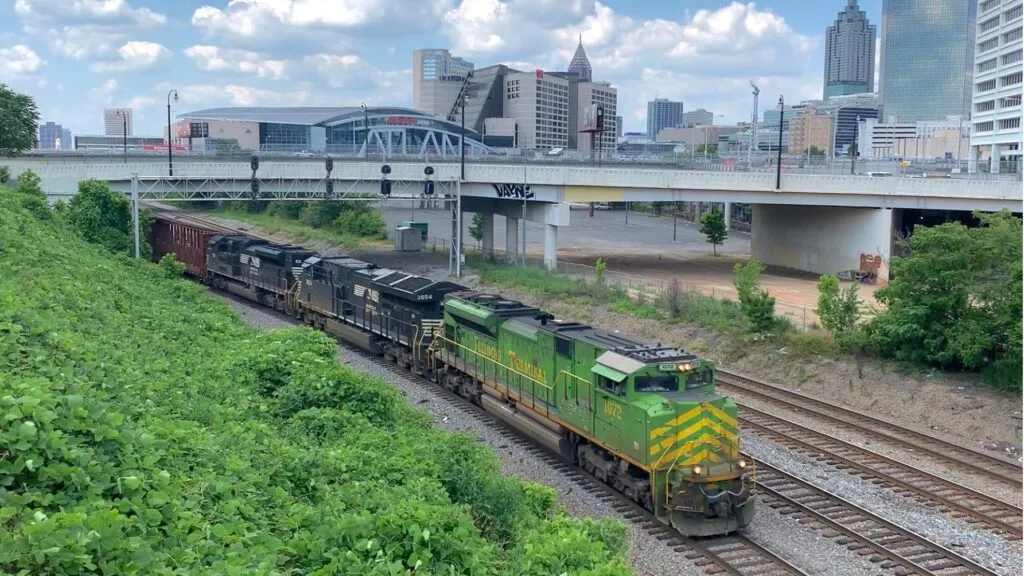
A major U.S. rail merger has revived proposals for expanded passenger rail service in Atlanta, including new stations and integrated transit. A key component is a $850 million intermodal truck-to-rail hub near Hartsfield-Jackson Airport, set to open in May 2026 and handle 12,000 weekly truck movements. Federal funding totals $4.2 billion under the Bipartisan Infrastructure Law, with environmental review concluding in December 2024 and construction expected to begin in 2026. Spot truckload rates on the Atlanta–Charlotte lane dropped 14.2% year-over-year as of August 2024.

Welcome Back!

Login to your account below

Create New Account!

Fill the forms below to register

Retrieve your password

Please enter your username or email address to reset your password.

Scan to share via WeChat

Open WeChat and scan the QR code to share

QR Code

Add New Playlist