Skip to content

ESG & Regulation · Green Supply Chain · Sustainability

CATL ties supplier contracts to carbon data by 2027

CATL has mandated that new suppliers provide verified carbon-footprint data starting in 2027, making low-carbon compliance a contractual requirement. Over 80 percent of a battery’s lifecycle emissions stem from raw-material sourcing, prompting CATL to audit carbon data from 100+ tier-one suppliers since launching its full-chain accounting platform in 2022. The company targets core-operations carbon neutrality by 2025 and full value-chain neutrality by 2035, backed by 100 billion yuan in R&D. Its Green Procurement Guide ties order preference and contract length to renewable-energy share and per-unit energy metrics.

Original source: Source information pending

CATL ties supplier contracts to carbon data by 2027

According to pandaily.com, Contemporary Amperex Technology Co. Limited (CATL) has declared that batteries failing to meet zero-carbon criteria will be excluded from its supply chain — with binding carbon-footprint requirements for new suppliers taking effect in 2027.

Carbon as the new competitive threshold

CATL chairman Zeng Yuqun stated plainly at a core-operations carbon-neutrality briefing:

“A battery that performs well and costs reasonably may still fail to sell — if it isn’t low-carbon enough.” — Zeng Yuqun, Chairman of CATL

He added, “I believe that in the future, non-zero-carbon batteries will be eliminated by the era.” This marks a strategic pivot: while safety, performance, cost, and delivery have long defined battery competitiveness, carbon footprint is now a decisive lever — driven by tightening global decarbonization rules.

CATL’s analysis shows that more than 80 percent of a battery’s total lifecycle carbon emissions originate in raw material sourcing — over five times the emissions from CATL’s own core manufacturing operations. Energy-intensive processes such as cathode and anode sintering — often conducted at temperatures between 700 and 1,000 degrees Celsius for tens of hours — amplify upstream impact. Suppliers unable to verify credible carbon-footprint data or green-power usage directly compromise their customers’ carbon accounting, risking tender disqualification and contract termination.

Systemic enforcement across the value chain

CATL launched its full-chain carbon-accounting platform in 2022, covering mining, refining, materials, and components. To date, it has audited real carbon data from more than 100 tier-one suppliers and aims to extend coverage to all key upstream companies. Its green-energy arm is deploying wind-solar-storage parks, regional green industrial grids, distributed rooftop photovoltaics, and pooled green certificate purchases — targeting 100 percent green power across the supply chain by 2035.

The company also initiated a zero-carbon supply-chain enablement program with 30 core suppliers and proposed a global lithium-battery zero-carbon ecosystem platform. Under its Green Procurement Guide, new suppliers must submit verified carbon-footprint data starting in 2027; annual audits will assess renewable-energy share and per-unit energy consumption. Low-carbon suppliers gain preferential order allocation and longer-term agreements — making decarbonization contractually binding, not voluntary.

From factory floors to global buyers

CATL’s product-level carbon tracing — integrated with green power and low-carbon materials — generates a verifiable “carbon passport” demanded by international clients including BMW and Seres. The company targets carbon neutrality in its core operations by 2025, supported by 20 zero-carbon factories, 100 percent green power, and net-zero core operations. Its broader value-chain carbon neutrality goal is set for 2035, backed by approximately 100 billion yuan in R&D investment over ten years — a commitment that may widen the industry’s performance gap and redefine market entry criteria.

Source: pandaily.com

Compiled from international media by the SCI.AI editorial team.
Ask SCI.AI Finished reading? Continue with SCI.AI. Explore the related policy, route, company and historical context. Continue asking
Gatik AI raises $200M, total funding reaches $500M
AI & Automation

Gatik AI raises $200M, total funding reaches $500M

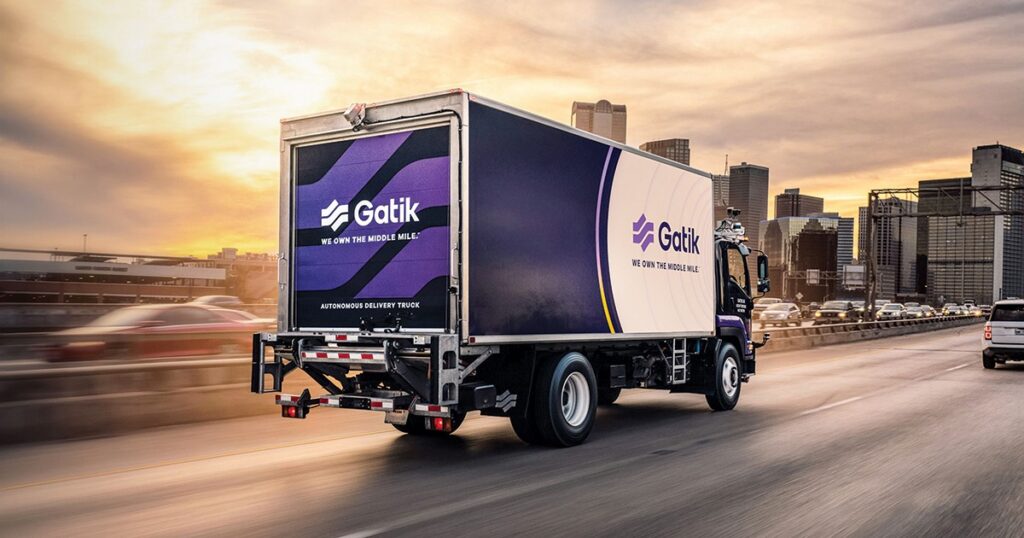
Gatik AI raised $200 million in its largest funding round to date, bringing its total capital raised to approximately $500 million. Led by Qatar Investment Authority and Koch Disruptive Technologies, the round includes Millennium Management, ARK Invest, and Intact Private Capital. The company operates driverless freight trucks across the Dallas-Fort Worth region, Phoenix, and Northwest Arkansas, and runs services with a safety driver in Ontario. In January 2026, Gatik announced $600 million in signed five-year revenue contracts. CEO Gautam Narang emphasized the shift from R&D to scaling proven commercial operations.

Descartes acquires Tai for $100M, third 2026 deal
AI & Automation

Descartes acquires Tai for $100M, third 2026 deal

Descartes Systems Group acquired Tai, an AI-powered transportation management software provider for freight brokers, for $100 million—the company’s third acquisition of 2026. The deal follows Descartes’ purchases of Idelic for at least $28 million and Drivin for $30 million earlier this year. Tai’s TMS supports truckload, LTL, drayage, and cross-border brokers across the full shipment lifecycle. Descartes reported $48.5 million in profit for the quarter ending April 30—a 35% increase year-over-year—and $193.6 million in revenue, up 15%. Its second-quarter fiscal 2027 earnings report is scheduled for September 10.

Rail mega-merger revives Atlanta passenger expansion, trucking angle emerges
AI & Automation

Rail mega-merger revives Atlanta passenger expansion, trucking angle emerges

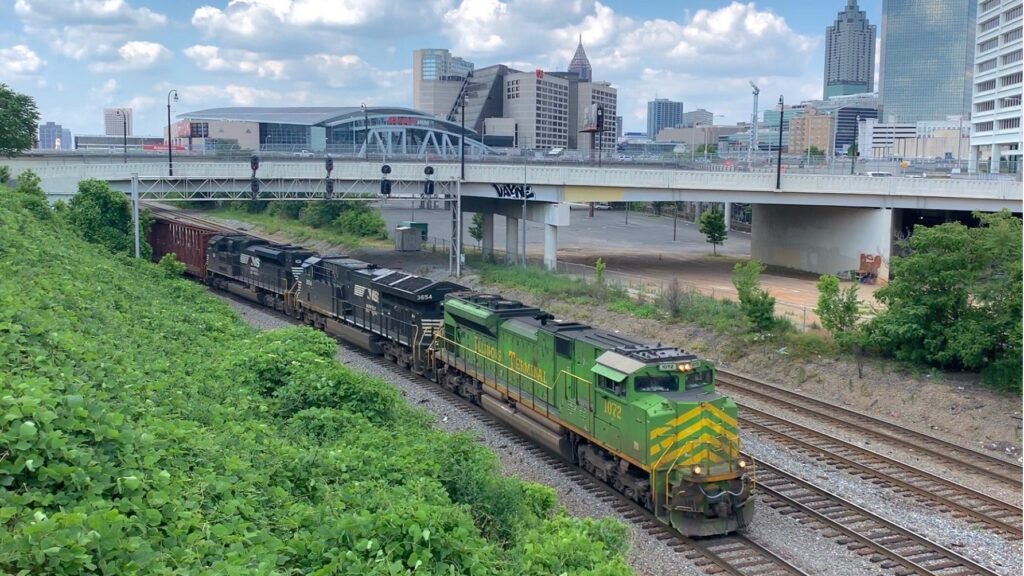
A major U.S. rail merger has revived proposals for expanded passenger rail service in Atlanta, including new stations and integrated transit. A key component is a $850 million intermodal truck-to-rail hub near Hartsfield-Jackson Airport, set to open in May 2026 and handle 12,000 weekly truck movements. Federal funding totals $4.2 billion under the Bipartisan Infrastructure Law, with environmental review concluding in December 2024 and construction expected to begin in 2026. Spot truckload rates on the Atlanta–Charlotte lane dropped 14.2% year-over-year as of August 2024.

Welcome Back!

Login to your account below

Create New Account!

Fill the forms below to register

Retrieve your password

Please enter your username or email address to reset your password.

Scan to share via WeChat

Open WeChat and scan the QR code to share

QR Code

Add New Playlist