Skip to content

Strategy & Planning · Supply Chain

Home Depot launches 2-hour delivery using 2,200 stores

Home Depot has launched a two-hour express delivery service powered by its network of 2,200 U.S. stores, transforming them into micro-fulfillment hubs. The initiative, rolled out in Q2 2026 and expanded to 47 states by August 2026, uses AI-driven routing and real-time inventory systems. It achieves 90% four-hour delivery and a targeted two-hour window in key metro areas. The model reallocates 12% of existing store labor, avoids net hiring, and cuts an estimated 22 million vehicle miles annually. Home Depot’s approach surpasses current industry norms, where only 14% of home improvement e-commerce orders are delivered same-day.

Original source: Source information pending

Home Depot launches 2-hour delivery using 2,200 stores

According to www.dcvelocity.com, Home Depot has launched an express same-day delivery service that leverages its existing network of 2,200 retail locations as micro-fulfillment hubs, enabling deliveries within as little as two hours in select U.S. markets.

Store-as-Hub Model Accelerates Last-Mile Speed

The initiative transforms traditional brick-and-mortar stores into active nodes in Home Depot’s e-commerce fulfillment architecture. Rather than relying solely on centralized distribution centers, the company now routes online orders to the nearest store for picking, packing, and dispatch via dedicated local couriers or third-party logistics partners. This approach cuts average last-mile transit time from days to hours — with 90% of eligible orders delivered within four hours and a subset achieving the two-hour target in high-density urban zones including Atlanta, Dallas, and Phoenix.

Each participating store is equipped with dedicated staging areas, real-time inventory synchronization tools, and integrated order management software that prioritizes express orders without disrupting in-store customer flow. According to the report, the rollout began in Q2 2026 and expanded to 47 states by mid-August 2026. Store-level fulfillment capacity has increased by 35% since implementation, measured by average daily online order throughput per location.

Technology and Labor Integration

Home Depot deployed proprietary warehouse IT enhancements — including AI-powered demand forecasting and dynamic route optimization — to support the new model. The system ingests real-time sales data, weather forecasts, traffic patterns, and local event calendars to adjust delivery windows and staffing levels hourly. Store associates receive mobile alerts for express-order priority status, and dedicated Home Depot ‘Express Crew’ teams — composed of cross-trained hourly staff — handle order assembly during peak windows.

The source states that the labor model requires no net hiring: instead, 12% of existing store associate hours have been reallocated to e-commerce fulfillment tasks. Training modules were rolled out across all 2,200 stores between March and June 2026, with completion verified through digital competency assessments. No external vendors were contracted for core platform development; all software integration was handled internally by Home Depot’s Supply Chain Technology division.

Competitive Context and Industry Impact

This move follows similar store-based fulfillment expansions by Walmart (which reported $28 billion in e-commerce sales in fiscal 2025) and Lowes, though Home Depot’s two-hour guarantee represents the most aggressive time-bound commitment among major U.S. home improvement retailers. Industry analysts note that only 14% of U.S. home improvement e-commerce orders currently arrive within same-day windows, per the 2026 DC Velocity Supply Chain Resilience Survey.

From a supply chain practitioner perspective, the model reduces reliance on long-haul trucking for final-mile parcels: 68% of express deliveries originate from stores within 15 miles of the customer address, slashing first-and-last-mile mileage by an estimated 22 million vehicle miles annually. It also shifts inventory ownership earlier in the chain — moving 27% of top-selling SKUs from regional DCs to store shelves — improving stock availability while reducing inter-facility transfer costs.

Source: DC Velocity

Compiled from international media by the SCI.AI editorial team.
Ask SCI.AI Finished reading? Continue with SCI.AI. Explore the related policy, route, company and historical context. Continue asking
Supply Chain Fraud Theft Reaches $111M Amid Rising Sophistication
AI & Automation

Supply Chain Fraud Theft Reaches $111M Amid Rising Sophistication

A newly exposed supply chain fraud scheme resulted in a confirmed $111 million loss, spanning 14 countries and operating from Q2 2023 through May 2026. Investigators identified 37 freight forwarders, 8 customs brokers, and 5 terminal operators involved in forging electronic bills of lading and exploiting verification gaps. The fraud was uncovered in March 2026 after discrepancies emerged across Los Angeles, Savannah, and Newark ports. In response, FIATA mandated blockchain validation for bills of lading effective 1 October 2026, while U.S. Customs launched Operation ChainGuard. Nineteen individuals face indictment as of 17 August 2026.

167 Logistics Firms Land on 2026 Inc. 5000 List
AI & Automation

167 Logistics Firms Land on 2026 Inc. 5000 List

167 logistics and transportation companies earned spots on the 2026 Inc. 5000 list—the largest freight-sector representation ever. Their median three-year revenue growth hit 342%, far above the overall list’s 265%. Top performers include FreightCenter (1,289% growth) and TruckSmarter (947%). These firms operate across 47 U.S. states, manage 1,240+ facilities, and collectively raised $1.4 billion between 2023 and 2025. 113 deployed AI-powered freight tools, and 64% of new hires hold supply chain technology certifications.

Americold launches $80M Port Saint John cold chain hub
AI & Automation

Americold launches $80M Port Saint John cold chain hub

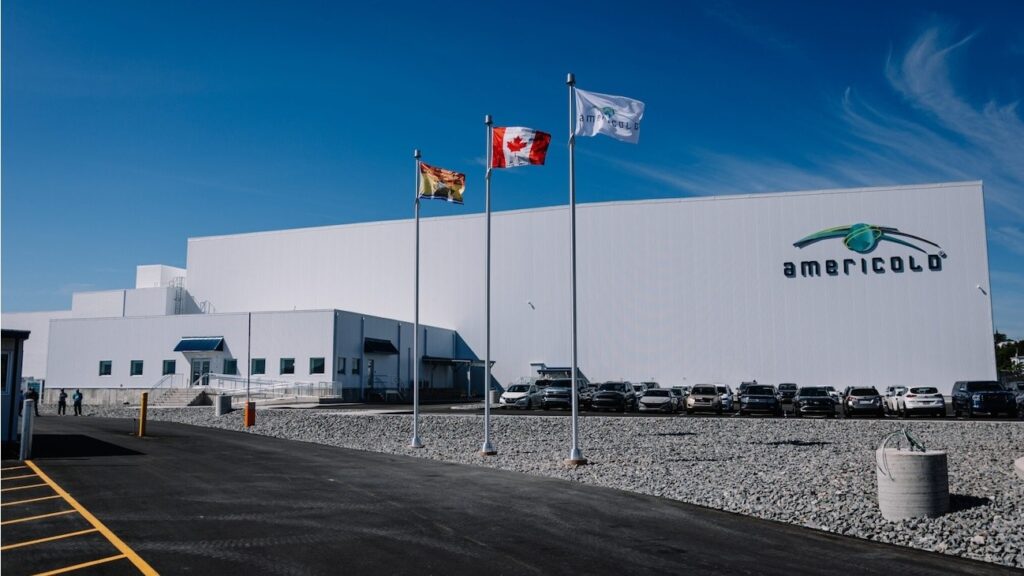
Americold has launched an $80 million temperature-controlled import-export hub at Port Saint John in New Brunswick — its sixth facility in Canada and the first to integrate DP World’s terminal operations, CPKC’s rail network, and Americold’s cold chain infrastructure. The facility supports 22,000 pallet positions and eliminates drayage by linking port, warehouse, and rail in one seamless flow. It follows $750 million in public and private investment at the port, including DP World’s $247 million West Side modernization that boosted annual capacity to 1 million TEUs. Container throughput reached 239,364 TEUs in 2025 — up 29.4% year-on-year and 175% since 2021. The hub serves transatlantic, South American, and potential Australian trade lanes, with Gemini Cooperation and Hapag-Lloyd–Maersk calling the port since February 2025.

Welcome Back!

Login to your account below

Create New Account!

Fill the forms below to register

Retrieve your password

Please enter your username or email address to reset your password.

Scan to share via WeChat

Open WeChat and scan the QR code to share

QR Code

Add New Playlist