According to www.dcvelocity.com, Toyota Material Handling North America (TMHNA) opened a $100 million electric forklift manufacturing facility in Columbus, Indiana on August 6, 2026.
Strategic repositioning of U.S. production
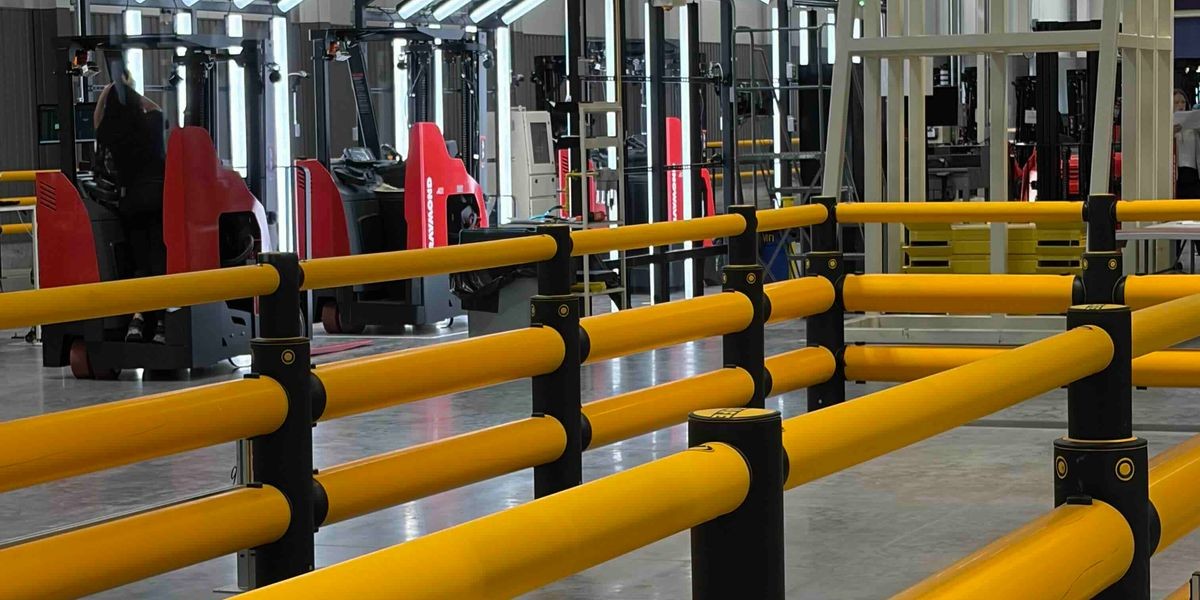
The new 295,000-square-foot factory — located at TMHNA’s Columbus headquarters — will produce the electric Class 1 Stand-Up Counterbalanced Forklift under both the Toyota and Raymond brands. This shift frees up TMHNA’s Greene, N.Y. plant to begin manufacturing reach trucks, order pickers, and automation systems — a reallocation announced during the opening ceremony in Columbus.
The facility marks a major milestone following the 2025 merger of Toyota and Raymond operations into TMHNA. That consolidation was followed shortly thereafter by Japanese parent company TICO’s reorganization of its warehouse automation subsidiaries — Vanderlande, viastore, and Bastian — into a unified entity named Toyota Automated Logistics (TAL). The Columbus plant now brings TMHNA’s total footprint in the city to 1.9 million square feet “under roof.”
Meeting surging demand for electric lift trucks
Brett Wood, President & CEO of TMHNA, stated that the plant directly responds to accelerating electrification trends:
“In 2023, 66% of all lift trucks sold in North America were electric powered, and currently the market is approximately 70% electric. The electric forklift demand is likely to reach 80% before 2035, and our new factory is poised to address this electrification trend.”
The facility is designed to scale rapidly: it began production at approximately eight forklifts per day and will ramp up to 24 per day by September. This pace supports TMHNA’s “lean management” model — building units on demand rather than for stock. Notably, 75% of forklifts produced there are built to individual customer specifications, including options such as 14 different seat varieties.
Lean operations and supply chain resilience
The plant integrates automation with human craftsmanship and applies Kaizen — Toyota’s continuous improvement methodology — to eliminate waste across eight categories: transportation of parts, inventory, motion, waiting, overproduction, overprocessing, defects, and underutilized skills.
Parts arrive via “just in time” delivery, with 60% of parts by value sourced from North American suppliers. However, Tony Miller, Chief Supply Officer of TMHNA, confirmed that Japan remains the largest import supplier, producing common components for TMHNA’s broad vehicle catalog. To mitigate customs-related delays exacerbated since the covid pandemic, TMHNA recently added a foreign trade zone (FTZ) to its Columbus campus — enabling imported goods to be brought directly to the site without waiting for U.S. Customs clearance at distant ports or railyards.
Miller emphasized proactive risk management:
“There are a lot of things that can happen outside your control. Especially when you consider both our suppliers and our suppliers’ own supply chains,” he said. “So we work on identifying delays proactively, in enough time to recover. We focus on keeping the sequence [of factory forklift assembly steps]. The sequence is sacred.”
Source: DC Velocity
Compiled from international media by the SCI.AI editorial team.