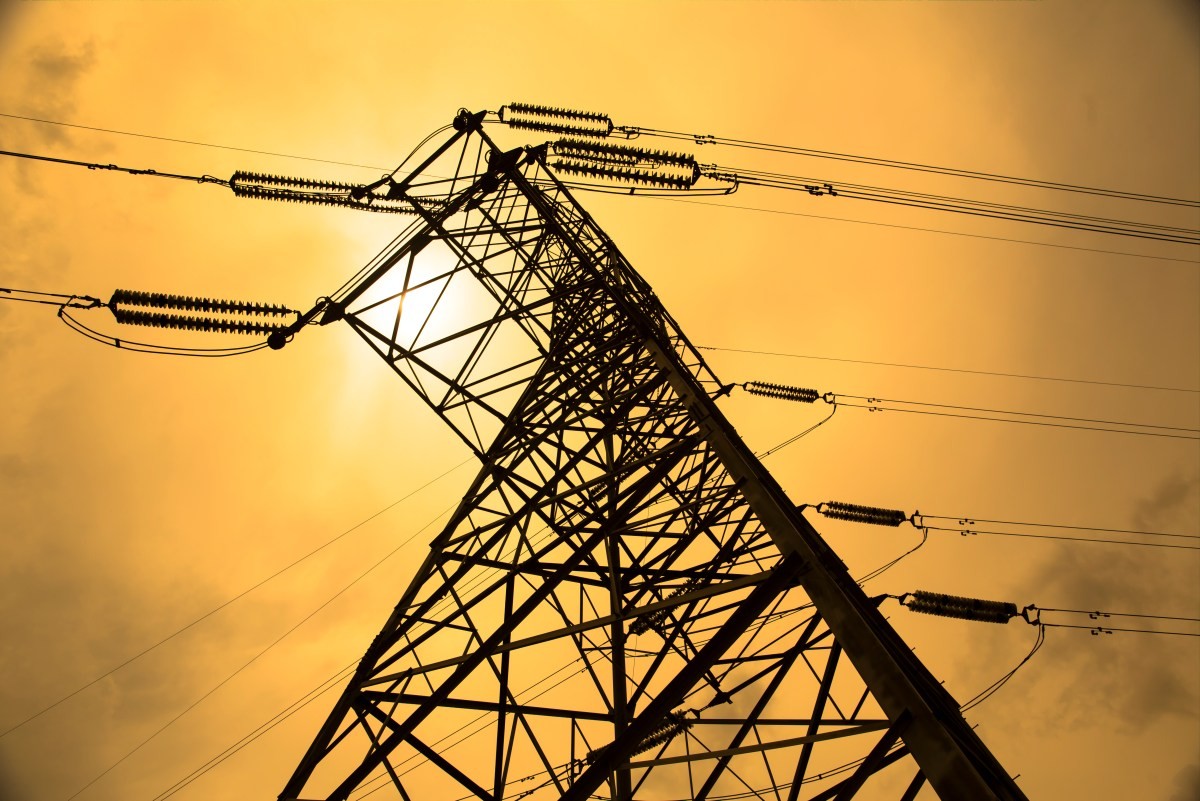
According to techcrunch.com, a fallen power line outside Washington, DC, triggered a cascading grid event in which more than 3.1 gigawatts of AI data center load disconnected nearly simultaneously — causing voltage spikes across the PJM Interconnection grid from Northern Virginia to Chicago.
Grid Instability Amplified by Concentrated Data Center Load
The incident occurred on July 25, 2026, and took over 11 minutes for the PJM grid to fully stabilize after an initial recovery phase. During peak disruption, the grid carried an excess of 3.49 gigawatts of electricity — a direct result of synchronized disconnections by data centers in Northern Virginia, home to the world’s highest concentration of such facilities. According to Reuters, the disconnected load represented approximately 3% of total demand on PJM at the time — a seemingly modest share that nonetheless destabilized grid equilibrium due to the system’s requirement for near-perfect supply-demand balance.
The PJM Interconnection manages electricity across 13 states and the District of Columbia, serving 67 million customers. Its territory includes Northern Virginia — where data center density has grown so rapidly that the region now accounts for roughly 6% of PJM’s total load, up from earlier levels and projected to reach 24% by 2040, per Synapse Energy Economics.
Synchronized Fail-Safes Exacerbate Systemic Risk
When the voltage dip reached data centers this week, most responded within seconds — disconnecting en masse rather than riding through the fluctuation. As Ali Zain Banatwala, senior market models specialist at the Independent Electricity System Operator, explained to TechCrunch:
“We need to figure a way for these loads that are located next to each other to sequentially either disconnect or reconnect.”
This lack of coordination transformed a localized supply drop into a regional demand collapse, sending surplus power surging and triggering visible flickering of lights across multiple states.
A similar event occurred in 2024, when 60 data centers simultaneously disconnected, pulling 1.5 gigawatts off the grid — half the magnitude of this year’s event. The escalation underscores growing systemic exposure: the 2026 disconnection was twice as large as the 2024 episode, revealing accelerating strain on legacy grid protocols.
Emerging Technical Solutions: Battery-Integrated Power Management
To mitigate such events, startups like ON.Energy are deploying grid-responsive uninterruptible power systems designed for entire data center campuses — covering servers, chillers, and ancillary infrastructure. Rather than presenting volatile, reactive loads to the grid, ON.Energy’s architecture uses battery banks and advanced power conversion equipment to mask internal variability. The grid “sees” only one stable, predictable load profile.
Ricardo de Azevedo, CTO at ON.Energy, described the incident as
“It’s the canary in the coal mine.”
His team is currently installing 3 gigawatts worth of these systems across four data center campuses. The technology enables dynamic workload scaling — including AI training bursts — without grid disturbance. Crucially, it also allows data centers to absorb grid fluctuations: excess power charges batteries; dips are offset by dispatching stored energy — all within milliseconds.
Regulatory response is accelerating. ERCOT, the Texas grid operator, plans to mandate “ride-through” capability for large industrial loads like data centers — requiring them to remain connected during brief disturbances instead of defaulting to backup generators.
Source: TechCrunch
Compiled from international media by the SCI.AI editorial team.