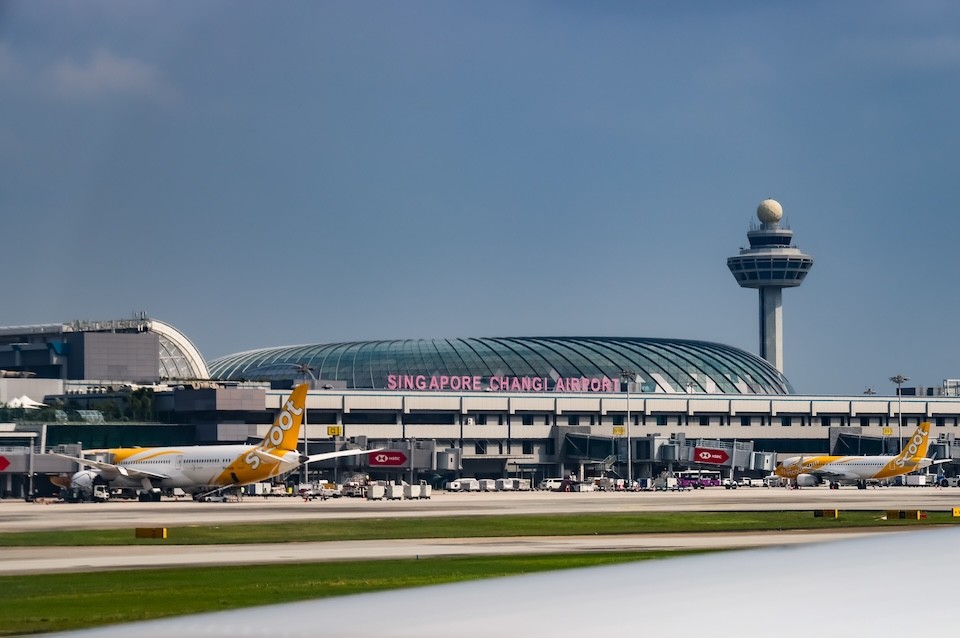
According to www.aircargonews.net, Singapore Changi Airport handled 567,000 tonnes of airfreight in the second quarter of 2026 — a 9.8% year-on-year increase.
AI-driven semiconductor shipments fuel growth
The surge was driven primarily by strong demand for AI-related semiconductors and electronics, which underpinned robust performance across all cargo flow types: exports, imports, and transhipments. According to the airport, “
The strong performance was led by growth across all cargo flows, at the back of strong AI-related semiconductor and electronics shipments.
” This category accounted for the largest share of volume gains in Q2 2026. Total air cargo throughput for the full year 2025 reached 2.1 million tonnes, up 4.5% from 2024 — confirming sustained momentum beyond the quarterly spike.
Market expansion and new freighter services
Changi’s top five air cargo markets in Q2 were China, Hong Kong, Australia, India, and the US. On 15 June 2026, Tianjin Air Cargo launched its first service between Singapore and Haikou, China — becoming Changi’s newest freighter operator. This followed an earlier announcement that SF Express, China’s largest express logistics provider, selected Changi as its first overseas hub, targeting growth opportunities across Southeast Asia and South Asia.
Infrastructure roadmap to 5.4 million tonnes
To support projected long-term demand, Changi is pursuing a capacity target of 5.4 million tonnes annually. A cornerstone of this plan is the Changi East Industrial Zone (CEIZ), currently under development for airfreight, air express, and Maintenance, Repair and Operations (MRO) activities. The CEIZ is scheduled to become operational in the mid-2030s. Upon opening, the existing Changi Airfreight Centre — part of the current Changi West development — will be remodelled to integrate with the expanded ecosystem. The airport confirmed that CEIZ will directly augment and eventually succeed parts of the current air cargo handling infrastructure.
Strategic positioning amid regional logistics shifts
Changi’s Q2 results reflect broader regional dynamics: rising semiconductor trade flows through Southeast Asia, deepening logistics integration between China and ASEAN, and increasing reliance on high-value, time-sensitive air cargo corridors. With SF Express establishing its first overseas hub at Changi and Tianjin Air Cargo launching direct services in June 2026, the airport is consolidating its role as a critical node for both manufacturing-linked and e-commerce–driven airfreight. These developments align with industry-wide trends — including DSV’s new Chicago Rockford–Incheon freighter service launched on 23 July 2026, and Envirotainer’s sixth India station opening at Navi Mumbai International Airport on the same day — underscoring intensified infrastructure investment across key Asian air cargo gateways.
Source: Air Cargo News
Compiled from international media by the SCI.AI editorial team.