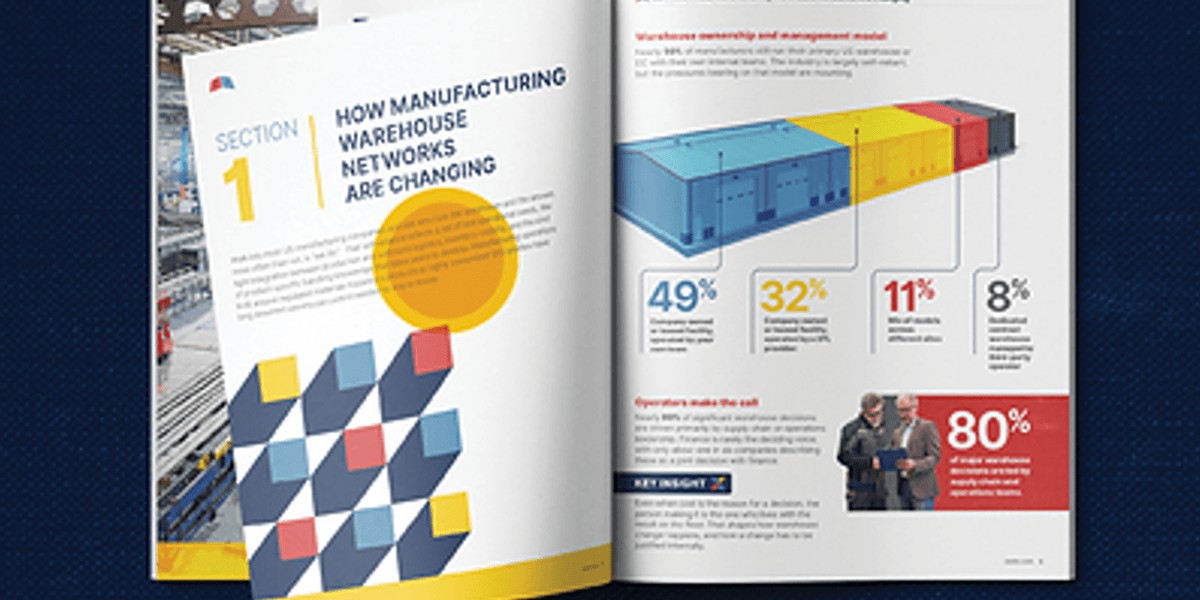
According to www.thescxchange.com, U.S. manufacturers report that 75% of their warehouse networks evolved organically—not by strategic design—creating structural inefficiencies that optimization alone cannot resolve.
Legacy Infrastructure Constrains Agility
A survey titled How Manufacturers Are Structuring Warehouse Operations in 2026, conducted by Wisconsin-based logistics firm Warehouse Specialists LLC (WSI), gathered insights from 306 supply chain, operations, and logistics leaders across U.S. manufacturing sectors—including chemicals, metals, food and beverage, building materials, and electronics. The findings reveal widespread operational strain: 75% of respondents confirmed their current warehouse model was built for an operating environment that no longer exists, while 53% reported at least one warehouse-related compliance incident, audit finding, or safety event within the past two years.
Strategic Overhaul Underway
Paul Simmons, President at Warehouse Specialists LLC, emphasized the limits of incremental fixes:
“Companies have responded to a chaotic supply chain in different ways. Some have focused on cost-cutting. But many have learned that a network optimized purely for cost is also optimized to fail under pressure.” — Paul Simmons, President, Warehouse Specialists LLC
He added that forward-looking manufacturers are deliberately redesigning their networks—not merely optimizing legacy infrastructure.
The urgency is reflected in near-term action plans: 88% of surveyed leaders expect changes to their U.S. warehouse and distribution footprint within the next 18 months, including expansion, consolidation, or shifts in operating model. Meanwhile, 67% have grown more likely to switch their third-party logistics (3PL) provider due to operational friction experienced over the past 12 months.
Industry-Wide Implications
These findings align with broader industry trends documented in the Annual State of Logistics Report, which described the logistics market as undergoing a “structural reset” in June 2026. That report noted rising resilience investments amid escalating risk—echoed in another Supply Chain Xchange finding that businesses are paying higher costs specifically for supply chain resilience. A separate survey published on July 9, 2026 revealed only 12.1% of organizations met their logistics technology implementation goals—underscoring the gap between ambition and execution in modernizing physical infrastructure.
From a practitioner perspective, the organic evolution of warehouse networks has tangible consequences: fragmented inventory visibility, inconsistent safety protocols across facilities, delayed response to demand volatility, and increased exposure during regulatory audits. Unlike software upgrades, physical network redesign requires multi-year capital planning, site acquisition or divestiture, labor retraining, and integration with new transportation lanes—making timing and sequencing critical. As one operations director at a Midwest food manufacturer noted (paraphrased from supplementary interviews cited by WSI), “You can’t patch concrete floors or retrofit ceiling heights with an API.”
Source: thescxchange.com
Compiled from international media by the SCI.AI editorial team.