According to www.scmp.com, India attracted US$3.2 billion in foreign direct investment from Japan during the 2025–26 financial year, while its bilateral trade with China reached US$151 billion in the same period — over five times higher than its US$27.5 billion trade volume with Japan.
Japan’s Growing Investment Footprint in India
Japan has emerged as one of India’s top foreign investors, delivering cumulative FDI totaling more than US$48 billion since the start of the century. Excluding Singapore and Mauritius — jurisdictions frequently used as investment conduits — Japan ranked second only to the United States in total FDI inflows to India. A prominent recent example is Mitsubishi UFJ Financial Group’s (MUFG) US$4.4 billion stake in Shriram Finance, announced in December 2025. This investment underscores Japan’s strategic focus on India’s financial infrastructure as a foundation for broader industrial engagement.
The 16th India-Japan annual summit, held in New Delhi in early July 2026, featured Japanese Prime Minister Sanae Takaichi leading a high-level business delegation. The summit reaffirmed commitments under the Japan-India Joint Vision, a ten-year framework established during the previous summit in Tokyo in 2025 under then-Prime Minister Shigeru Ishiba. Under this vision, Japan aims to channel up to 10 trillion yen (US$62 billion) into India across sectors including manufacturing, clean energy, and digital infrastructure.
Trade Imbalance Highlights Structural Complementarity
Despite robust investment flows, India’s trade relationship with Japan remains comparatively modest: US$27.5 billion in goods trade during 2025–26, placing Japan only 10th among India’s trading partners. In stark contrast, China stands as India’s largest goods trading partner, with bilateral trade hitting US$151 billion in the same fiscal year — a figure that reflects deep integration across electronics, pharmaceuticals, machinery, and intermediate goods.
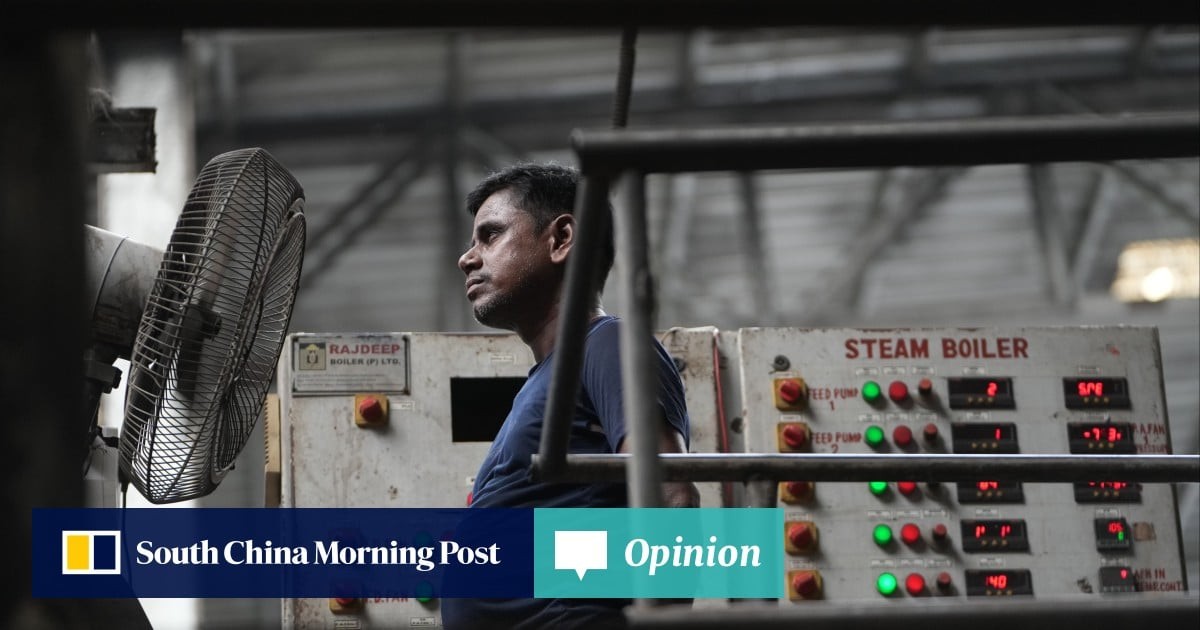
This asymmetry reveals a structural reality: many Japanese manufacturing investments in India rely on Chinese-sourced components, sub-assemblies, and tooling. As the source notes, “Without Chinese suppliers on the ground, potential Japanese investments will struggle to reach the scale or speed the moment demands.” This interdependence signals that supply chain resilience for India does not require an exclusive alignment with either Japan or China — but rather a pragmatic, multi-sourcing strategy anchored in functional capability rather than geopolitical binaries.
FDI Trajectories: China’s Peak vs. India’s Ascent
Global FDI patterns offer instructive context. According to World Bank data, China’s net FDI inflow surged from US$42 billion in 2000 to nearly US$244 billion by 2010, peaking at US$344 billion in 2021 before falling to US$43 billion in 2024. Its inward FDI stock stood at US$3.7 trillion at the end of 2023.
India’s trajectory differs markedly. Its net FDI inflow was just US$3.6 billion in 2000, climbed to a peak of US$64 billion in 2020, and settled at US$27 billion in 2024. While cumulative FDI inflows since 2000 have approached US$1.2 trillion, India’s total inward FDI stock remained around US$500 billion in 2023 — roughly one-seventh of China’s stock.
Strategic Implications for Supply Chain Professionals
For procurement and supply chain leaders operating in or serving India, these figures underscore two practical imperatives. First, sourcing strategies must recognize that Japanese capital often arrives without embedded Chinese supply capacity — meaning localized supplier development, joint ventures with Chinese component makers, or dual-sourcing corridors are essential to avoid bottlenecks. Second, India’s relatively low FDI stock versus inflow highlights gaps in long-term reinvestment and retention — suggesting opportunities for value-added partnerships beyond greenfield assembly, such as R&D co-location, local component certification programs, and shared logistics infrastructure.
As Winston Mok, a private investor and former private equity professional, observes:
“Without Chinese suppliers on the ground, potential Japanese investments will struggle to reach the scale or speed the moment demands.” — Winston Mok, private investor
Source: South China Morning Post
Compiled from international media by the SCI.AI editorial team.