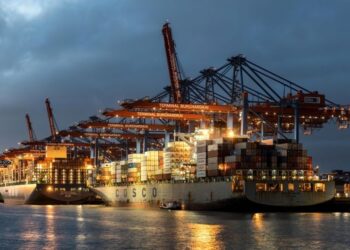
According to www.manilatimes.net, Chinese companies are pivoting toward long-term growth strategies centered on artificial intelligence adoption and supply chain resilience amid intensifying global trade complexity.
Strategic Shifts in Sourcing and Operations
A survey of 292 supply chain and logistics executives in China—conducted in late 2025 by DP World’s Global Trade Observatory—found that 58% plan to increase their supplier base and diversify sourcing in 2026. This reflects a deliberate move away from overreliance on single-source or region-concentrated procurement. Additional operational adjustments include near-shoring (cited by 38%), friend-shoring (36%), and increasing physical inventory levels (32%). These measures are driven by both defensive imperatives—such as tariff responses and geopolitical risk mitigation—and proactive initiatives including ESG compliance and regional trade incentives.
AI as the Primary Growth Catalyst
Technology is emerging as the dominant engine for future expansion. When asked to identify top business growth drivers over the next one to three years, 50% of surveyed Chinese executives pointed to AI deployment, while 44% cited broader digitalization efforts. This emphasis aligns with Beijing’s recent “Two Sessions” policy directives, which formally prioritized “New Quality Productive Forces”—a framework explicitly naming advanced computing and tech-driven systems—as core pillars of China’s next economic phase.
Integrated Logistics as Competitive Differentiator
Glen Hilton, CEO and managing director for Asia-Pacific at DP World, underscored the strategic implications of this shift:
“China’s next trade advantage will come from resilience and adaptability, not just scale.” — Glen Hilton, CEO and managing director for Asia-Pacific at DP World
He stressed that managing distributed, multi-regional networks demands integrated logistics capabilities—not fragmented service providers. According to Hilton, customers increasingly require an operating partner capable of unifying the physical and digital layers of trade: ports, terminals, freight forwarding, customs clearance, warehousing, enterprise systems, and last-mile execution.
Market Expansion and Sectoral Adoption
Beyond technology and sourcing, market expansion remains a priority: 43% of executives target demand from new markets and consumers, while 34% aim to develop entirely new value chains. These trends are already materializing across critical sectors in China—including e-commerce, automotive, healthcare, and technology. As a logistics infrastructure leader handling approximately 10% of global containerized trade, DP World confirms active implementation of these strategies across its China-facing operations.
Source: manilatimes.net
Compiled from international media by the SCI.AI editorial team.