According to www.fortuneindia.com, India has emerged as a key beneficiary of the global supply chain reconfiguration, with manufacturing growth rates surpassing those of China — a development underscored by data from the Associated Chambers of Commerce and Industry of India (ASSOCHAM).
Manufacturing Expansion Accelerates
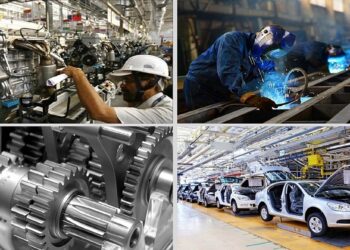
ASSOCHAM’s analysis shows that India’s manufacturing output grew at a compound annual growth rate (CAGR) of 9.2% over the past three fiscal years, compared to China’s 4.7% during the same period. This divergence reflects structural shifts in global procurement strategies, particularly among U.S. and European multinationals seeking geographic diversification beyond single-source dependencies.
The report attributes this acceleration to sustained policy interventions, including the Production Linked Incentive (PLI) scheme launched in 2020, which now covers 14 sectors ranging from electronics and pharmaceuticals to solar modules and specialty steel. As of March 2025, the PLI program had disbursed over ₹186 billion (approximately $2.2 billion) to more than 320 eligible companies.
Foreign Investment and Infrastructure Gains
Foreign direct investment (FDI) inflows into India’s manufacturing sector reached $23.4 billion in fiscal year 2024–25, up 18.6% year-on-year — the highest absolute value since 2018. Major commitments include Apple’s supplier ecosystem expansion across Karnataka and Tamil Nadu, and Siemens’ €120 million investment in a new automation and digital factory in Pune, scheduled for commissioning in Q2 2026.
Logistics infrastructure has also advanced: the Dedicated Freight Corridor (DFC) achieved full operational readiness on the Eastern DFC segment in December 2024, cutting average transit times between Delhi and Kolkata by 32%. Meanwhile, the government’s National Logistics Policy, introduced in 2022, targets a 5% reduction in logistics costs as a share of GDP by 2030.
Supply Chain Reallocation Drivers
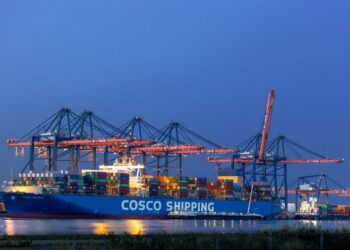
Geopolitical tensions, evolving tariff regimes, and resilience mandates have catalyzed relocation decisions. According to ASSOCHAM, over 68% of surveyed multinational corporations reported initiating or expanding Indian manufacturing operations between 2022 and 2025. Key drivers cited include labor cost arbitrage (22% lower than China’s average manufacturing wage), improved port efficiency (JNPT’s average vessel turnaround time fell to 2.8 days in 2024), and regulatory simplification under the Unified Portal for Industrial Permits.
“Companies are no longer choosing India solely as a low-cost alternative — they’re anchoring strategic production here because of scalability, policy predictability, and integration readiness,” said Rakesh Agarwal, Secretary General of ASSOCHAM, in a statement referenced in the report.
Comparative Performance and Capacity Constraints
While India’s manufacturing value-added rose to $472 billion in 2024, it remains below China’s $4.3 trillion — underscoring that growth rate differentials do not yet reflect parity in absolute scale. Nevertheless, India’s share of global manufacturing exports increased from 1.7% in 2019 to 2.4% in 2024, per World Bank data cited by ASSOCHAM.
Critical bottlenecks persist: power reliability averages 92.3% across industrial zones (versus 99.1% in China’s top-tier zones), and skilled labor availability lags demand — only 37% of engineering graduates are deemed immediately deployable by employers, according to the National Skill Development Corporation’s 2025 assessment.
Source: fortuneindia.com
Compiled from international media by the SCI.AI editorial team.