Explore

  • Trending
  • Latest
  • Tools
  • Browse
  • AI Assistant
  • Subscription Feed

Logistics

  • Ocean
  • Air Cargo
  • Road & Rail
  • Warehousing
  • Last Mile

Regions

  • Southeast Asia
  • South Asia
  • Central Asia
  • Japan & Korea
  • Middle East
  • Europe
  • Russia
  • Africa
  • North America
  • Latin America
  • Australia
SCI.AI
  • Supply Chain
    • Strategy & Planning
    • Logistics & Transport
    • Manufacturing
    • Inventory & Fulfillment
  • Procurement
    • Strategic Sourcing
    • Supplier Management
    • Supply Chain Finance
  • Technology
    • AI & Automation
    • Robotics
    • Digital Platforms
  • Risk & Resilience
  • Sustainability
  • Research
  • Expert Columns
  • English
    • Chinese
    • English
No Result
View All Result
  • Login
  • Register
SCI.AI
No Result
View All Result
Home Technology AI & Automation

Hong Kong launches $730M AI infrastructure push targeting 36x compute growth by 2032

2026/06/29
in AI & Automation, Technology
0 0
Hong Kong launches $730M AI infrastructure push targeting 36x compute growth by 2032

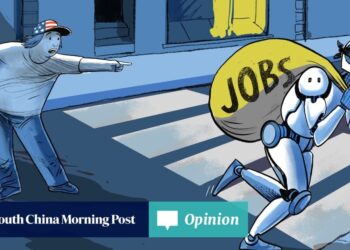
According to www.scmp.com, Hong Kong has committed HK$6.84 billion (US$730 million) across multiple AI infrastructure initiatives, aiming to increase the city’s computing power by 36 times its current level by 2032.

Major funding allocations revealed

The Hong Kong government has deployed substantial public funds to accelerate AI development. According to the report, it allocated HK$2.84 billion (US$364 million) to establish a semiconductor centre, HK$3 billion for an AI subsidy scheme, and HK$1 billion to launch an advanced AI research and development institute.

The cumulative investment totals HK$6.84 billion, equivalent to approximately US$730 million. These figures reflect the scale of fiscal commitment—though still dwarfed by U.S. private-sector AI investment, which Goldman Sachs estimated at US$800 billion flowing into the sector by the end of 2026.

Data centre expansion at Sandy Ridge

In March 2026, the Hong Kong government granted 11 hectares of land at Sandy Ridge to a Hebei-based computing technology company to construct a large-scale data centre. This project is designed to deliver the foundational computing capacity required for next-generation AI applications in the city.

The facility is projected to boost Hong Kong’s total computing power by 36 times over its current baseline by 2032. However, the source notes that the differential between mainland Chinese and Hong Kong electricity tariffs has raised persistent concerns about the project’s commercial viability—a key operational constraint not addressed in initial feasibility assessments.

Strategic realism over global rivalry

Regina Ip, convenor of Hong Kong’s Executive Council and chairwoman of the New People’s Party, argues that Hong Kong should abandon unrealistic comparisons with tech hubs like Silicon Valley or Shenzhen. “The city is unlikely to outspend Silicon Valley or outscale Shenzhen. But it doesn’t need to,” she states.

“Hong Kong cannot be faulted for not working hard enough to catch up in the global artificial intelligence (AI) race.” — Regina Ip, Convenor of the Executive Council and Chairwoman of the New People’s Party

Her commentary underscores a broader policy recalibration: prioritizing practical adoption and niche strengths—such as financial services AI, regulatory sandboxing, and cross-border data governance—over attempts to replicate the capital-intensive, talent-concentrated models of U.S. or mainland Chinese AI ecosystems.

Contextual benchmarks and fiscal proportionality

While Hong Kong’s HK$6.84 billion AI infrastructure budget represents the largest coordinated public investment in the city’s technology history, it remains modest relative to global peers. The U.S. private sector alone is projected to invest US$800 billion in AI this year—more than 1,000 times Hong Kong’s total public allocation.

This disparity highlights structural realities: Hong Kong lacks domestic semiconductor manufacturing, faces constraints on land and energy, and operates under a distinct regulatory framework from mainland China. Its comparative advantage lies not in raw compute scale but in trusted data flows, common-law IP protection, and deep integration with global finance—factors that could support high-value AI applications in compliance, risk modeling, and trade finance.

Source: South China Morning Post

Compiled from international media by the SCI.AI editorial team.

More on This Topic

  • Prime Inc. sues IRS for $11 million reefer diesel tax refund (Jun 29, 2026)
  • Limitless Labs raises $20M for AI CNC programming platform (Jun 29, 2026)
  • Long Beach Port, Bali Express Launch Zero-Emission Mexico Corridor (Jun 28, 2026)
  • Chinese Youth Trust AI at 87%, US Gen Z Sees Job Threat at 59% (Jun 28, 2026)
  • Armstrong Transport nears $2B revenue after Quad-C investment (Jun 27, 2026)
ShareTweet

Related Posts

Prime Inc. sues IRS for $11 million reefer diesel tax refund
AI & Automation

Prime Inc. sues IRS for $11 million reefer diesel tax refund

June 29, 2026
1
Limitless Labs raises $20M for AI CNC programming platform
Digital Platforms

Limitless Labs raises $20M for AI CNC programming platform

June 29, 2026
3
Long Beach Port, Bali Express Launch Zero-Emission Mexico Corridor
AI & Automation

Long Beach Port, Bali Express Launch Zero-Emission Mexico Corridor

June 28, 2026
10
Chinese Youth Trust AI at 87%, US Gen Z Sees Job Threat at 59%
AI & Automation

Chinese Youth Trust AI at 87%, US Gen Z Sees Job Threat at 59%

June 28, 2026
7
Armstrong Transport nears $2B revenue after Quad-C investment
AI & Automation

Armstrong Transport nears $2B revenue after Quad-C investment

June 27, 2026
7
DSV’s platform shift sparks AI deployment rethink
Digital Platforms

DSV’s platform shift sparks AI deployment rethink

June 27, 2026
5

Leave a Reply Cancel reply

Your email address will not be published. Required fields are marked *

Recommended

FedEx向所有美国客户开放fdx访问权限

FedEx Opens FDX Access for All US Customers

20 Views
February 16, 2026
The End of Unpriced Resilience: How Boards Are Enforcing Four New Rules to Rebalance Supply Chain Strategy in 2026

The End of Unpriced Resilience: How Boards Are Enforcing Four New Rules to Rebalance Supply Chain Strategy in 2026

71 Views
February 21, 2026
J&J pledges $1B for Florida contact lens plant

J&J pledges $1B for Florida contact lens plant

12 Views
June 18, 2026
China Gold Output Falls 12.3%, Bars & Coins Demand Jumps 45% — www.bloomberg.com

China Gold Output Falls 12.3%, Bars & Coins Demand Jumps 45% — www.bloomberg.com

31 Views
May 10, 2026
Show More

SCI.AI

Global Supply Chain Intelligence. Delivering real-time news, analysis, and insights for supply chain professionals worldwide.

Categories

  • Supply Chain Management
  • Procurement
  • Technology


  • Risk & Resilience
  • Sustainability
  • Research

© 2026 SCI.AI. All rights reserved.

Powered by SCI.AI Intelligence Platform

Welcome Back!

Sign In with Facebook
Sign In with Google
Sign In with Linked In
OR

Login to your account below

Forgotten Password? Sign Up

Create New Account!

Sign Up with Facebook
Sign Up with Google
Sign Up with Linked In
OR

Fill the forms below to register

All fields are required. Log In

Retrieve your password

Please enter your username or email address to reset your password.

Log In

Scan to share via WeChat

Open WeChat and scan the QR code to share

QR Code

Add New Playlist

No Result
View All Result
  • Supply Chain
    • Strategy & Planning
    • Logistics & Transport
    • Manufacturing
    • Inventory & Fulfillment
  • Procurement
    • Strategic Sourcing
    • Supplier Management
    • Supply Chain Finance
  • Technology
    • AI & Automation
    • Robotics
    • Digital Platforms
  • Risk & Resilience
  • Sustainability
  • Research
  • Expert Columns
  • English
    • Chinese
    • English
  • Login
  • Sign Up

© 2026 SCI.AI