Explore

  • Trending
  • Latest
  • Tools
  • Browse
  • AI Assistant
  • Subscription Feed

Logistics

  • Ocean
  • Air Cargo
  • Road & Rail
  • Warehousing
  • Last Mile

Regions

  • Southeast Asia
  • South Asia
  • Central Asia
  • Japan & Korea
  • Middle East
  • Europe
  • Russia
  • Africa
  • North America
  • Latin America
  • Australia
SCI.AI
  • Supply Chain
    • Strategy & Planning
    • Logistics & Transport
    • Manufacturing
    • Inventory & Fulfillment
  • Procurement
    • Strategic Sourcing
    • Supplier Management
    • Supply Chain Finance
  • Technology
    • AI & Automation
    • Robotics
    • Digital Platforms
  • Risk & Resilience
  • Sustainability
  • Research
  • Expert Columns
  • English
    • Chinese
    • English
No Result
View All Result
  • Login
  • Register
SCI.AI
No Result
View All Result
Home Technology AI & Automation

Chinese Youth Trust AI at 87%, US Gen Z Sees Job Threat at 59%

2026/06/28
in AI & Automation, Technology
0 0
Chinese Youth Trust AI at 87%, US Gen Z Sees Job Threat at 59%

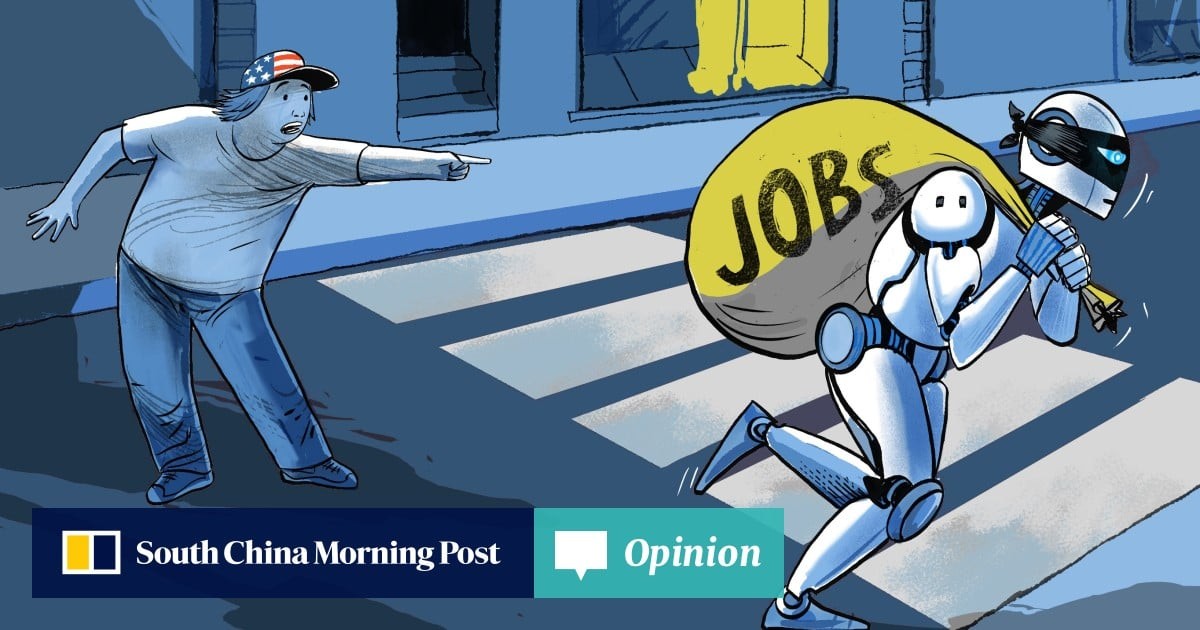
According to www.scmp.com, a comparative analysis of youth attitudes toward artificial intelligence reveals stark contrasts between China and the United States — with 87% of Chinese respondents expressing trust in AI, compared to just 32% in the U.S., while 59% of American 18–29-year-olds believe AI threatens their job prospects.

Evidence from Nationwide Surveys

A recent Chinese survey of more than 7,000 people found that over 96% report awareness of AI, and over 54% actively use it. Of those users, more than 40% integrate AI into work, study, or daily life — a rate significantly higher than in the United States and other developed countries. These findings are corroborated by the Edelman Trust Barometer, which recorded 87% AI trust in China versus 32% in the U.S. The divergence reflects not just technological adoption but deeply rooted socioeconomic contexts.

U.S. Youth: Rising Anxiety Amid Workplace Integration

In contrast, U.S. data signals growing apprehension. The Harvard Youth Poll reported that 59% of 18–29-year-olds in the U.S. perceive AI as a threat to their employment. Gallup’s tracking shows 48% of Gen Z workers now believe workplace AI risks outweigh benefits — an increase of 11 percentage points year-over-year. Simultaneously, the share reporting excitement about AI dropped by 14 points. A Harris Poll survey added further nuance: nearly half of Gen Z respondents stated AI had rendered their college degrees “irrelevant” — underscoring how perceptions of credential value intersect with automation fears.

Divergent Concerns, Shared Engagement

While Chinese respondents express greater optimism, they are not without concerns — only of a different kind. The proportion worried about AI-driven job displacement declined to 39.44% in the latest survey, down from 60.5% the prior year. Instead, the top concern emerged as AI overuse leading to atrophy of personal capabilities — cited by 45.79% of surveyed Chinese respondents. This shift suggests a maturing public discourse focused less on existential labor threats and more on cognitive and behavioral impacts of prolonged AI interaction.

Everyday Experience Shapes Perception

Personal experience plays a critical role in framing these attitudes. Wei Wei, former chief correspondent of the Eurasian bureau of China Central Television based in Moscow, describes her four-year-old son’s engagement with Doubao, one of China’s most popular AI applications. She allows supervised interaction — pausing low-quality or inaccurate space-related videos to explain reliability limits — while affirming AI’s role as a foundational tool, akin to the internet or smartphone.

“I see AI primarily as a tool; like the internet or smartphone, it will become an important part of everyday life, so learning to use it matters.” — Wei Wei, former chief correspondent, China Central Television

This pragmatic, pedagogical framing mirrors broader societal normalization — where AI is embedded not as a disruptor but as infrastructure.

Source: South China Morning Post

Compiled from international media by the SCI.AI editorial team.

More on This Topic

  • Armstrong Transport nears $2B revenue after Quad-C investment (Jun 27, 2026)
  • DSV’s platform shift sparks AI deployment rethink (Jun 27, 2026)
  • Agility Robotics merges with SPAC for $2.5B valuation (Jun 27, 2026)
  • Philadelphia cargo theft ring steals $1.5M, including $230K in dimes (Jun 26, 2026)
  • Zhipu AI Shares Surge 48% as US Blocks Anthropic Models (Jun 26, 2026)
ShareTweet

Related Posts

Armstrong Transport nears $2B revenue after Quad-C investment
AI & Automation

Armstrong Transport nears $2B revenue after Quad-C investment

June 27, 2026
5
DSV’s platform shift sparks AI deployment rethink
Digital Platforms

DSV’s platform shift sparks AI deployment rethink

June 27, 2026
3
Agility Robotics merges with SPAC for $2.5B valuation
Robotics

Agility Robotics merges with SPAC for $2.5B valuation

June 27, 2026
5
Philadelphia cargo theft ring steals $1.5M, including $230K in dimes
AI & Automation

Philadelphia cargo theft ring steals $1.5M, including $230K in dimes

June 26, 2026
8
Zhipu AI Shares Surge 48% as US Blocks Anthropic Models
AI & Automation

Zhipu AI Shares Surge 48% as US Blocks Anthropic Models

June 26, 2026
9
Nestlé opens $300M automated CA distribution center
Digital Platforms

Nestlé opens $300M automated CA distribution center

June 25, 2026
13

Leave a Reply Cancel reply

Your email address will not be published. Required fields are marked *

Recommended

Sustainability-Linked Loans: 5 Strategic Shifts Reshaping Agri-Supply Chains

Sustainability-Linked Loans: 5 Strategic Shifts Reshaping Agri-Supply Chains

15 Views
March 25, 2026
Target Names Former Walmart Exec for Supply Chain Role

Target Names Former Walmart Exec for Supply Chain Role

8 Views
May 20, 2026
2026 Supply Chain Trends: AI-Driven Execution, Resilience by Design, and the Integration Imperative

2026 Supply Chain Trends: AI-Driven Execution, Resilience by Design, and the Integration Imperative

15 Views
March 15, 2026
ERP-TMS-WMS Integration: The Unseen Engine of Modern Supply Chain Resilience

ERP-TMS-WMS Integration: The Unseen Engine of Modern Supply Chain Resilience

46 Views
March 19, 2026
Show More

SCI.AI

Global Supply Chain Intelligence. Delivering real-time news, analysis, and insights for supply chain professionals worldwide.

Categories

  • Supply Chain Management
  • Procurement
  • Technology


  • Risk & Resilience
  • Sustainability
  • Research

© 2026 SCI.AI. All rights reserved.

Powered by SCI.AI Intelligence Platform

Welcome Back!

Sign In with Facebook
Sign In with Google
Sign In with Linked In
OR

Login to your account below

Forgotten Password? Sign Up

Create New Account!

Sign Up with Facebook
Sign Up with Google
Sign Up with Linked In
OR

Fill the forms below to register

All fields are required. Log In

Retrieve your password

Please enter your username or email address to reset your password.

Log In

Scan to share via WeChat

Open WeChat and scan the QR code to share

QR Code

Add New Playlist

No Result
View All Result
  • Supply Chain
    • Strategy & Planning
    • Logistics & Transport
    • Manufacturing
    • Inventory & Fulfillment
  • Procurement
    • Strategic Sourcing
    • Supplier Management
    • Supply Chain Finance
  • Technology
    • AI & Automation
    • Robotics
    • Digital Platforms
  • Risk & Resilience
  • Sustainability
  • Research
  • Expert Columns
  • English
    • Chinese
    • English
  • Login
  • Sign Up

© 2026 SCI.AI