PepsiCo is expanding autonomous truck use in its supply chain.
PepsiCo is also working on a “large-scale rollout and implementation of electric vehicles,” she added, though it has already operated more than 11 million all-electric miles. “We don’t believe there’s a silver bullet for a sustainable fleet,” she said. “We always need to be putting the most efficient truck on the road that we can [that] suits our duty cycle.” She gave the headquarters engineering team as an example. It designs new or expanding sites, so the engineers may as well include infrastructure to support PepsiCo’s current and future trucks.
Electrification strategy and infrastructure
The food and beverage giant has long been integrating aerodynamic devices, lightweight equipment and other tactics for improving fuel efficiency in a diesel truck. Still, PepsiCo has a goal to reduce direct emissions by 75% by 2030, which means its current fleet will need to transition to modern equipment. PepsiCo is likely to continue updating its electrification strategy on an annual basis, as more data comes out and the technology develops, Conway said. But, put simply, any long-haul trucks still run on diesel, and medium and other shorter hauls use CNG.
KoiReader AI barcode technology deployment
PepsiCo joins the wider industry push toward warehouse automation as companies look to optimize their distribution processes. Last year, Maersk began a pilot with robotics company BionicHIVE on an automated solution that sorts, selects and puts away packages. This isn’t the first time the ocean carrier looked to strengthen its inventory management efforts. Maersk also announced a partnership with Verity in January to use autonomous drones to track inventory.
KoiReader’s technology is already operating at a PepsiCo distribution center in the Dallas-Fort Worth area, the release says, with broader deployment planned for later this year. KoiReader’s technology can identify and track barcodes and labels of any size or angle in fast-moving environments, like a conveyor belt, or even labels that have been partially damaged, Ashutosh Prasad, founder and CEO of KoiReader, told Supply Chain Dive in an interview. The technology is also “being investigated to assist warehouse workers as they scan pallets of soda and snacks,” and has also been deployed to automate yard operations as tractors and trailers enter and exit PepsiCo’s distribution center in Texas, release.
The application will eventually be expanded to validate customer deliveries to ensure 100% accuracy of human-assisted picking operations, release. KoiReader initially started working with PepsiCo in 2021 and since then has slowly expanded into different applications, Prasad said.
Fresno Tesla fleet and energy infrastructure
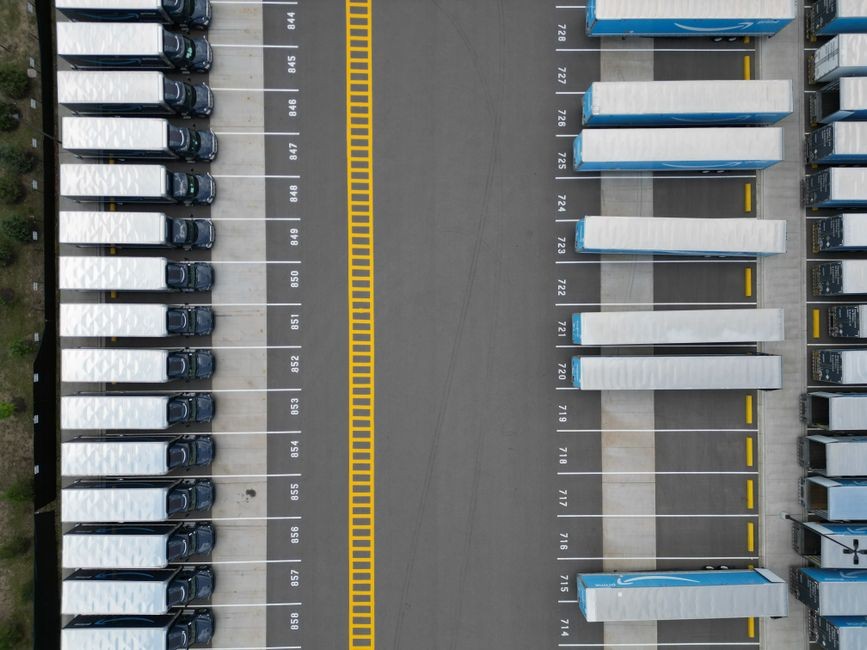
A row of PepsiCo’s Tesla semitrucks that operate at the bottling facility in Fresno, California. PepsiCo has a fleet of 50 trucks in Fresno, which have gained additional charging capacity though PG&E’s Flex Connect program. If the energy provided was static or “without Flex Connect, we would actually be limited to only charging overnight, from 9 p.m. to 3 a.m. We would be completely cut off the majority of the day,” Dejan Antunovic, electrification program manager at PepsiCo, told Trucking Dive in an interview.
PepsiCo expects nearly $1M in fuel savings for its EV semitrucks, Chain Dive. The Fresno deployment reflects a concrete, site-specific integration of heavy-duty battery-electric transport into existing bottling operations — a model increasingly adopted by consumer packaged goods firms seeking to meet near-term Scope 1 emissions targets. Unlike many peers still in pilot phases, PepsiCo’s 50-truck Fresno fleet represents one of the largest operational deployments of Class 8 battery-electric semitrucks by a U.S. food and beverage manufacturer as of mid-2026.
This effort aligns with broader industry trends: Amazon, for instance, is testing next-generation Proteus 2.0 autonomous mobile robots across Europe, with deployment expected in the first half of 2027; Maersk’s drone-inventory partnership with Verity launched in January 2026; and KoiReader’s multi-year engagement with PepsiCo — beginning in 2021 — demonstrates how supply chain AI vendors scale from single-site pilots to regional rollouts over defined timelines.
Source: Supply Chain Dive
Compiled from international media by the SCI.AI editorial team.