According to www.scmp.com, the U.S. government has formally appealed a federal judge’s order mandating refunds for tariffs imposed by former President Donald Trump — a legal reversal that places $166 billion in collected revenue at risk.
Legal Reversal and Immediate Financial Impact
In February 2026, the U.S. Supreme Court ruled that Trump had exceeded his statutory authority under the International Emergency Economic Powers Act (IEEPA) when imposing broad-based tariffs on allies and competitors. The decision invalidated the legal foundation of the duties, triggering subsequent litigation over repayment obligations. A judge of the U.S. Court of International Trade then ordered refunds, directing U.S. Customs and Border Protection (CBP) to administer the process while allowing operational flexibility for compliance.
The CBP’s refund system is already active: as of last month, it reported being on track to process approximately $85 billion in repayments, with $20.6 billion approved for disbursement. These figures reflect real-time execution against a total liability estimated at $166 billion, according to court filings cited by www.scmp.com. The appeal — filed on Tuesday, 3 June 2026 — could delay or suspend ongoing disbursements pending appellate review.
Operational Mechanics and Supply Chain Implications
The refund mechanism is administered exclusively by U.S. Customs and Border Protection, which began processing claims following the Court of International Trade’s ruling. Unlike ad hoc administrative relief, this is a judicially mandated, large-scale fiscal correction affecting thousands of importers across sectors including steel, aluminum, electronics, and agricultural inputs. For supply chain professionals, the implications extend beyond balance sheets: tariff refunds directly influence landed-cost calculations, working capital cycles, and duty drawback reconciliation timelines.
Historically, U.S. tariff refund programs have required rigorous documentation — including entry summaries, proof of payment, and Harmonized System (HS) code validation — and often involve multi-month verification windows. Given the scale — $166 billion across an estimated 2.4 million entries (based on CBP’s 2025 Annual Report), the logistical burden falls heavily on trade compliance teams. According to CBP’s published guidance, claimants must submit Form 19 within 180 days of liquidation, a deadline now complicated by the appellate uncertainty.
Broader Context: Tariffs as Fiscal and Strategic Tools
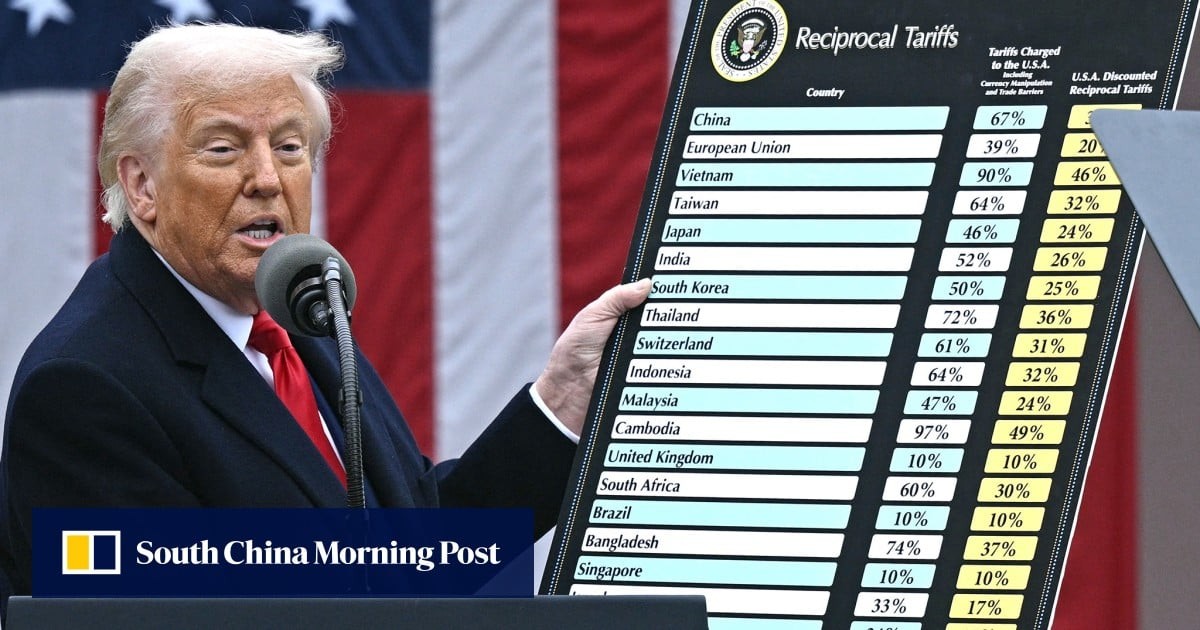
Trump’s tariff actions — launched after his return to the White House in 2025 — marked a sharp departure from prior administrations’ reliance on World Trade Organization (WTO)-aligned mechanisms. Using IEEPA, his administration imposed differential rates on over 37 countries, including the EU (15%), Canada (25%), and China (30%), according to U.S. Federal Register notices published between March and October 2025. This approach bypassed congressional approval but drew immediate legal challenges from industry coalitions and foreign governments.
The $166 billion figure represents cumulative collections from March 2025 through January 2026, per CBP’s Fiscal Year 2025 Summary of Collections. For comparison, the Biden administration’s Section 301 tariff receipts totaled $34.2 billion in FY2024 — underscoring the unprecedented scale of the contested measures. Other major economies have responded with countermeasures: the EU imposed retaliatory duties on $4.2 billion worth of U.S. goods in Q4 2025, while Canada announced parallel levies targeting U.S. dairy and steel exports.
Source: South China Morning Post
Compiled from international media by the SCI.AI editorial team.