Explore

  • Trending
  • Latest
  • Tools
  • Browse
  • Subscription Feed

Logistics

  • Ocean
  • Air Cargo
  • Road & Rail
  • Warehousing
  • Last Mile

Regions

  • Southeast Asia
  • South Asia
  • Central Asia
  • Japan & Korea
  • Middle East
  • Europe
  • Russia
  • Africa
  • North America
  • Latin America
  • Australia
SCI.AI
  • Supply Chain
    • Strategy & Planning
    • Logistics & Transport
    • Manufacturing
    • Inventory & Fulfillment
  • Procurement
    • Strategic Sourcing
    • Supplier Management
    • Supply Chain Finance
  • Technology
    • AI & Automation
    • Robotics
    • Digital Platforms
  • Risk & Resilience
  • Sustainability
  • Research
  • Expert Columns
  • English
    • Chinese
    • English
No Result
View All Result
  • Login
  • Register
SCI.AI
No Result
View All Result
Home Procurement

Intra-Asia Freight Rates Up 80% as Middle East Capacity Plummets — The Loadstar

2026/06/05
in Procurement, Supplier Management
0 0
Intra-Asia Freight Rates Up 80% as Middle East Capacity Plummets — The Loadstar

Intra-Asia rates are now more than 80% higher than before the US/Israel conflict against Iran, as bottlenecks hinder shipping lines’ attempts to move vessels out of the Middle East and refocus on Asia.

By Alison Koo | 2026-06-04

Rate surges across key intra-Asian corridors

Drewry’s Intra-Asia Container Index shows that on 29 May, average intra-Asia rates were 7% above the previous fortnight, at $1,008 per 40ft, a year-on-year increase of 54%.

  • The China-India route led the way, with rates gaining 49%, to $1,753 per 40ft
  • Indonesia-China rose 22%, to $83 per 40ft

The Shanghai Containerised Freight Index shows the Shanghai-South-east Asia rate went up to $607 per teu on 29 May, from $585 on 22 May. Compared with the same period a year ago, rates are now 38% higher.

New services reconfigure regional networks

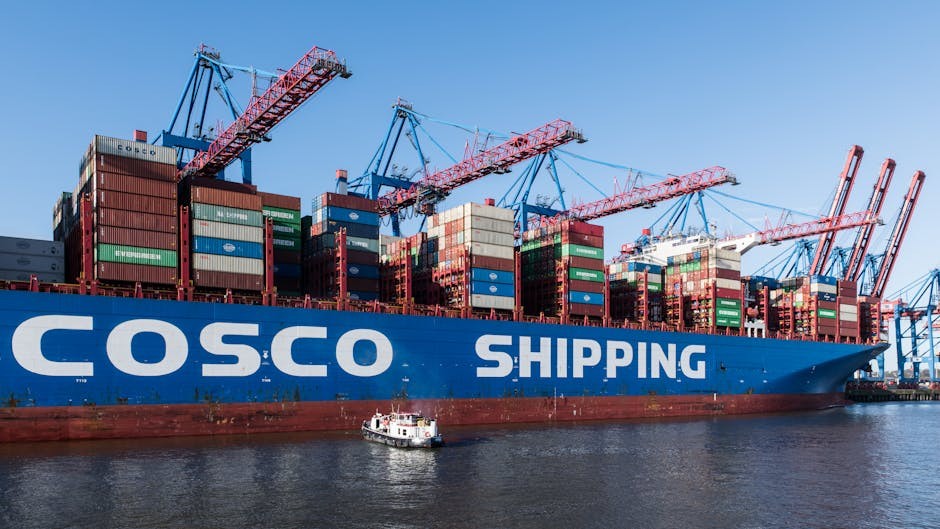
As the conflict against Iran has limited seaborne transport to the Middle East, shipping lines have been refocusing on the growing lanes between East Asia, South-east Asia and the Indian subcontinent and today, Cosco launched its South-east Asia India Service 2, connecting Qinzhou, Xiaochan Beach, Haiphong, Singapore, Mundra, Singapore, Hong Kong, and Qinzhou.

The service will turn in 35 days and will deploy five 3,300–4,400 teu ships, starting with the 4,250 teu Xin Tai Cang from Qinzhou today. It will offer the first direct connection between Haiphong and India.

Also, from 21 June, Gold Star Line (GSL) will back out of its joint Far East-Western India service with KMTC Line, Evergreen and Emirates Shipping Line (ESL) to team with Global Feeder Shipping to offer a revised New India Express service, covering Shanghai, Ningbo, Dachan Bay, Port Klang, Nhava Sheva, Hazira, Mundra, Port Klang, Haiphong, and Shanghai.

The loop, which removes Colombo and Singapore calls, will continue to turn in six weeks, using five 4,300–5,600 teu ships.

KMTC Line, Evergreen and ESL will continue their cooperation, but with six 5,500–9,500 teu vessels calling at Shanghai, Ningbo, Shekou, Port Klang, Nhava Sheva, Hazira, Mundra, Port Klang, and Shanghai. Calls at southern China have been moved from Dachan Bay to Shekou, while Colombo is dropped.

Capacity collapse in Middle East, surge in South Asia corridors

Drewry Shipping Consultants MD Philip Damas told The Loadstar capacity on the North Asia-Middle East and South-east Asia-Middle East routes had collapsed by 70.6% and 67% year on year, respectively.

“This structural retreat is likely a response to ongoing geopolitical friction and operational realignments that have coincided with a demand spike. In contrast, other regional corridors are seeing supply injections as carriers pivot toward manufacturing hubs with higher reliability.” — Philip Damas, Managing Director, Drewry Shipping Consultants

Capacity on South Asia-North Asia and South Asia-South-east Asia routes has grown 43% and 51% in the year to April.

“These increases are however being blunted by operational bottlenecks. Port utilisation in major hubs like Singapore remain at critical levels, with rolling pools of displaced containers forcing carriers to prioritise westbound traffic, which in turn slows the repositioning of empty units into South Asian corridors.” — Philip Damas

Xeneta’s chief analyst, Peter Sand, told The Loadstar that Asian exporters were driving the redrawing of routes.

“Networks are adjusted not only away from calling Jebel Ali/Damman or the like, but also internally in Asia. This should not be mistaken for a lower level of capacity, but merely network disruption and changes.” — Peter Sand, Chief Analyst, Xeneta

Source: The Loadstar

Compiled from international media by the SCI.AI editorial team.

More on This Topic

  • Amazon Unveils AI Warehouse Robot in $12 Billion Europe Push — Reuters (Jun 5, 2026)
  • Starbucks Ditches AI Inventory System After 9 Months — Supply Chain Dive (Jun 5, 2026)
  • FMC Can Help Ocean Shippers in 3 Key Ways — Supply Chain Dive (Jun 4, 2026)
  • U.S. Manufacturing PMI Hits 54.0 — FreightWaves (Jun 4, 2026)
  • Transportation Pricing Index Hits Record 96 in May — FreightWaves (Jun 3, 2026)
ShareTweet

Related Posts

Amazon Unveils AI Warehouse Robot in $12 Billion Europe Push — Reuters
Procurement

Amazon Unveils AI Warehouse Robot in $12 Billion Europe Push — Reuters

June 5, 2026
1
Starbucks Ditches AI Inventory System After 9 Months — Supply Chain Dive
Procurement

Starbucks Ditches AI Inventory System After 9 Months — Supply Chain Dive

June 5, 2026
1
FMC Can Help Ocean Shippers in 3 Key Ways — Supply Chain Dive
AI & Automation

FMC Can Help Ocean Shippers in 3 Key Ways — Supply Chain Dive

June 4, 2026
1
U.S. Manufacturing PMI Hits 54.0 — FreightWaves
Procurement

U.S. Manufacturing PMI Hits 54.0 — FreightWaves

June 4, 2026
3
Transportation Pricing Index Hits Record 96 in May — FreightWaves
Procurement

Transportation Pricing Index Hits Record 96 in May — FreightWaves

June 3, 2026
4
Q2 2026 Carrier Rate Report — FreightWaves
Procurement

Q2 2026 Carrier Rate Report — FreightWaves

June 3, 2026
6

Leave a Reply Cancel reply

Your email address will not be published. Required fields are marked *

Recommended

Logistics Reply Named Visionary in 2026 Gartner WMS Magic Quadrant

Logistics Reply Named Visionary in 2026 Gartner WMS Magic Quadrant

24 Views
May 16, 2026
Top 5 Warehouse Unitizing Trends Reshaping Logistics

Top 5 Warehouse Unitizing Trends Reshaping Logistics

16 Views
May 2, 2026

Trump Second-Term Tariffs Hit 47%: Supply Chain Disruption

19 Views
April 13, 2026
The Fractured Supply Chain: How the 2026 Section 122 Tariff Shock Is Reshaping Global Industrial Geography

The Fractured Supply Chain: How the 2026 Section 122 Tariff Shock Is Reshaping Global Industrial Geography

13 Views
March 23, 2026
Show More

SCI.AI

Global Supply Chain Intelligence. Delivering real-time news, analysis, and insights for supply chain professionals worldwide.

Categories

  • Supply Chain Management
  • Procurement
  • Technology


  • Risk & Resilience
  • Sustainability
  • Research

© 2026 SCI.AI. All rights reserved.

Powered by SCI.AI Intelligence Platform

Welcome Back!

Sign In with Facebook
Sign In with Google
Sign In with Linked In
OR

Login to your account below

Forgotten Password? Sign Up

Create New Account!

Sign Up with Facebook
Sign Up with Google
Sign Up with Linked In
OR

Fill the forms below to register

All fields are required. Log In

Retrieve your password

Please enter your username or email address to reset your password.

Log In

Scan to share via WeChat

Open WeChat and scan the QR code to share

QR Code

Add New Playlist

No Result
View All Result
  • Supply Chain
    • Strategy & Planning
    • Logistics & Transport
    • Manufacturing
    • Inventory & Fulfillment
  • Procurement
    • Strategic Sourcing
    • Supplier Management
    • Supply Chain Finance
  • Technology
    • AI & Automation
    • Robotics
    • Digital Platforms
  • Risk & Resilience
  • Sustainability
  • Research
  • Expert Columns
  • English
    • Chinese
    • English
  • Login
  • Sign Up

© 2026 SCI.AI