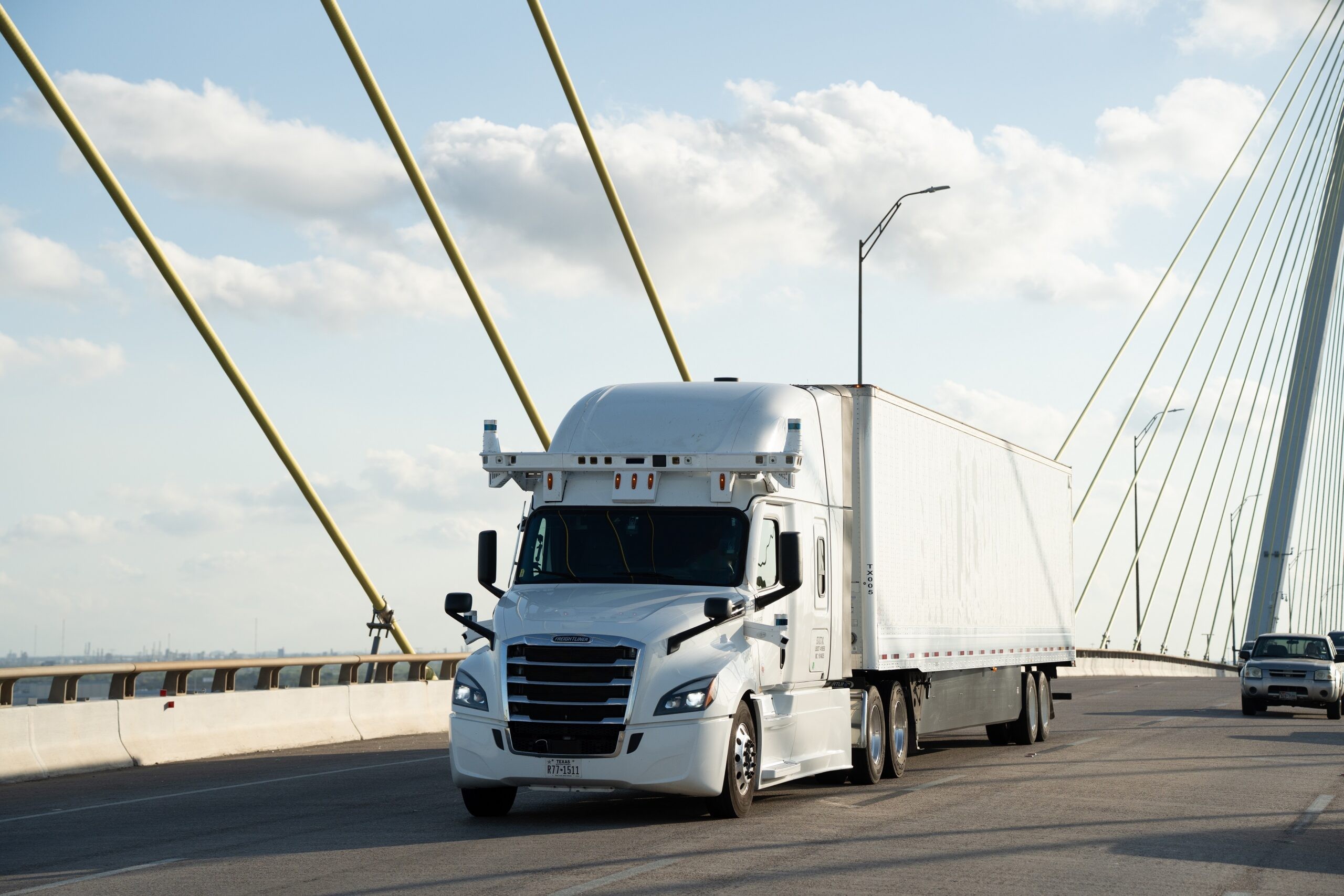
The autonomous trucking race has a new entrant with a distinctly old-school playbook. Bot Auto, fresh off completing its first fully humanless commercial load on a public highway, is betting its next chapter on a freight industry veteran who has spent nearly three decades learning how to build trucking networks.
The Knight Transportation Playbook, Rebuilt for Autonomy
Brett Suma is joining as president and chief operating officer, bringing with him David Stemm as vice president of commercial operations and Jessica Kane as vice president of commercial finance. The trio founded TrailerHawk.ai together before Wabash acquired it in 2025. They are now reuniting to tackle one of the industry’s most complex operational challenges: turning a technological milestone into a repeatable commercial business.
“We have proven that humanless commercial truckloads are possible, but we understand that technology alone cannot drive value creation,” said Dr. Xiaodi Hou, founder and CEO of Bot Auto. “This industry is complex for good reasons, and building a scalable autonomous freight product requires humility, flexibility, and relentless creativity.”
Suma’s freight education started at age 19, working nights at Knight Transportation to pay for college. From the beginning, trucking had him hooked. From 1999 through the company’s explosive growth period in the early 2000s, he watched the founders build a methodical freight network to feed their growing fleet. It started by identifying corridors with the right freight density, matching them to driver populations, then constructing facilities to support 125 to 150 trucks per market.
“It was very formulaic,” Suma said. “You had to identify a corridor that fit your network that had access to a certain level of inbound and outbound freight to be able to support the driver population that you would need in order to support the actual construction of the facility.”
The difference now? Bot Auto does not need drivers.
“The one great benefit that we have at Bot Auto is that we don’t have to really worry about the driver population piece from a support perspective in order for us to scale,” Suma said. “But the freight still has to work for us and the market still has to be able to support the amount of investment in tractors.”
Purpose-Built Networks vs. Legacy Friction
Suma is blunt about what separates Bot Auto from competitors bolting autonomous tractors onto existing operations. The math, he argues, does not work.
“There are others in the space that are saying, ‘We’re going to deploy X number of autonomous tractors into our network,’” Suma said. “And I look at it and I do the math because it’s very simple math to do. And I say, ‘OK, so they’re just going to continue to run inefficient freight in an inefficient way, but with an autonomous solution.’”
The inefficiency is baked into traditional trucking. Drivers average 7 to 8 hours of actual drive time during an 11-hour shift because origins and destinations do not communicate efficiently. Deploying expensive autonomous assets into that same broken network, Suma argues, misses the point entirely.
“We’re building a native AI freight network,” he said. “Deploying physical AI as opposed to saying, ‘We already have this network that exists and now we’re going to figure out how to make AV work in it.’”
Mixed Fleet Challenges
Mixed fleets create impossible decisions. Suma illustrated with a scenario: one load, two trucks — an autonomous tractor and Johnny, a safe driver with 12 years at the company who runs Houston to Phoenix twice weekly.
“What truck do you decide to give it to? You’re going to give it to Johnny because he’s worked here for 12 years,” Suma said. “You’ve just chosen to make your autonomous truck sit because there’s no other alternative for that truck.”
The alternatives are worse: force Johnny into unfamiliar routes, or idle him entirely. “None of those are good outcomes,” Suma said. “They’re all bad outcomes.”
Large fleets are just as much at the whim of their driver pools as they are of their customers. Introducing autonomous trucks creates an added challenge because tenured drivers often have priority on preferred routes, which can leave autonomous assets idle. In this instance, that choice leads to suboptimal load pairings.
Bot Auto sidesteps the friction by starting clean. No legacy network. No driver conflicts. Every decision is optimized for autonomous deployment.
Texas First, Then Corridor by Corridor
The company is now targeting aggressive milestones for 2026: growing its autonomous fleet, increasing humanless trips, and expanding lane coverage across Texas. Suma frames it as building infrastructure methodically — lanes into corridors, corridors into networks.
“Texas is the ideal starting point, and we’re thinking corridor by corridor until we’ve built something the traditional trucking model simply can’t compete with,” Suma said.
For carriers watching the autonomous space, the technology works. The question now is whether purpose-built networks can outscale the incumbents trying to retrofit it.
Source: FreightWaves
Compiled from international media by the SCI.AI editorial team.