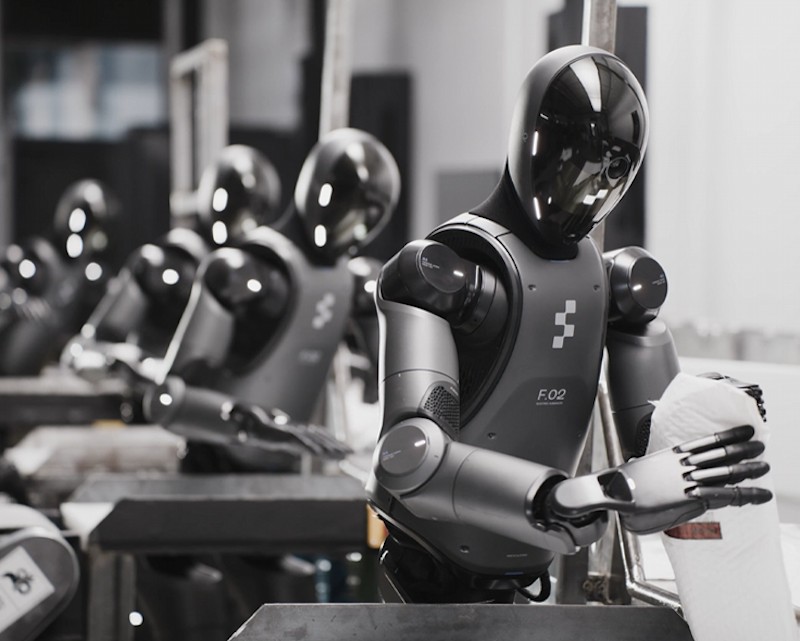
According to roboticsandautomationnews.com, Figure AI has signed a commercial agreement with Catalyst Brands to deploy humanoid robots across the retailer’s distribution and logistics network, beginning at its Reno, Nevada Distribution Logistics Center on May 27, 2026.
First Commercial Deployment at Multi-Brand Logistics Hub
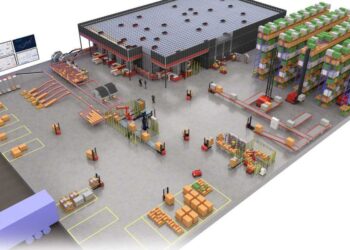
Catalyst Brands operates several nationally recognized retail chains, including JCPenney, Aéropostale, and Brooks Brothers. The partnership marks Figure’s first large-scale, multi-brand commercial deployment of humanoid robots in active supply chain operations. According to the report, the robots will automate physically demanding tasks — such as case handling, pallet building, and order consolidation — within the warehouse environment.
“The collaboration starts at Catalyst’s Reno, Nevada Distribution Logistics Center, focusing on automating physically demanding tasks within the supply chain.”
The source states that Figure’s humanoid systems provide “a flexible solution that can be deployed across a diverse, multi-brand portfolio instantly” — a capability enabled by standardized hardware interfaces and cloud-based fleet management software. This interoperability is critical for Catalyst, which manages integrated logistics for three distinct retail banners under one corporate umbrella.
Manufacturing Scale-Up Enables Rapid Rollout
Figure’s ability to meet Catalyst’s deployment timeline stems from accelerated manufacturing output at its BotQ facility. As reported in an April 2026 company update, production capacity increased from one Figure 03 humanoid robot per day to one per hour within four months. The facility has already produced more than 350 third-generation humanoid robots and over 9,000 actuators across multiple product variants. This volume supports concurrent field deployments and real-time AI model training.
Figure said its expanding physical fleet is accelerating development of Helix, the company’s proprietary humanoid AI model, through large-scale real-world operational data collection. The company recently demonstrated perception-conditioned whole-body control, enabling robots to navigate stairs and uneven terrain using AI models trained largely in simulation before direct transfer to physical units.
Industry Context: Warehouse Logistics as First Viable Market
Humanoid robotics companies globally are prioritizing warehouse logistics, manufacturing, and material handling as the earliest commercially viable markets for general-purpose humanoid systems. Major players including Nvidia, Amazon, and multiple automotive manufacturers have increased investment in humanoid robotics and embodied AI technologies over the past two years. According to industry tracking by ABI Research, global spending on humanoid robots for logistics applications reached $218 million in 2025, up from $47 million in 2023 — a 366% increase — driven primarily by labor shortages and rising wage costs in U.S. warehousing roles, where median hourly wages rose 12.4% between Q1 2023 and Q1 2026 (U.S. Bureau of Labor Statistics).
For supply chain professionals, the Catalyst- Figure deployment introduces new operational parameters: humanoid robots require no retrofitting of existing racking or conveyance infrastructure but do demand updated safety protocols, workforce upskilling pathways, and revised KPIs — such as task completion rate per robot-hour rather than labor-hours saved. Early adopters report that integration timelines average 8–12 weeks for pilot deployments in Class A distribution centers, significantly shorter than legacy robotic systems requiring structural modifications.
Source: Robotics & Automation News
Compiled from international media by the SCI.AI editorial team.