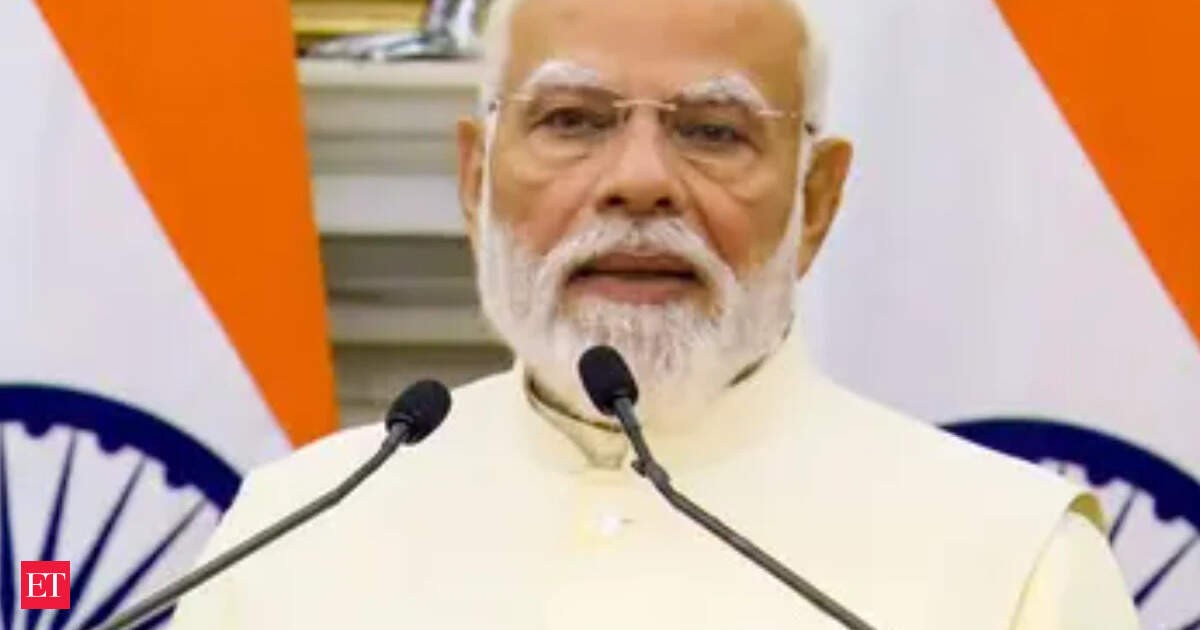
According to m.economictimes.com, Prime Minister Narendra Modi announced on May 23, 2026, that India is establishing a complete semiconductor supply chain, with 10 major domestic semiconductor units expected to make a global impact in the near future. The statement was delivered during a video-conferenced Rozgar Mela event targeting youth aged 18–35.
Semiconductor Supply Chain Buildout
The Prime Minister confirmed that India is moving beyond assembly and testing toward integrated design, fabrication, and packaging capabilities — a shift requiring coordinated investment across materials, equipment, design houses, and foundry infrastructure. While no specific funding figure was cited for the semiconductor initiative itself, Modi’s broader industrial strategy includes large-scale capital commitments: an investment of approximately Rs 75,000 crore (about $9 billion at current exchange rates) is underway to develop shipbuilding, refitting, and overhauling capacity — part of a parallel national push to strengthen high-end engineering ecosystems supporting advanced electronics manufacturing.
Job Creation and Rozgar Mela Scale
At the same event, PM Modi distributed more than 51,000 appointment letters to new government recruits. These appointments span roles aligned with technical and vocational qualifications — including candidates certified under the National Skills Qualifications Framework — and cover education levels from 8th grade through ITI, Diploma, Graduate, and postgraduate degrees. The Rozgar Mela initiative mobilizes job seekers via print advertisements, bulk SMS, social media, and college/university workshops, reflecting a systematic, multi-channel outreach effort across districts.
MRO Ecosystem and Aviation Cost Impact
Modi emphasized parallel development of a domestic Maintenance, Repair, and Overhaul (MRO) ecosystem, designed to reduce Indian commercial airlines’ reliance on overseas heavy maintenance facilities. This move targets direct cost savings: Indian carriers currently spend an estimated 60–70% of their total MRO expenditure abroad, according to industry benchmarks cited in prior Ministry of Civil Aviation reports. The government’s plan includes dedicated infrastructure for aircraft engine overhaul, airframe structural repair, and avionics certification — all anchored in domestic regulatory compliance with DGCA and EASA standards.
Youth Employment and Global Partnerships
The Prime Minister linked semiconductor and MRO development directly to youth opportunity, stating that investments in core manufacturing and engineering are generating millions of high-quality job opportunities. He underscored that India’s global partnerships are expanding access for startups, researchers, and young professionals — enabling connections with international labs, joint R&D programs, and co-development agreements. As evidence of traction, India’s semiconductor workforce grew by 22% year-on-year in FY2025, per data published by the India Electronics and Semiconductor Association (IESA) in March 2026.
“Today, a complete supply chain for semiconductor manufacturing is being created in India. In the coming times, 10 major semiconductor units from India will be making their mark in the world.” — Narendra Modi, Prime Minister of India
Source: m.economictimes.com
Compiled from international media by the SCI.AI editorial team.