According to www.puentedemando.com, the SIL Barcelona logistics fair — scheduled for June 3–5, 2026 at Fira Barcelona (Montjuic) — will spotlight artificial intelligence as a core driver of supply chain innovation, with 76.6% of participating companies already using AI tools or actively implementing them.
AI Adoption Data from the XVI Barometer
The XVI Barometer of the Logistics Circle 2026 — jointly published by SIL Barcelona and Supply Chain — provides foundational metrics on AI integration across the sector. According to the report, 72.5% of logistics sector leaders expect AI to increase productivity and efficiency, while 22.9% anticipate only minimal impact on staffing levels. The Barometer surveyed senior decision-makers across European and global logistics firms, confirming that AI is no longer experimental but operationally embedded: over three-quarters of respondents are beyond pilot stage, either fully deployed or in active rollout.
Event Scale and International Composition
SIL Barcelona 2026 will host more than 600 companies representing the full supply chain spectrum — including transportation, intralogistics, e-commerce, last-mile delivery, sustainability, and infrastructure. Of these, 30% are international exhibitors from Germany, France, the United States, China, Italy, Portugal, and the United Kingdom. Attendance is projected to exceed 15,000 professionals from major corporations such as Nestlé, Decathlon, SEAT, HP, L’Oréal, PepsiCo, Lidl, and Mango.
Innovation Showcase and Program Structure
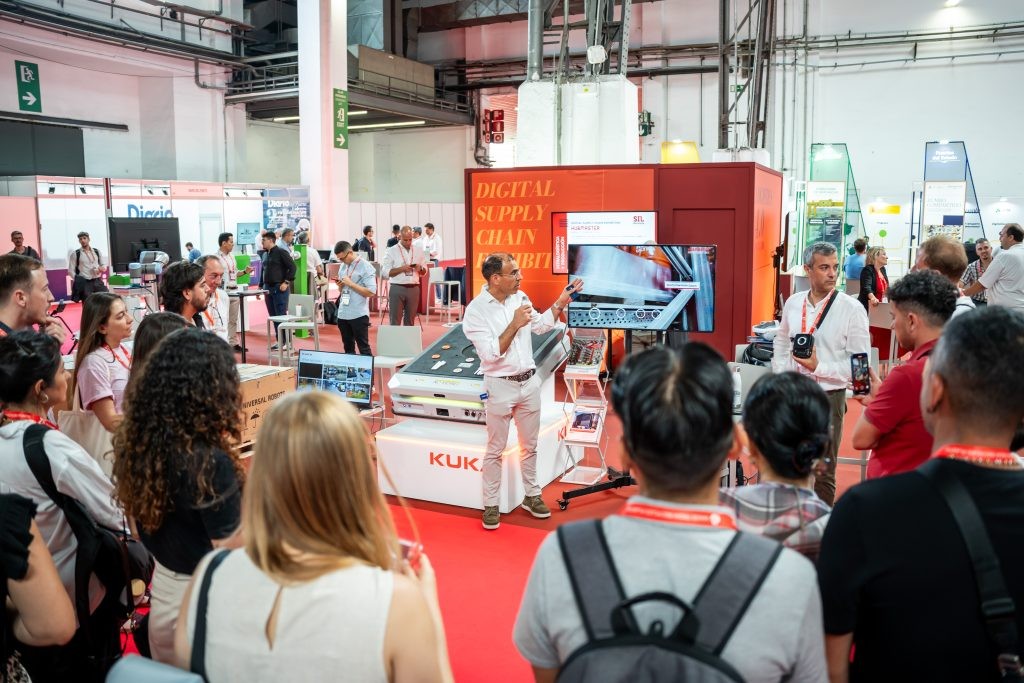
The fair will present more than 160 global innovations, including drones for air logistics, electric loading docks, recyclable pallets, automated measurement systems, and AI-based decision-support platforms for human capital management. Two dedicated technology spaces will demonstrate real-world applications of digitalization and AI in supply chain operations. The SIL Knowledge program features over 250 speakers across 7 content spaces, including the International Logistics Summit, Spain Air Cargo Day, and Investors Day. In addition, 150+ company-organized activities will run alongside networking zones such as the Startup Innovation Hub, Job Market Place, and Dakar Logistics Experience.
Industry Context and Practitioner Implications
This emphasis on AI aligns with broader industry trends: DHL’s 2025 Logistics Trend Radar identified AI-powered predictive analytics and autonomous warehouse systems as top-tier priorities, while the European Commission’s 2024 Digital Decade Progress Report noted that 42% of EU logistics SMEs had adopted at least one AI-enabled tool by end-2023. For supply chain professionals, the practical implication is clear — AI implementation is shifting from strategic discussion to operational necessity. Companies reporting measurable ROI cite reductions in planning cycle times (up to 40% in demand forecasting accuracy per McKinsey’s 2025 Supply Chain AI Survey) and labor-hour optimization in warehouse sorting (22% average reduction in manual review time). SIL Barcelona’s focus on applied cases — not just theoretical frameworks — reflects this practitioner-driven urgency.
Source: www.puentedemando.com
Compiled from international media by the SCI.AI editorial team.