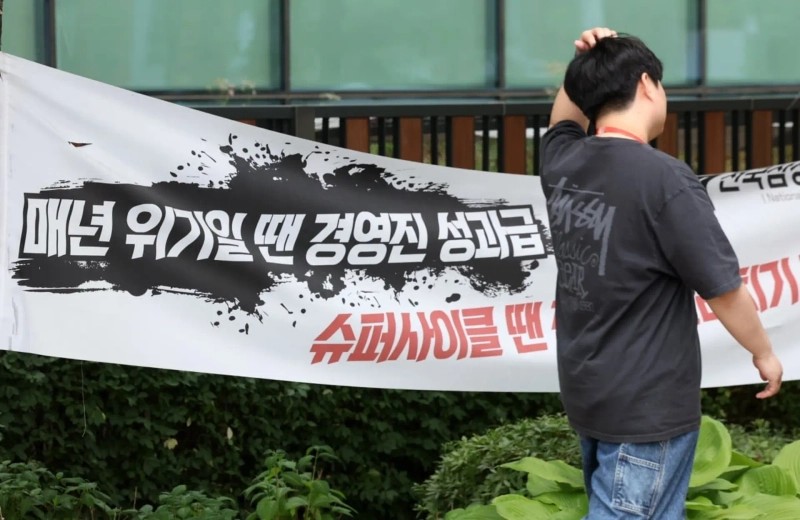
According to en.bloomingbit.io, concerns over disruption to the global semiconductor supply chain have eased following a tentative agreement between Samsung Electronics and its union on wages and performance bonuses. The deal averted a planned 18-day strike that Bloomberg reported would have disrupted production and impeded Samsung’s acceleration of next-generation semiconductor development.
Global Media Assess Supply Chain Impact
Bloomberg emphasized that the strike—had it proceeded—would have added a significant burden to Samsung’s efforts to scale advanced chip R&D, particularly for AI-optimized chips used in data-center servers, smartphones, and electric vehicles. Reuters underscored timing sensitivity: the strike would have occurred amid an ongoing artificial-intelligence boom already causing acute semiconductor supply shortages. That confluence, Reuters stated, could have fueled a rise in global chip prices.
Economic Weight and Domestic Response
The semiconductor industry accounts for approximately 20% of South Korea’s total exports (per 2025 Korea Customs Service data), making stability at Samsung—a company responsible for 43% of global memory chip output (TrendForce, Q1 2026)—economically critical. The Federation of Korean Industries welcomed the agreement the same day, calling it meaningful for minimizing disruption at industrial sites and safeguarding a pillar of the national economy. The Korea Chamber of Commerce and Industry credited sustained dialogue between labor and management, along with active government mediation, as decisive factors in reaching the accord.
Analyst Perspectives on Operational Resilience
Some analysts cited Samsung’s operational redundancy as a mitigating factor: even if the strike had occurred, the impact on production would likely have been limited due to three fully operational fabrication plants in Pyeongtaek (Samsung’s largest semiconductor cluster) and cross-site staffing protocols. This view aligns with Samsung’s publicly reported 92% equipment utilization rate across its DRAM and NAND lines in Q1 2026 (Samsung Investor Relations, April 2026). According to the report, the agreement directly supports continuity for key components supplying 17 major AI server OEMs, including Dell, HPE, and Lenovo—firms collectively ordering $21.4 billion in memory chips in 2025 (Counterpoint Research).
Supply Chain Practitioner Implications
For supply chain professionals managing semiconductor-dependent product lines, the resolution eliminates near-term risk of allocation cuts from Samsung’s 12-inch wafer fabs in Giheung and Hwaseong. It also preserves scheduled ramp-up timelines for 2nm process node shipments beginning Q3 2026, critical for AI accelerator ASICs. With global memory chip inventory levels at 4.8 weeks (DRAMeXchange, May 2026)—below the 6-week safety threshold—avoiding unplanned capacity loss was operationally essential. As one Seoul-based procurement director noted,
“This removes a $3.7 billion exposure window we’d modeled for Q2–Q3 2026 across automotive and cloud infrastructure segments.” — Park Min-jae, Head of Strategic Sourcing, Hyundai Motor Group
Source: en.bloomingbit.io
Compiled from international media by the SCI.AI editorial team.