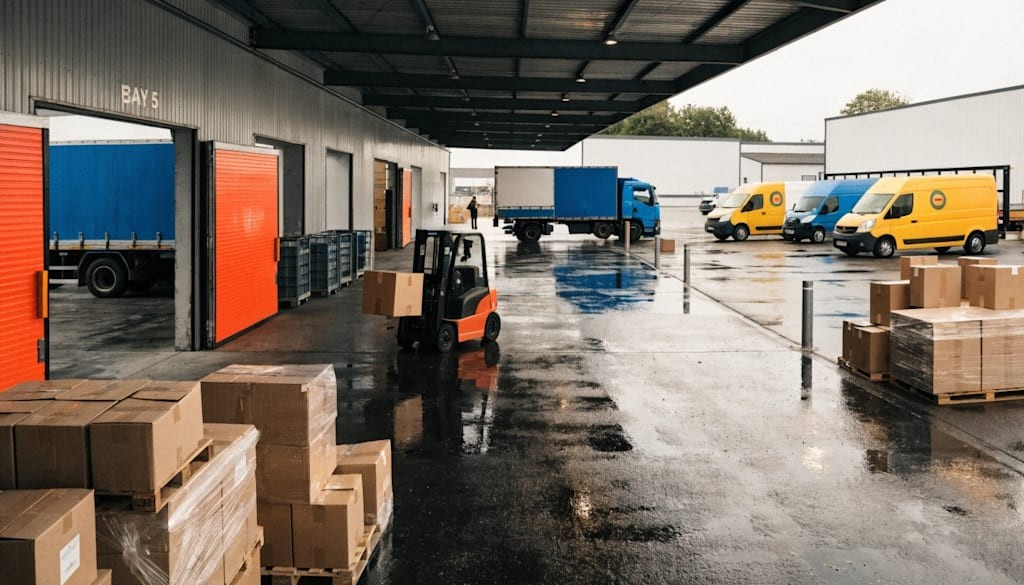
According to vocal.media, the UK warehousing and distribution logistics market size reached USD 200.2 Billion in 2025 and is projected to grow to USD 328.5 Billion by 2034, reflecting a compound annual growth rate (CAGR) of 5.48% during 2026–2034. This expansion is driven by e-commerce acceleration, rising third-party logistics (3PL) adoption, and sustained investment in smart warehouse infrastructure — including robotics, AI-powered inventory systems, and IoT-enabled warehouse management platforms.
Market Drivers: E-Commerce, Outsourcing, and Speed Imperatives
The rapid expansion of the UK e-commerce sector is intensifying demand for fulfillment centers and last-mile distribution solutions. Consumers now expect same-day delivery and real-time shipment tracking — expectations that are reshaping facility location strategies and operational cadence. According to the report, businesses are increasingly outsourcing warehousing and distribution operations to specialized 3PL providers to improve scalability and cost management. This shift aligns with broader industry trends: global logistics firms such as DHL and UPS have expanded UK automation hubs since 2022, with DHL’s Coventry Smart Hub launching in Q3 2023 and integrating over 1,200 autonomous mobile robots (AMRs).
Technology Adoption Accelerates Amid Labor Constraints
Labor shortages across the UK logistics sector — exacerbated by post-Brexit migration policy changes and an aging workforce — are accelerating automation deployment. The source states that warehouse operators are adopting robotics, AI-driven predictive analytics, and automated sorting technologies to maintain throughput amid staffing gaps. For example, Ocado’s Andover fulfillment center, operational since 2021, processes up to 200,000 orders per week using grid-based robotics and machine learning algorithms. Similarly, Amazon’s UK network now includes 12 fully automated fulfillment centers, with its Daventry site alone housing over 15,000 robotic drive units. These deployments support not only speed but also accuracy: AI-powered inventory forecasting has reduced stockouts by up to 27% in pilot facilities, per industry benchmarking data from Logistics UK’s 2024 Automation Survey.
Sustainability Integration and Regional Distribution Patterns
Sustainable logistics is no longer optional: the UK government’s Net Zero Strategy mandates that all new large warehouses meet BREEAM Outstanding certification standards by 2027. As a result, major developers like SEGRO and Prologis have committed £1.8 billion in green warehousing investments across England and Scotland between 2023 and 2025. Regionally, the South East remains the dominant hub — hosting 34% of national warehousing capacity — followed by the North West (18%) and East Midlands (12%). Cold-chain infrastructure is expanding rapidly, particularly in the East of England, where food and beverage clients account for 41% of value-added services revenue in temperature-controlled facilities.
Competitive Landscape and Strategic Implications for Practitioners
The market is highly competitive, featuring global players (DHL, FedEx), domestic specialists (Stobart Group, Wincanton), and tech-native entrants (Ocado Technology, Locus Robotics partners). Differentiation hinges on automation maturity, delivery speed (under 4-hour urban window now standard for premium retail contracts), and carbon reporting transparency. For supply chain professionals, this means procurement criteria now routinely include API-level integration readiness, AMR fleet interoperability scores, and Scope 3 emissions audit trails. According to Logistics UK’s 2024 State of Automation report, 68% of Tier-1 UK shippers now require vendors to disclose automation uptime metrics quarterly.
Source: vocal.media
Compiled from international media by the SCI.AI editorial team.