According to www.fool.com, the recent military escalation involving Iran has severely disrupted global helium supply — a critical, non-substitutable input in AI chip manufacturing — with lasting implications for semiconductor production timelines and costs.
The invisible bottleneck: Helium’s irreplaceable role
Qatar’s Ras Laffan Industrial City supplies 30% to 38% of the world’s helium. Helium is not optional in semiconductor fabrication: it cools silicon wafers during chemical etching, purifies clean rooms, and detects microscopic leaks in ultra-clean chip manufacturing environments. There is currently no substitute.
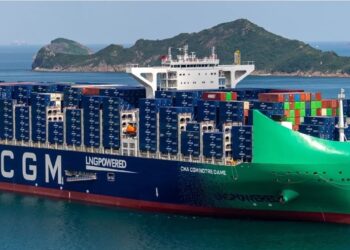
In early March, Iranian strikes damaged Ras Laffan’s LNG production infrastructure, prompting QatarEnergy to declare force majeure and halt operations. As a result, helium spot prices roughly doubled in the weeks that followed.
Compounding an already strained supply chain
The disruption hit an industry with zero slack: high-bandwidth memory (HBM) chips were sold out through 2026, and advanced chip packaging lead times had already stretched to one to two years before the first strike. As analysts at J.P. Morgan stated, the AI investment boom is “increasingly supply constrained, not demand-constrained.”
Companies most exposed
- Samsung and SK Hynix: Produce roughly two-thirds of the world’s memory chips — essential for Nvidia’s AI chips. South Korea sources a significant share of its industrial helium from Qatar and the broader Gulf region; South Korean industrial power prices rose as supply lines were disrupted.
- Micron Technology (MU +3.46%): Its manufacturing processes are helium-dependent, and domestic U.S. production alone cannot insulate it from global supply tightening. Morningstar flagged Micron as part of a group whose margins could compress meaningfully if the Qatar helium situation persists through the summer.
- Taiwan Semiconductor Manufacturing (TSM +6.11%): Deserves particular attention as the dominant foundry serving leading-edge AI chip designers — though the source cuts off mid-sentence before elaborating on TSMC’s specific exposure.
The ripple effects extend directly to hyperscalers: when Samsung and SK Hynix struggle to meet production targets, the impact reaches Nvidia (NVDA +4.81%), Microsoft (MSFT +1.18%), and every cloud provider ordering HBM chips for AI clusters.
“Even if fighting in Iran actually stops, the damage to supply chains could last years, putting pressure on major chipmakers like Micron and TSMC.”
This crisis reveals how geopolitical instability in the Strait of Hormuz — which handles ~20% of the world’s daily oil supply — can trigger cascading failures far beyond energy markets. For supply chain professionals, the episode underscores that single-source dependencies on non-energy critical gases, even in politically volatile regions, represent acute, under-mapped operational risks. Diversifying helium procurement, investing in closed-loop recovery systems, and stress-testing clean-room gas logistics against regional conflict scenarios are now urgent priorities — especially for firms managing AI hardware scale-up.
Source: www.fool.com
Compiled from international media by the SCI.AI editorial team.